Coco Chanel as Abwehr agent F-7124 and her 1941 attempt to seize Parfums Chanel
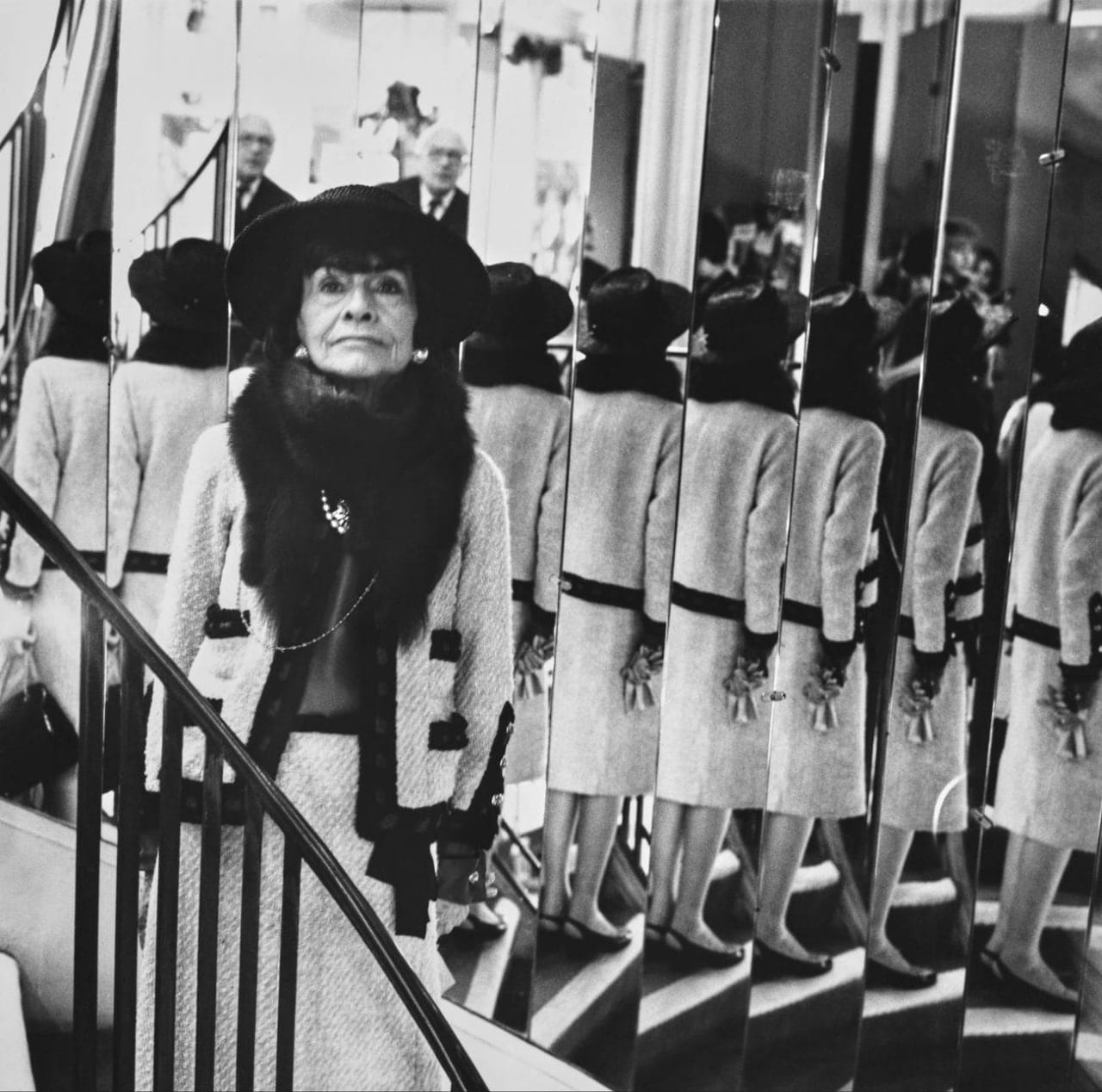
Everyone remembers that Coco Chanel was a collaborator and worked for the Abwehr, that is, for German military intelligence? This is not conjecture or gossip but a well-documented part of her biography.
So, she not only tried, with the help of her fascist patrons, to wrest a perfume company from its Jewish owners, but also managed to serve officially as an agent. In 1941 Berlin opened a file on her: agent F-7124, codename "Westminster", after a former lover, the Duke of Westminster. She was recruited by her new lover, Baron Hans Günther von Dincklage, an attaché of the German embassy and an Abwehr officer, thirteen years her junior. They spent the whole of the Occupation together at the Ritz, which the Germans had taken over and where they lodged Göring. The first thing she got out of it: her nephew André Palasse was released from a prison camp.
Then she was put to work on something bigger. In 1943 Walter Schellenberg, head of SS political intelligence, sent her on Operation Modellhut, which translates as "model hat". The idea was this: Chanel, drawing on old society connections, would approach Churchill and pass on a proposal for a separate peace. She travelled to Madrid with Vera Lombardi, who went straight to the British embassy and betrayed the whole party. That was the end of the madame's espionage career.
Now, about the wresting. In May 1941 Chanel wrote to the Vichy office for Jewish property, asking that all the shares of Parfums Chanel be transferred to her. Her arguments: the firm belonged to Jews, its owners had abandoned it, and the money she herself received from it was unjustly small. The procedure was called Aryanisation, whereby property was taken from Jews and handed to non-Jews. The shares were to be transferred to Aryans, and she had a perfectly specific Aryan in mind.
Pierre and Paul Wertheimer, the very Jews from whom she asked for the company to be taken, had already in May 1940, a year before her denunciation, transferred the firm to Félix Amiot, a French aircraft industrialist with a spotless record under the racial laws, and left for New York. There turned out to be nothing to take away: the company was already registered to an Aryan. After the war Amiot returned it to its owners and kept nothing for himself.
In September 1944 Chanel was detained by Resistance fighters and released a few hours later. It is thought that Churchill helped the living legend. She left for Switzerland, lived there for nine years with the same Dincklage, and paid Schellenberg so that he would not mention her in his memoirs.
But the old lady did have to settle certain accounts after all. In 1947 the Wertheimers offered her a deal: money at once, maintenance for life and 2% of worldwide sales, in exchange for which she would hand over everything else, including the rights to her own name. She agreed. In 1954 Pierre Wertheimer paid for her return to Paris and at the same time secured the name Chanel not merely for perfume but for everything the by no means small company produced. By the end of the fifties he had also bought out the share of Théophile Bader. When Chanel died in 1971, she owned nothing in the house of Chanel, not even her own surname above the door.
The company is now owned by Alain and Gérard Wertheimer, grandsons of Pierre, who hold one hundred per cent of the shares; revenue for 2025 was 19.3 billion dollars. They do not give interviews.
How is all this known? The story was first made public by Edmonde Charles-Roux, who knew Chanel personally: her biography L'Irrégulière appeared in 1974, and the text said outright that Chanel had seriously compromised herself with the Germans. In 1995 L'Express published testimony, and in 2008 Der Spiegel returned to the subject. The principal work was done by the American Hal Vaughan: his 2011 book Sleeping with the Enemy is built on declassified French intelligence documents and on archives in Germany, Britain, Italy and Poland, and that is precisely where the file of agent F-7124 comes from. The house of Chanel itself, after the book's publication, declared that its founder was not an anti-Semite and that her wartime biography retains an "element of mystery".
Well, the main thing is, not an anti-Semite, right?