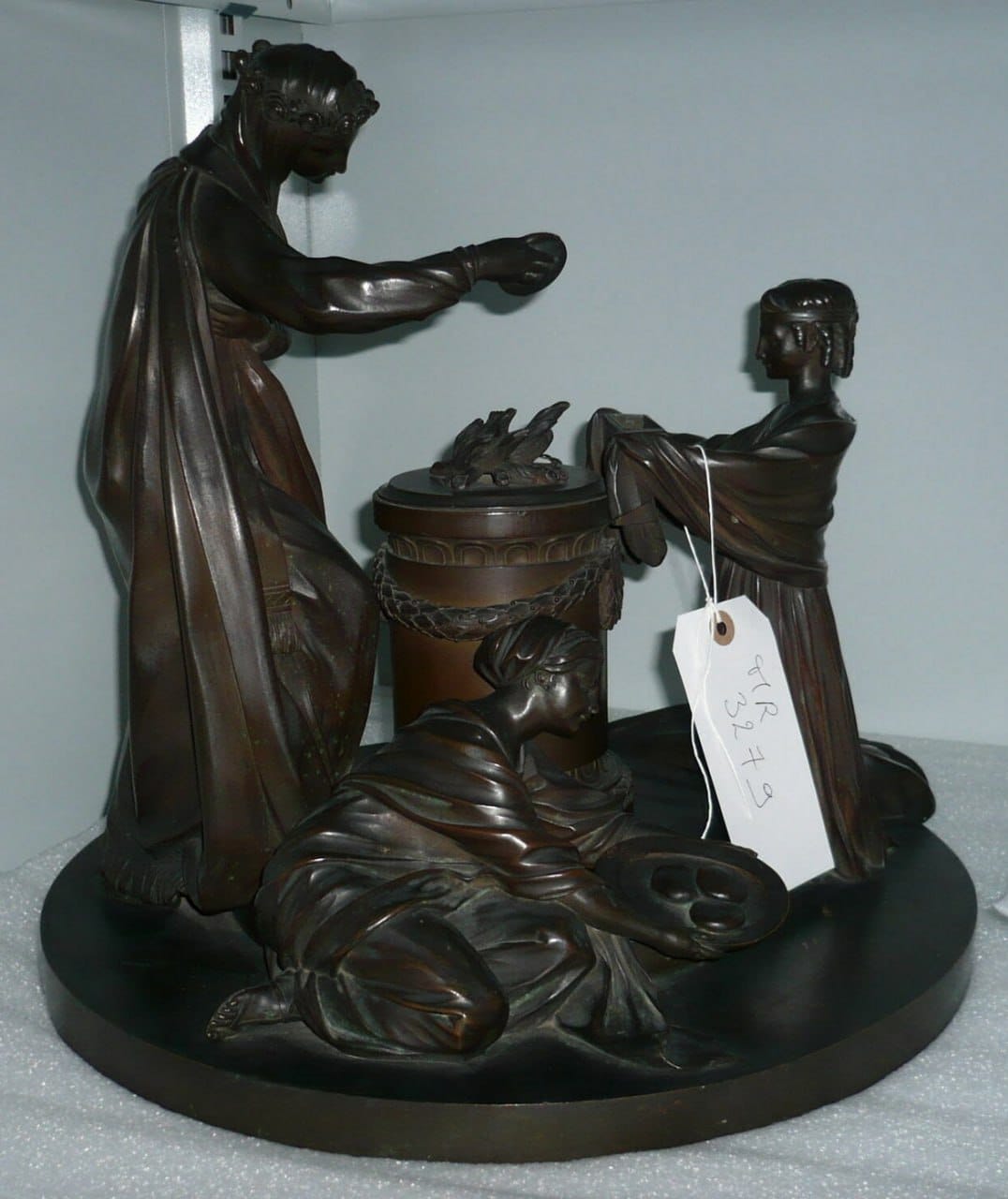
Bronze “Antique Sacrifice” from the Louvre at the Jeanne du Barry exhibition in Marly and the vogue for the Greek taste
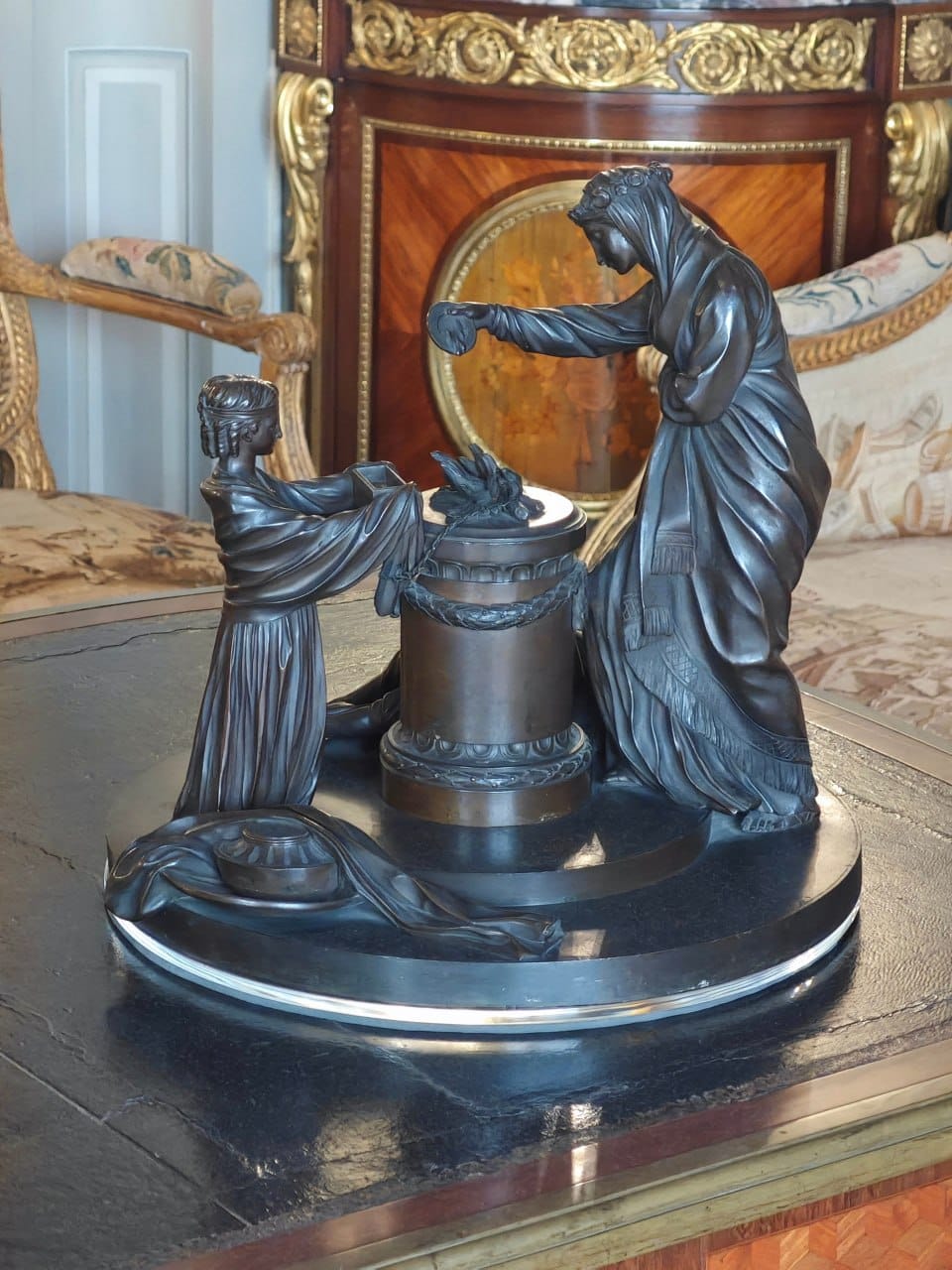
The bronze sculpture "Ancient Sacrifice" from the Louvre's collection at the exhibition "Jeanne du Barry. The Invention of the Favourite" at Marly. The group has been placed in an interior setting rather than a display case, just as in the eighteenth century, when such pieces were acquired to furnish studies and cabinets.
The sculpture is small, a little higher than an elbow, set on a round plinth of black marble. At the centre stands a cylindrical altar with a laurel garland caught up with ribbons, an Ionic egg-and-dart band at the base and tongues of flame on top. Around the altar are three women. On the right stands the eldest, with a veil over her head and a fillet in her hair; she stretches out her arm with a patera, a flat libation bowl, and tilts it over the fire. This is a gesture of ancient ritual, when wine or oil was poured into the flames. On the left, a girl kneels, her hair arranged in dense rows of curls and crowned with a diadem; she holds before her an open casket of perfumes and awaits her turn. The third figure is almost hidden behind the altar: she has sunk to the ground, turned her head in profile and holds out a dish with three fruits, while beside her stands a low vessel.
In other words, the sacrifice itself is divided into stages: the libation, the burning of incense, the offering of fruits, as in Ovid and in engravings after ancient reliefs.
In the 1770s there were two fashions in interiors. One was for gilt bronze on mantel clocks and candelabra; dark, patinated bronze, however, pointed to excavated ancient sculpture and to resounding archaeological discoveries such as Herculaneum.
This group shows the arrival of the Greek taste in aristocratic interiors. Wealthy patrons had begun to tire of the curlicues of the Rococo and wanted straight lines, garlands and altars.
Priestesses at the altar appear in salon painting and sculpture, and in small-scale pieces such as inkwells, while individual elements come into wider use: Parisian women, for example, begin to dress their hair after the manner of the kneeling girl, the coiffure à la grecque, with rows of curls and a ribbon.