At the Musée Jacquemart-André in Paris, "Tintoretto: Eternal" runs until 24 January 2027
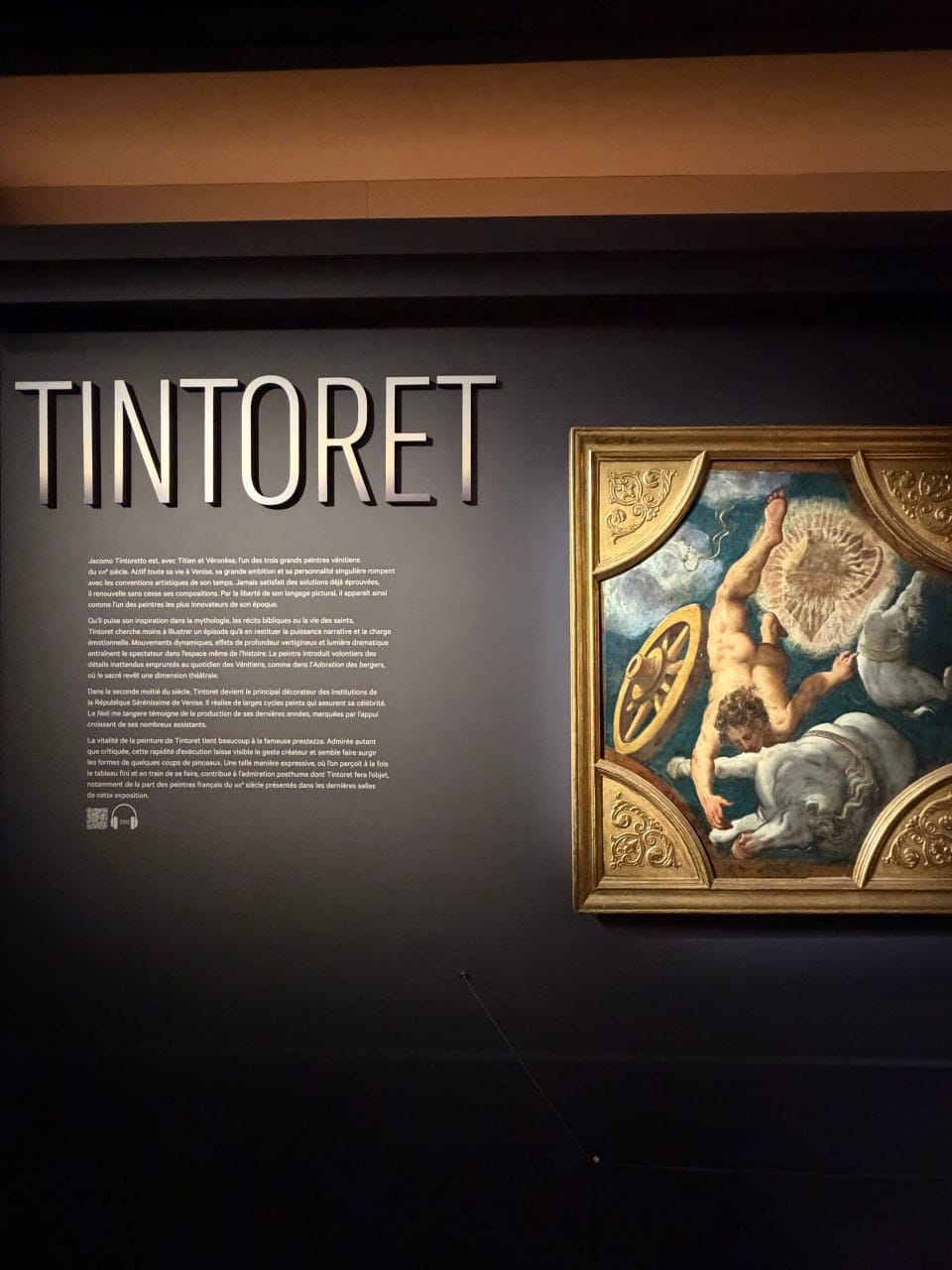
The Musée Jacquemart-André in Paris is showing the exhibition "Tintoretto: Eternal" until 24 January 2027
This is the first exhibition in France to cover the whole career of Jacopo Robusti (1518/1519-1594). In a fairly small exhibition space are gathered some forty paintings and drawings from French, Italian and other collections. More than six hundred paintings are attributed to Tintoretto, and his principal cycles, the decoration of the Scuola Grande di San Rocco and the "Paradise" in the Doge's Palace, remain in Venice. The exhibition shows only that part of his legacy which can be moved: altarpieces, mythological scenes, portraits and drawings. Some of these paintings I had previously seen only in black-and-white photographs in old albums. In the case of this exhibition, what troubled the curators was not the fragility of the canvases or the impossibility of transporting them, but their enormous size, ill suited to the small rooms of a town house.
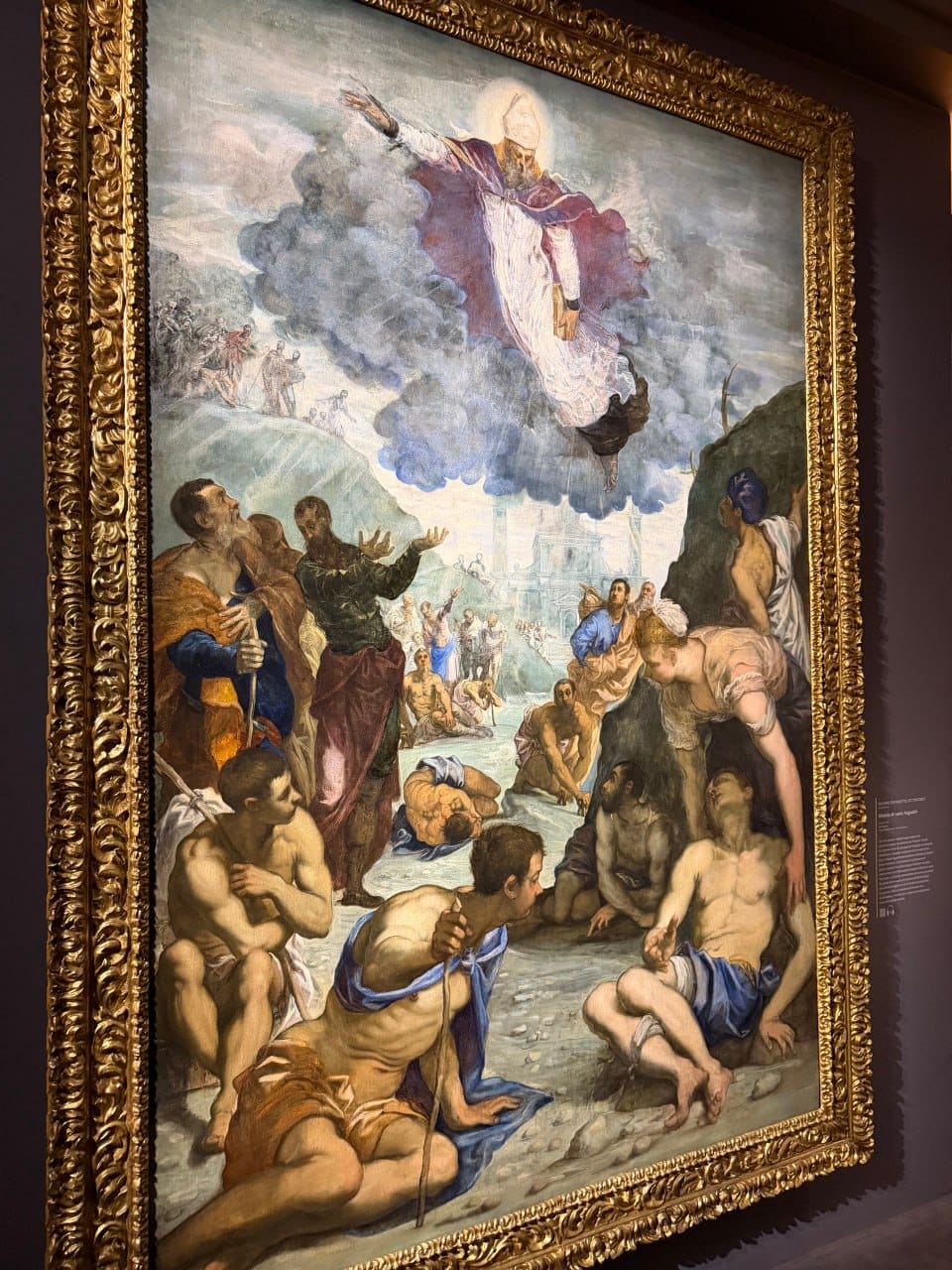
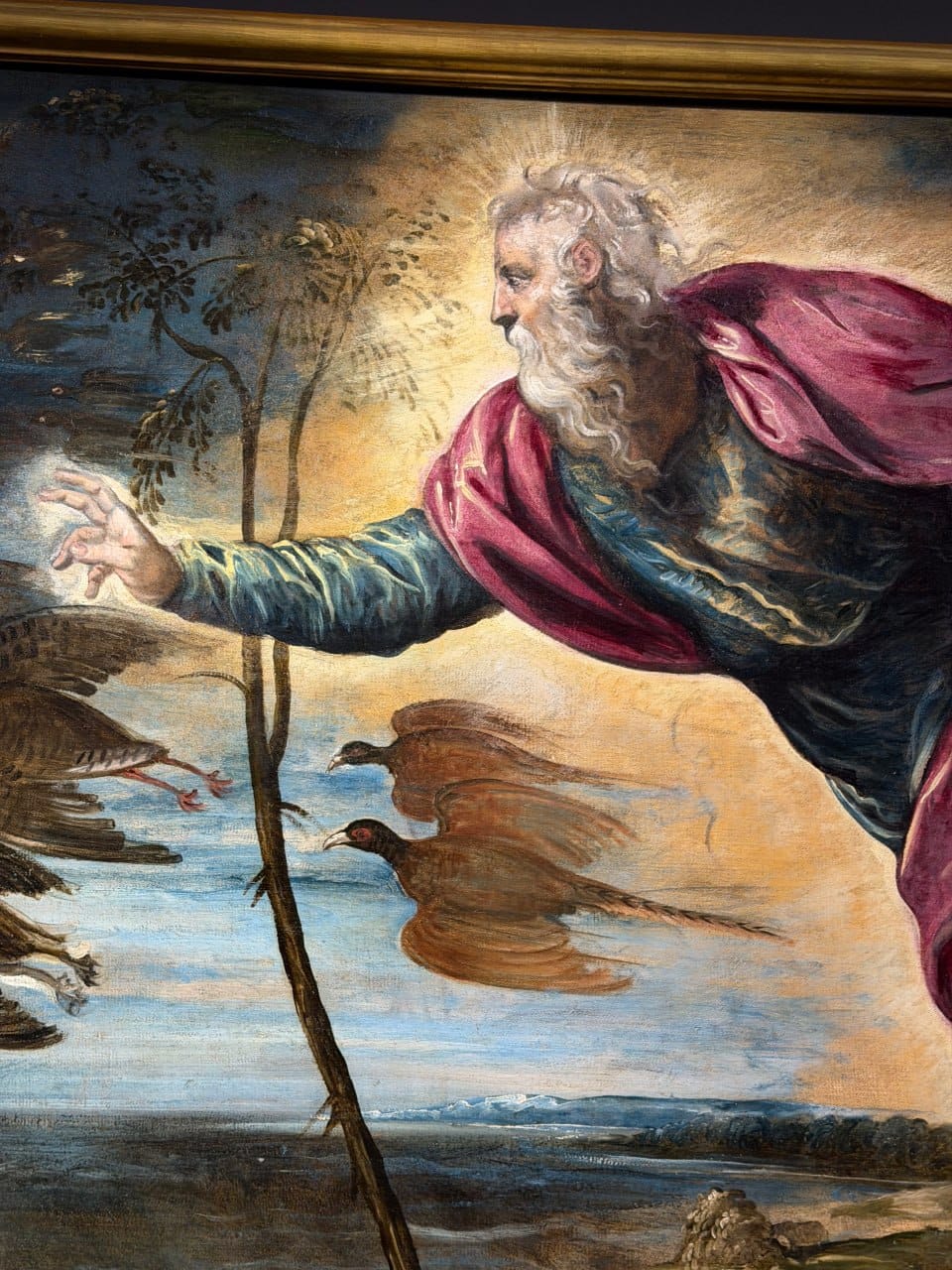
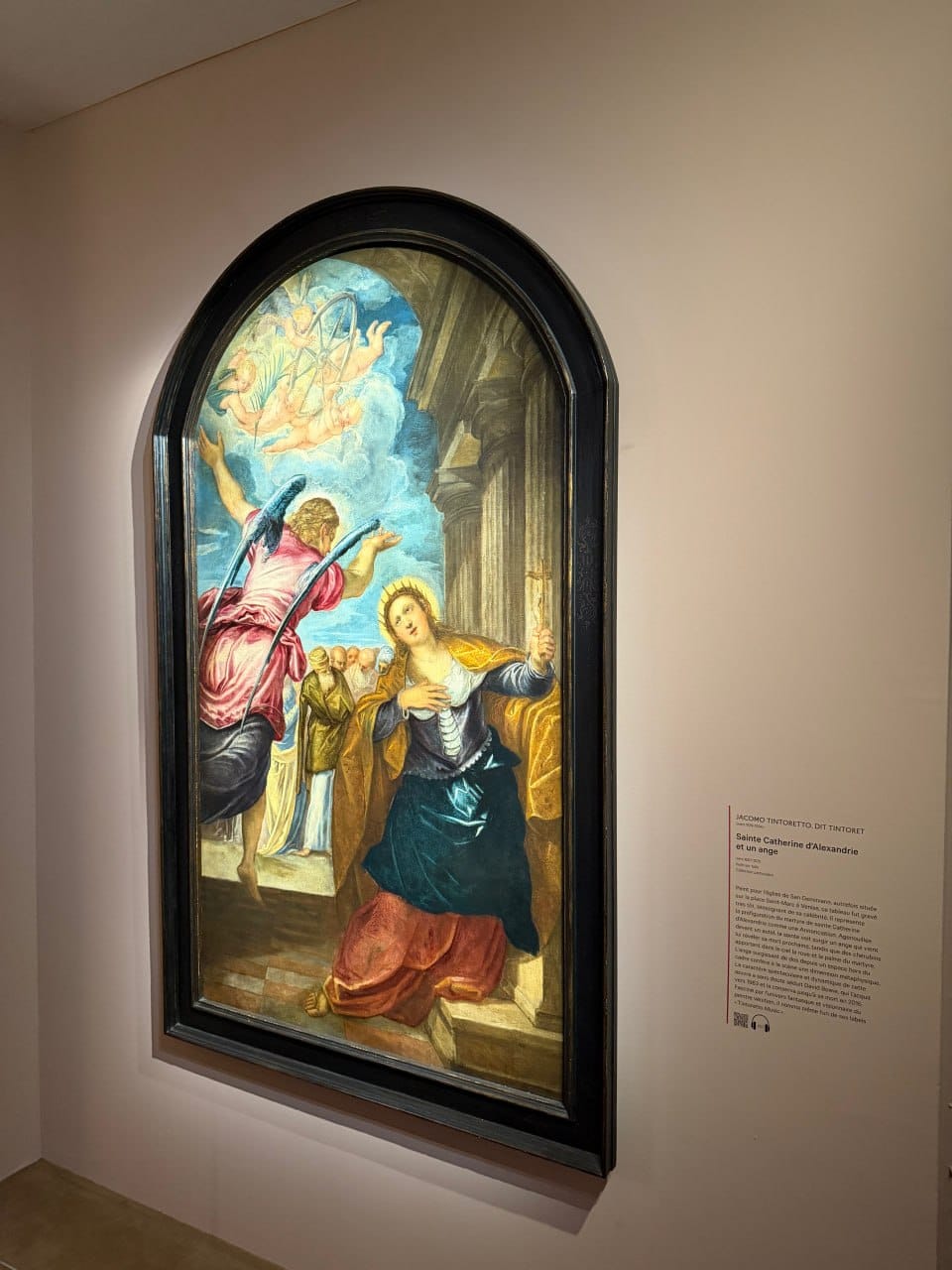
The earliest major work in the exhibition is called "The Miracle of Saint Augustine". It was brought from the Civic Museums of Vicenza, and stands 2.5 metres high. Augustine appears in the clouds and heals the crippled. From the Galleria Sabauda in Turin came the "Trinity", and the Gallerie dell'Accademia in Venice lent "The Creation of the Animals", which until the end of August hung there in an exhibition after restoration. In this picture God the Father sweeps swiftly over the water, while behind him fish emerge from the waves and birds rise into the sky. The altarpiece "Saint Catherine of Alexandria and an Angel" formerly belonged to David Bowie.
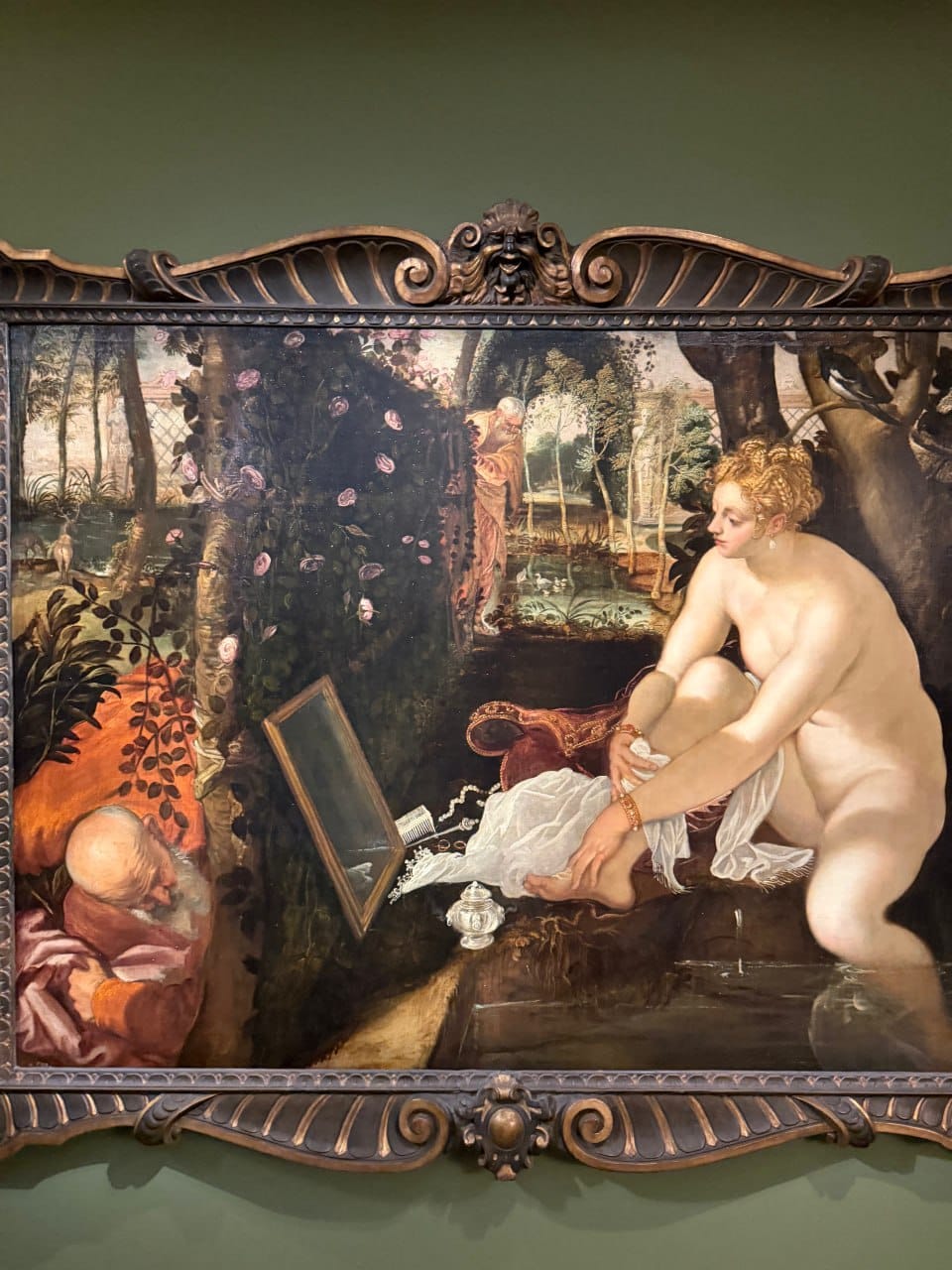
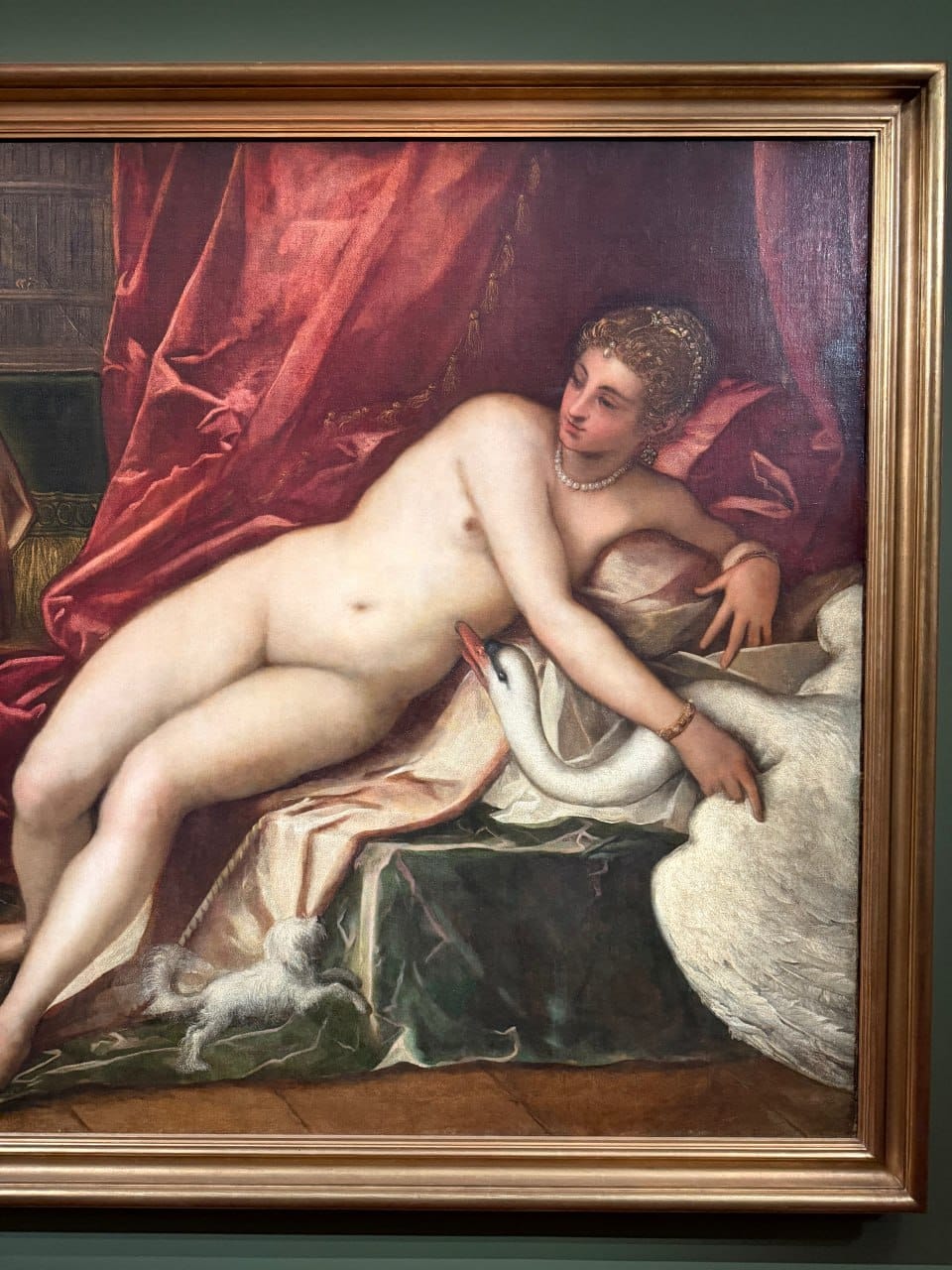
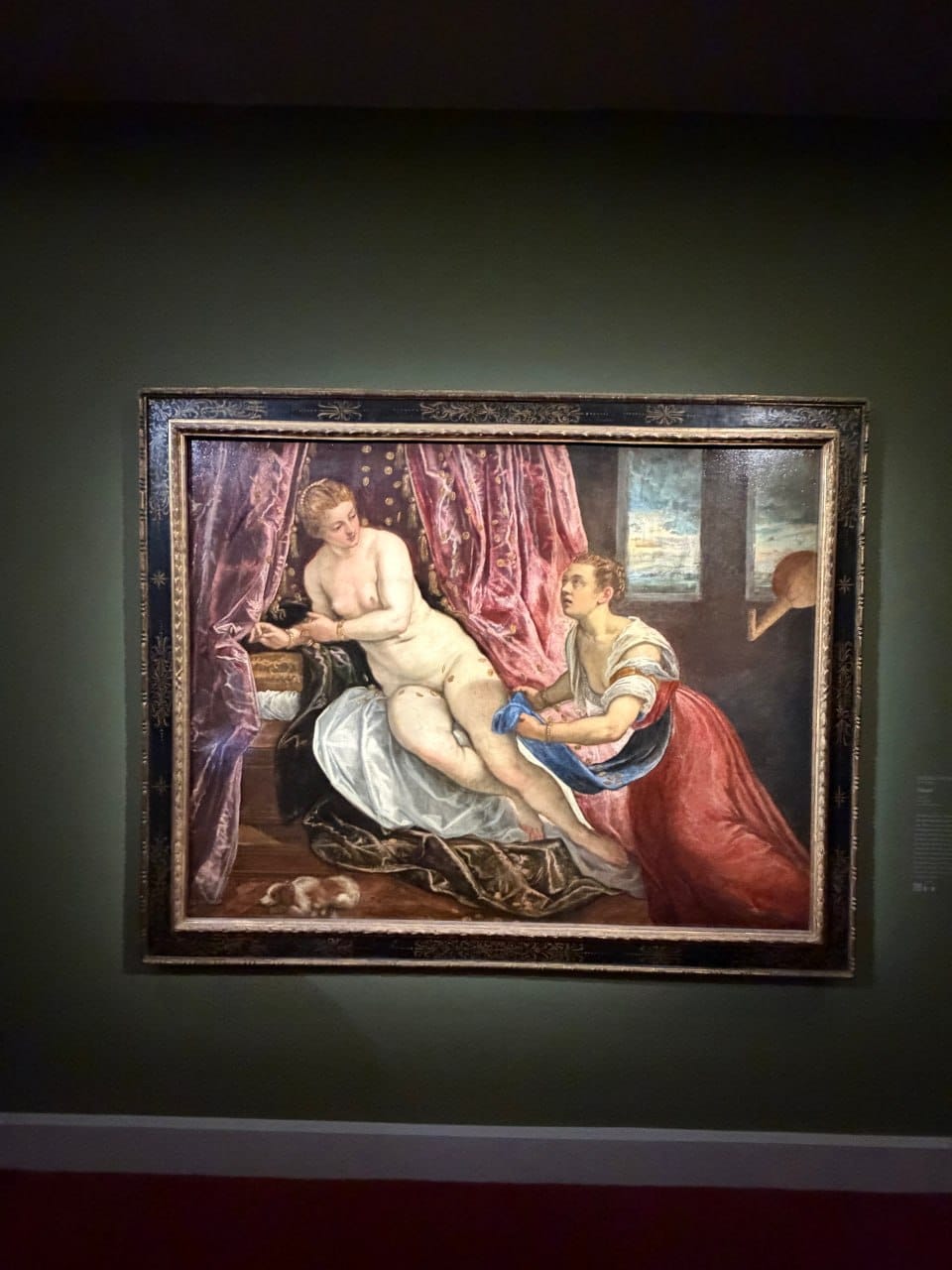
A separate room is given over to mythological and Old Testament subjects. "Susanna and the Elders" from the Kunsthistorisches Museum in Vienna is, as it were, divided into two spaces: in the first, by the water, sits the naked, pale-skinned Susanna, in the second lurk the peeping lechers. "Leda and the Swan" from the Uffizi shows Leda together with a maidservant. "Danaë" from Lyon finds herself literally under a rain of gold coins, into which Zeus has turned. Danaë and her maid gather the coins into a chest, while at her feet sits a small dog.
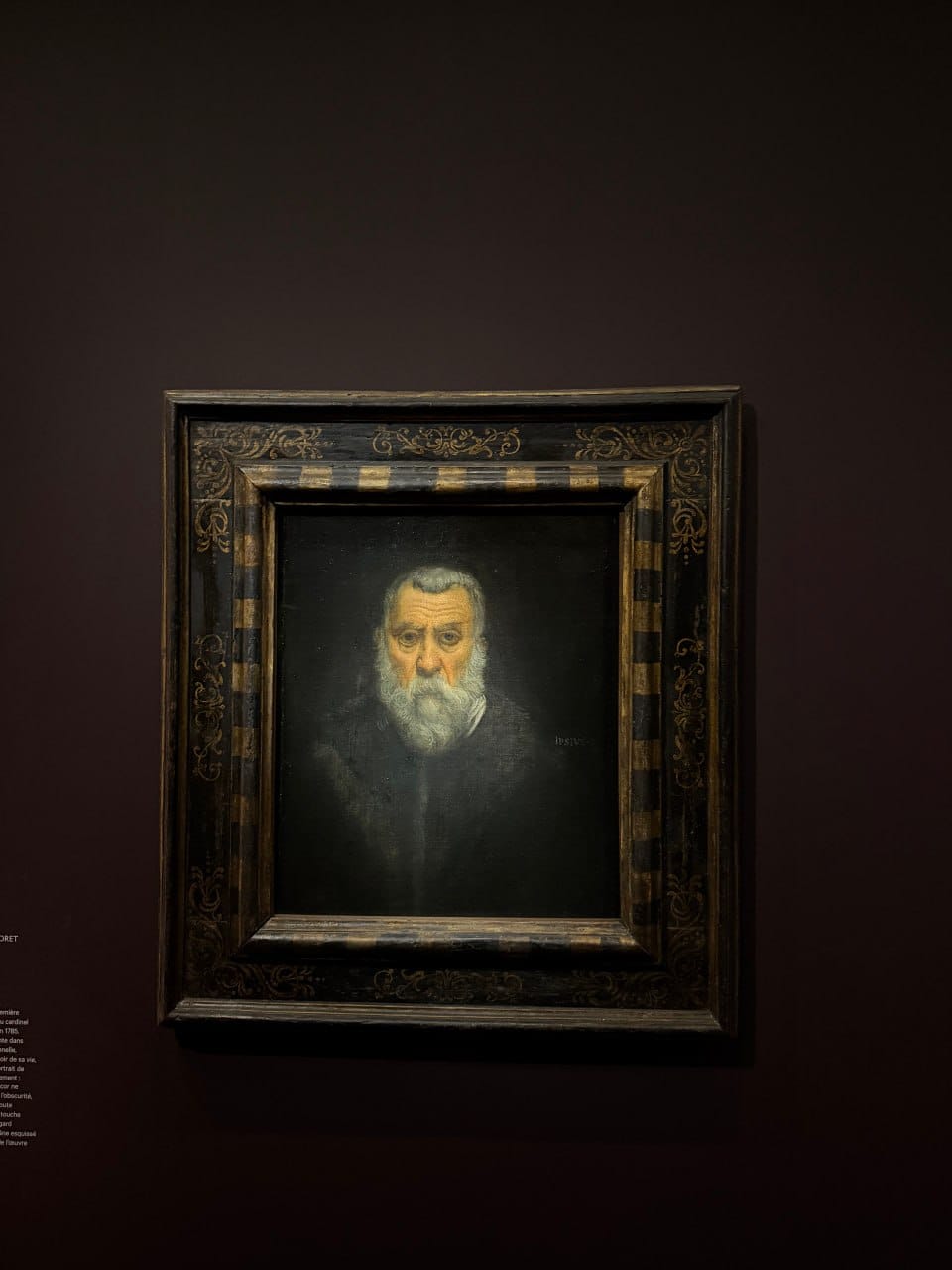
The section of portraits includes the "Portrait of a Lady in Mourning" from Dresden and two male portraits from Besançon and Orléans. The Louvre's "Self-Portrait", full-face against an almost black background, Tintoretto painted when he was nearly seventy.
The drawings show how carefully Tintoretto prepared his compositions, although his contemporaries reproached him with working without preparation. The Louvre holds his study from a plaster cast of the statue "Day", which Michelangelo made for the Medici tomb. The artist executed it in black chalk and gouache. These sheets are connected with the Renaissance dispute over which art is the higher: painting or sculpture.
Tintoretto's manner combines the draughtsmanship of the Florentine masters, above all Michelangelo, with the Venetian colouring of Titian, who was his rival. Tintoretto built his scenes like theatrical ones, chose unusual viewpoints and bold perspectives, and painted sharp contrasts of light. The Italians called his rapid manner prestezza: the artist laid on his brushstrokes swiftly and almost never reworked them. On the canvases one sees transparent draperies and stormy skies, while the palette remains light.
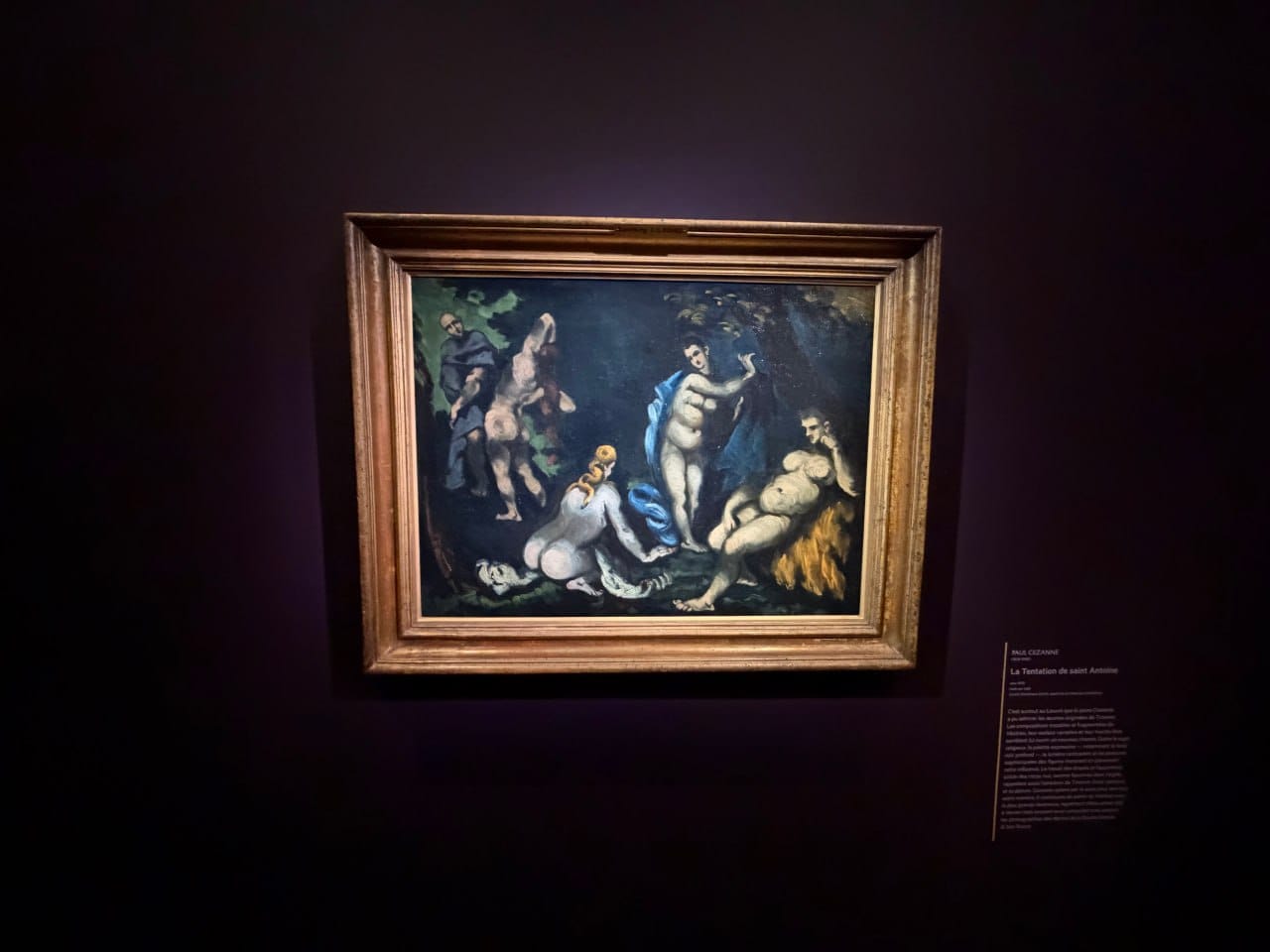
The last room is devoted to Tintoretto's influence on French painting of the nineteenth century. The copy of the "Self-Portrait" that Édouard Manet painted in 1854 was brought from Dijon and hung beside the original by Tintoretto's hand. Next to it hangs Ingres's picture "Aretino in Tintoretto's Studio". The exhibition closes with Paul Cézanne's "The Temptation of Saint Anthony" from the Bührle collection in Zurich