
Traces of Maya life found at Aké in Yucatán centuries after the city's political collapse
In the state of Yucatán a Maya city has been discovered that its inhabitants did not abandon for several hundred years after its political collapse
Around AD 900, up to 19,000 people may have lived in Aké. In the following centuries drought, war and violence brought political upheaval to the whole region, and about a thousand years ago the city's political system fell apart. It was previously believed that its inhabitants left Aké after this, and earlier studies described the city as a place of pilgrimage.
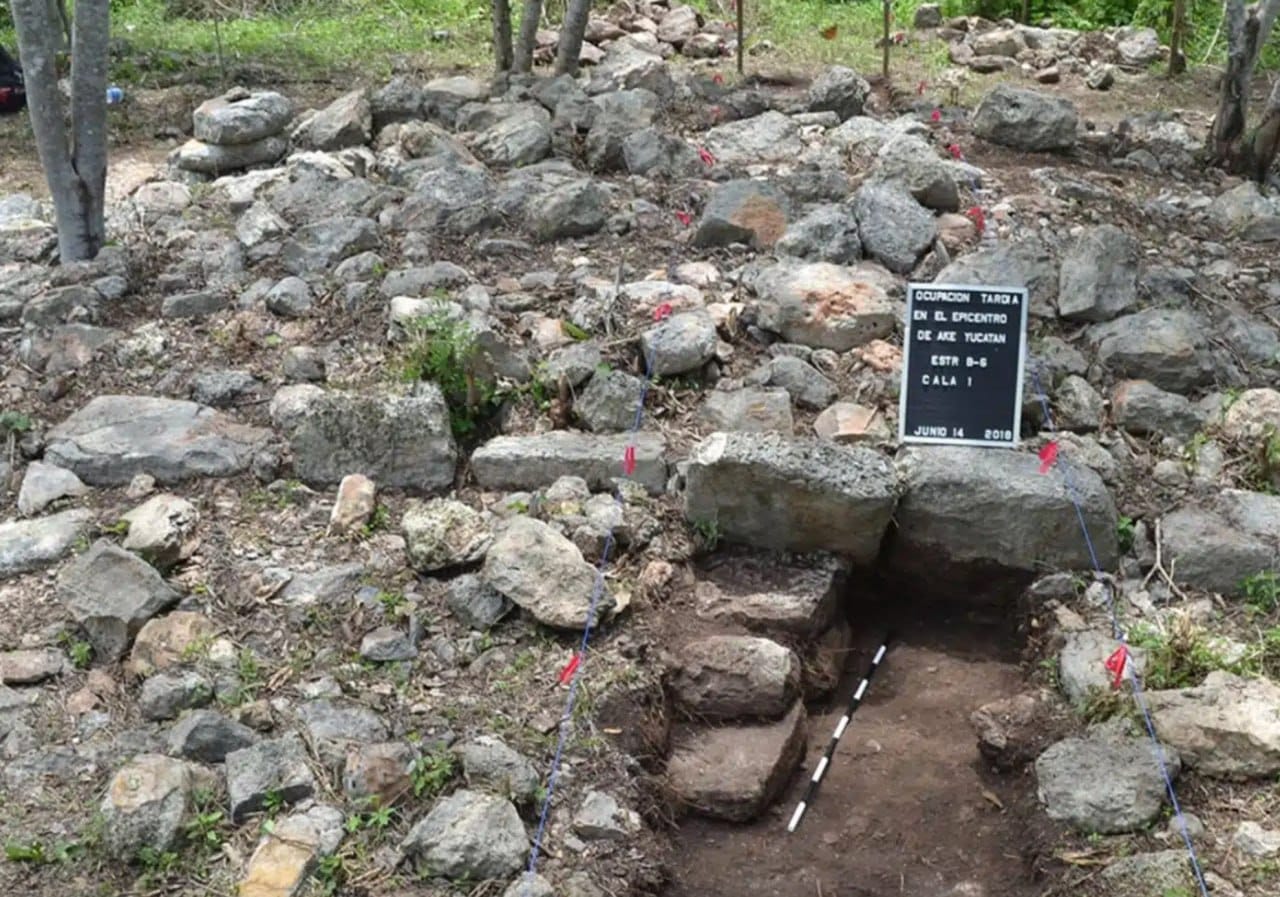
Inside the walled centre of the city, archaeologists found 96 low mounds on which stood houses of wooden posts with thatched roofs. The inhabitants built these houses on old plazas, roads and collapsed buildings. In at least three quarters of the mounds, stones from ruined monumental structures were built into the foundations. Archaeologists excavated 17 mounds or the ground next to them and found ceramics dating from 1100-1550. The deposits in one rubbish pit belong to the period between 1116 and 1218. The layers show no obvious break in the life of the settlement.
No fewer than 76 mounds form 12 groups around shared open courtyards, where several generations of relatives lived together. Next to the houses the researchers found grinding stones, as well as stone tools, fragments of pottery, animal bones and spindle whorls. These finds show that the inhabitants cooked, wove and kept house, rather than merely coming to worship at some shrines, as would be implied by the version of the ruined city as a pilgrim settlement.
The people of Aké also continued their religious life. Archaeologists found five small structures resembling shrines. In one of them lay fragments of ceramic incense burners and part of a carved monument made around 600. Among the finds there are also vessels, animal figurines and a burial in the ruins of old buildings.
According to the study, the settlement vanished not because of political collapse but because of Spanish colonial rule. A document of 1567 possibly mentions Aké as an Indian community, but the city no longer appears in later colonial documents. The researchers therefore suppose that the Spaniards forcibly resettled its inhabitants between 1567 and 1580. Today about 350 people live in Aké