The Ascent
The Ascent. Perhaps this is the chief thought that comes to mind on viewing the grand retrospective of Karl Bryullov at the Russian Museum. An ascent at once of you, the viewer, and of Russian art itself, up to the level of Bryullov, who became our first great painter to win recognition throughout the world. And of course it is the ascent of Karl Bryullov himself, from Pompeii to his Golgotha and his church frescoes, notably the ceiling of Saint Isaac's Cathedral, which proved his last great work and all but a fatal one: having broken his health by labouring alone on this colossal project, the artist never recovered.
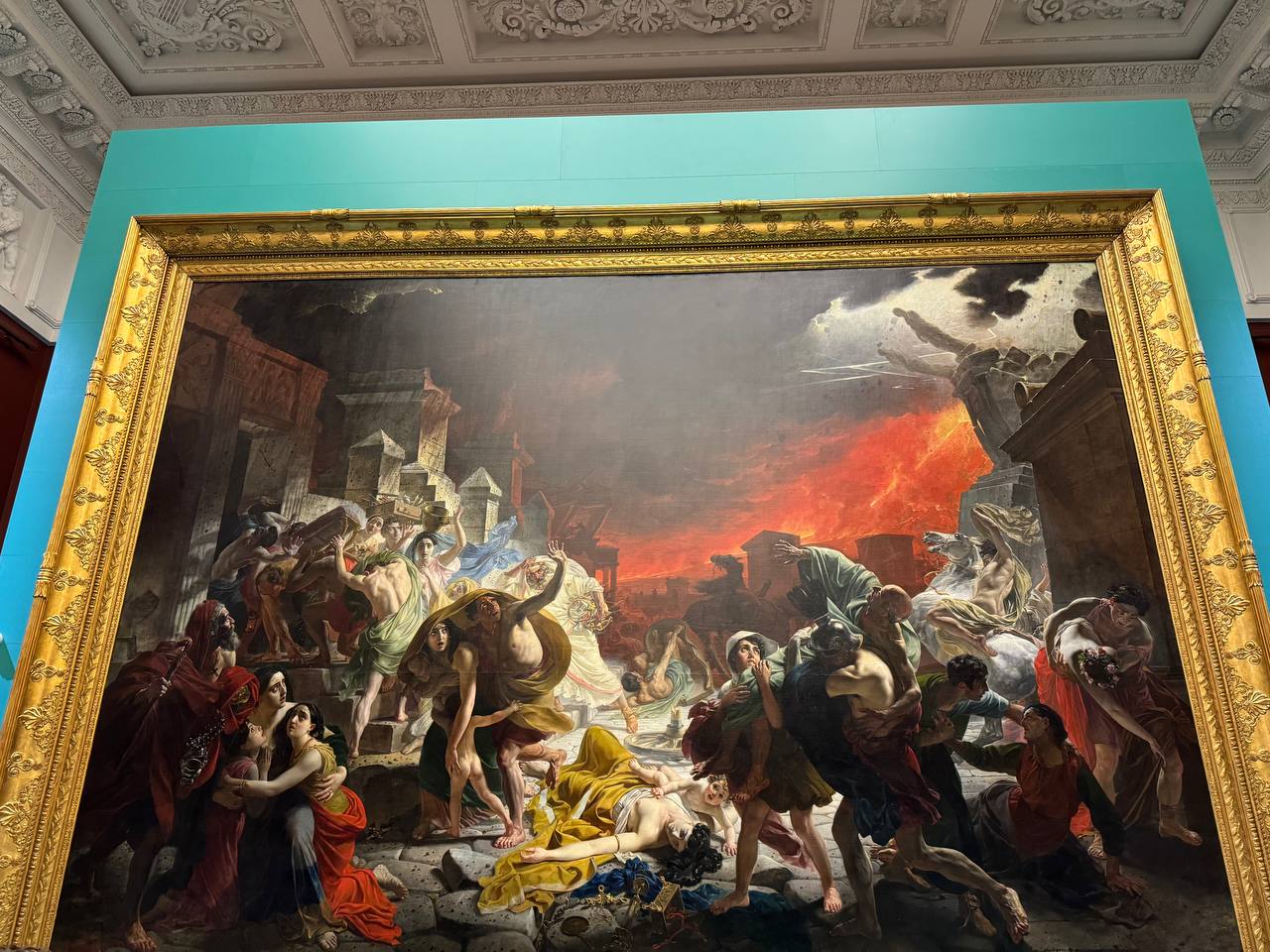
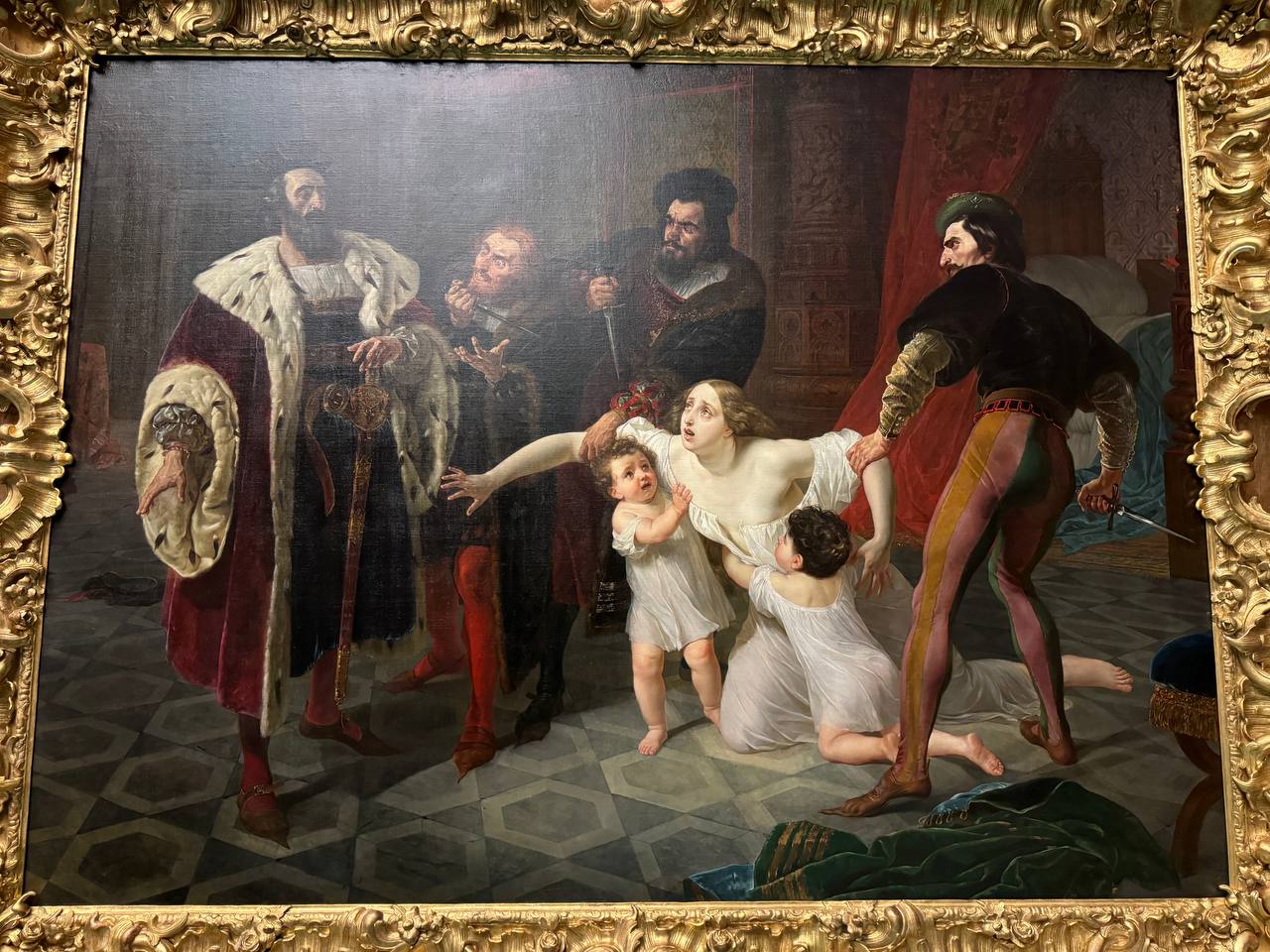
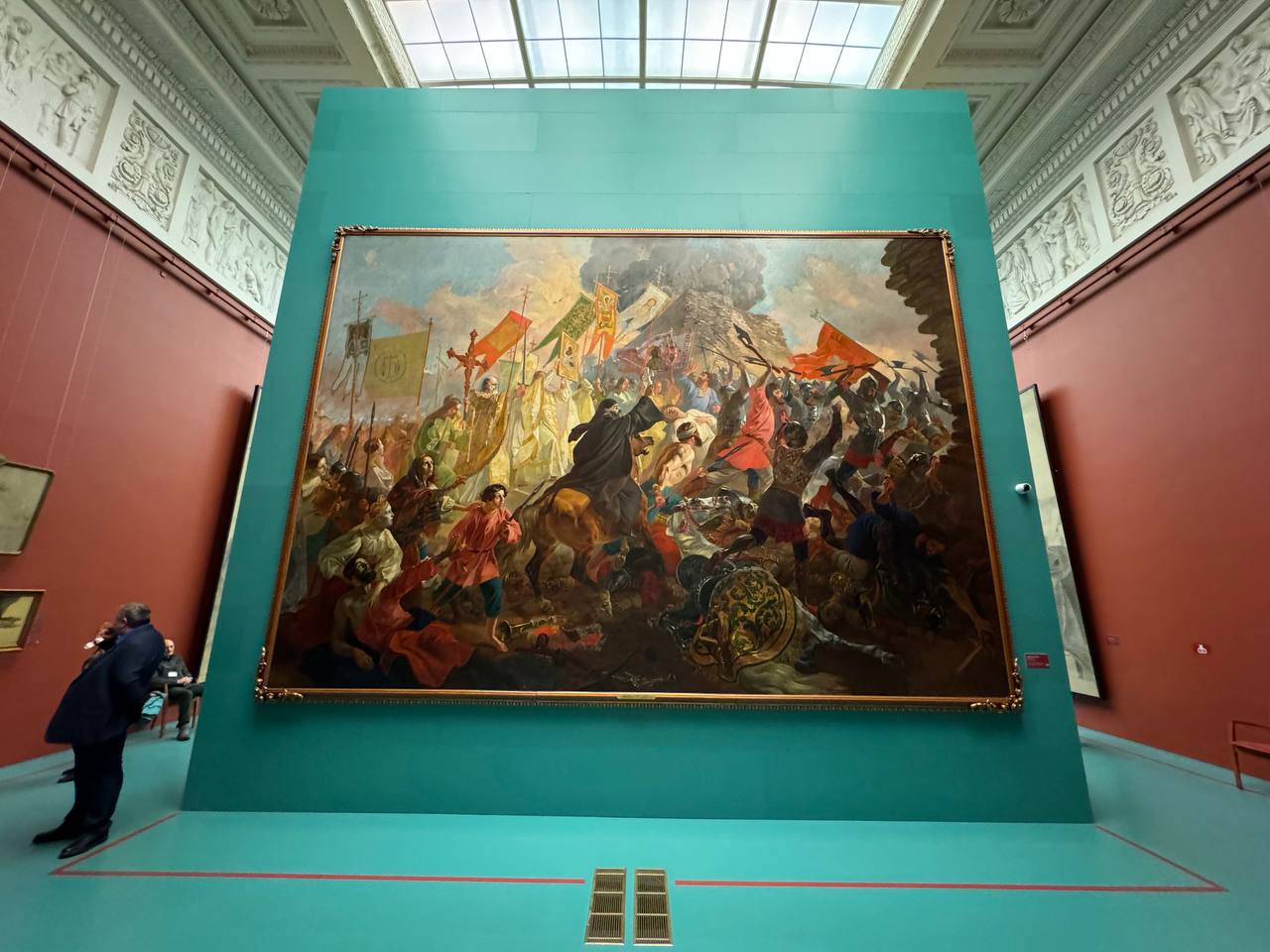
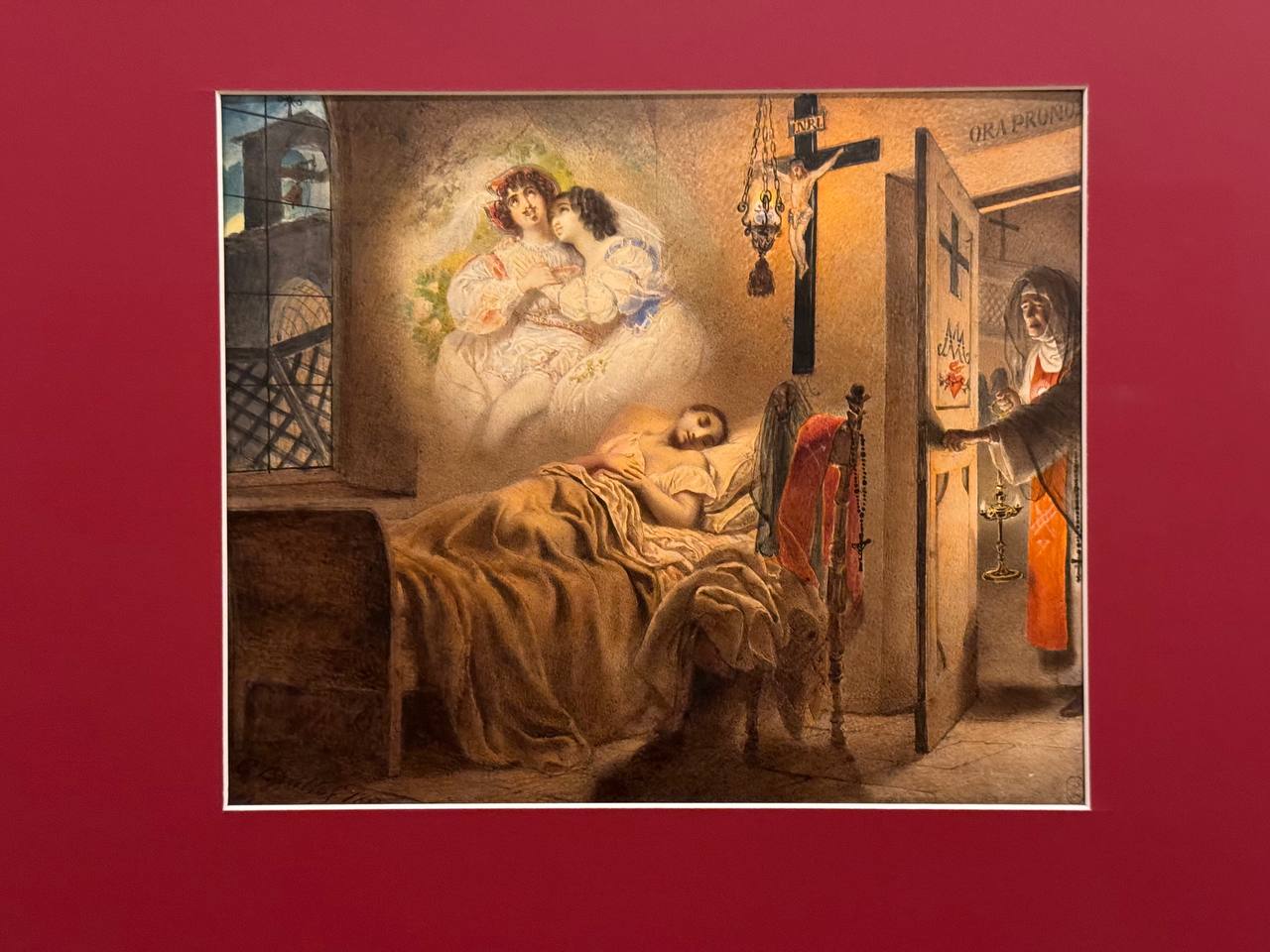
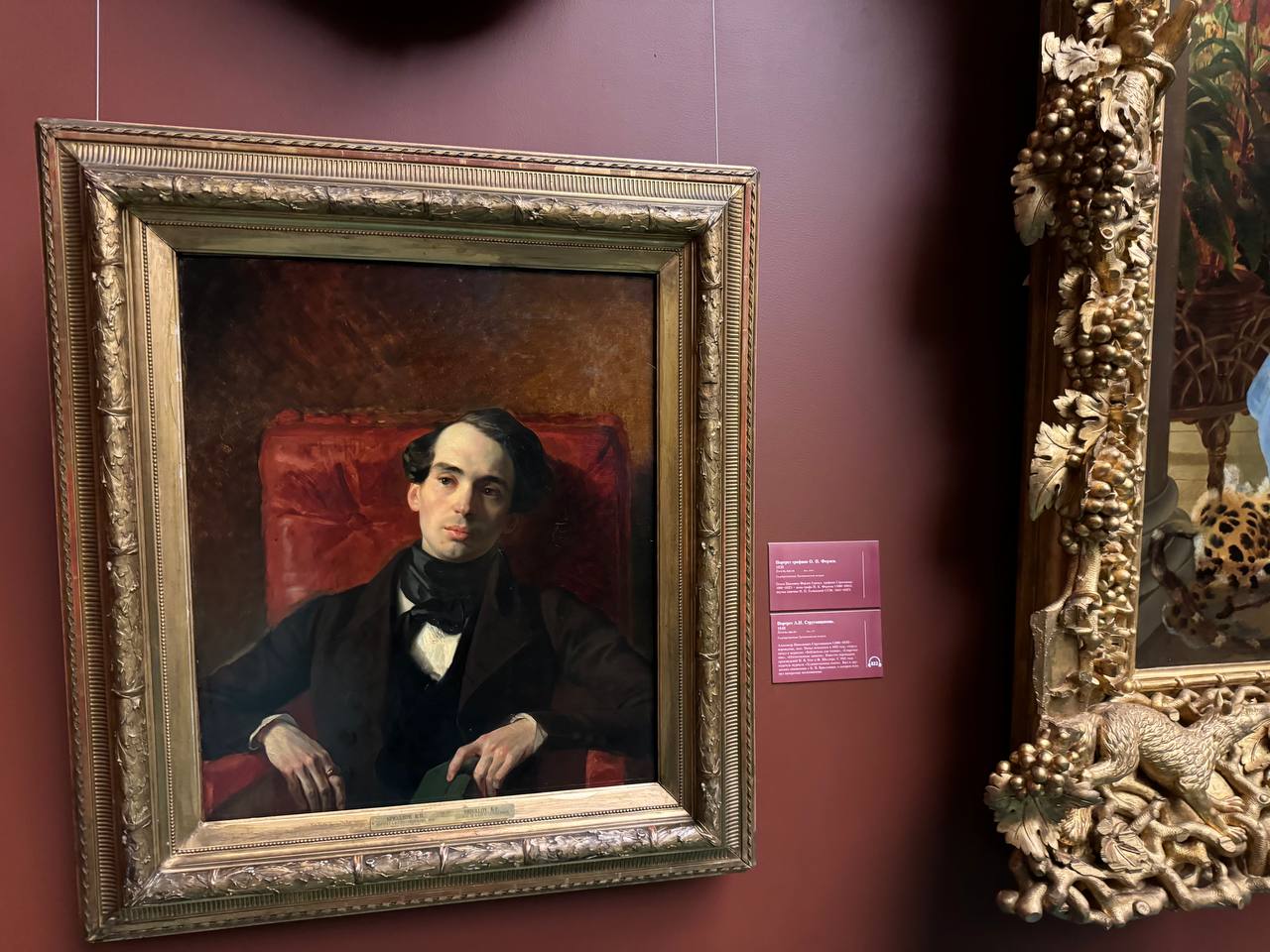
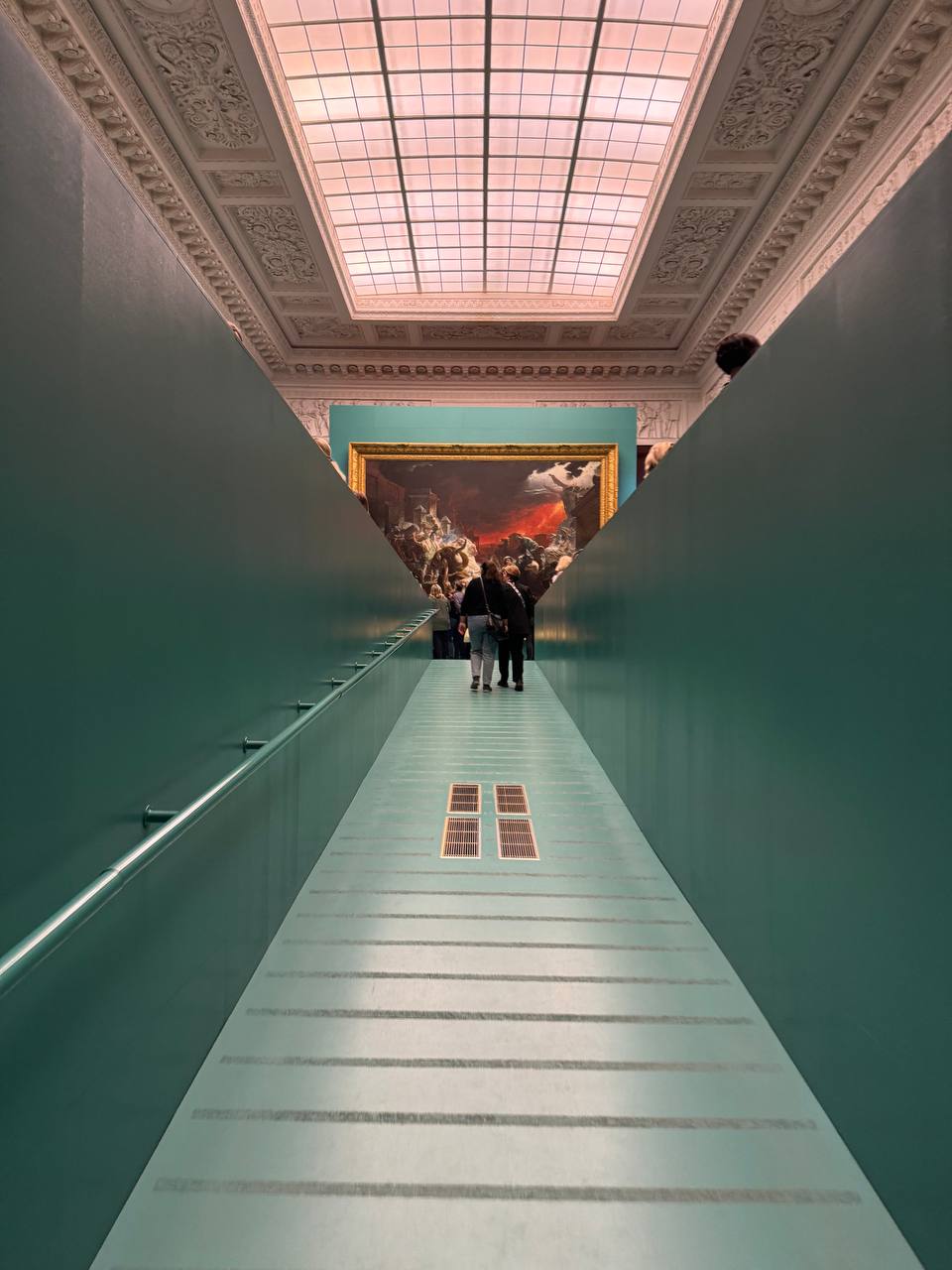
One need only climb up to contemplate the great "Last Day of Pompeii", literally shining (one can see that the canvas has only just come out of restoration), and there at once unfolds the full chronology of Bryullov's creative path. A hundred and sixty paintings and two and a half hundred watercolours have found room in several halls. Here, of course, are the textbook pieces known from the school desk: "The Horsewoman", "Portrait of A.K. Tolstoy", "Italian Morning". Here are the dramatic "Siege of Pskov" and "The Death of Inés de Castro". Here are numerous portraits of princes, beauties, [sic: "аптеров", apparently a misprint in the original] and actresses, artists and poets, historical subjects, family idylls.
The sensation of walking upward is constantly present. No wonder: the floors in the halls have been raised by several metres so that the pictures can be viewed almost face to face, though even so I would not say that one manages to pass through the display without tilting one's head back.
As for the bright green, sea-green colour chosen, a question naturally cannot fail to arise. Let us try to understand why precisely this decision was taken. Probably because of the prevailing palette of the paintings, a brownish burgundy, combined with the wine-coloured walls of the halls of the Mikhailovsky Palace adjoining the academic ones. Yes, the exhibition (which happens very rarely) has been incorporated into the main display and placed in the museum's principal building, which imposed certain limitations on the design of the space. Hence the green, a colour contrasting with red, to set off the hundreds of dark canvases hung closely together on the terracotta walls.
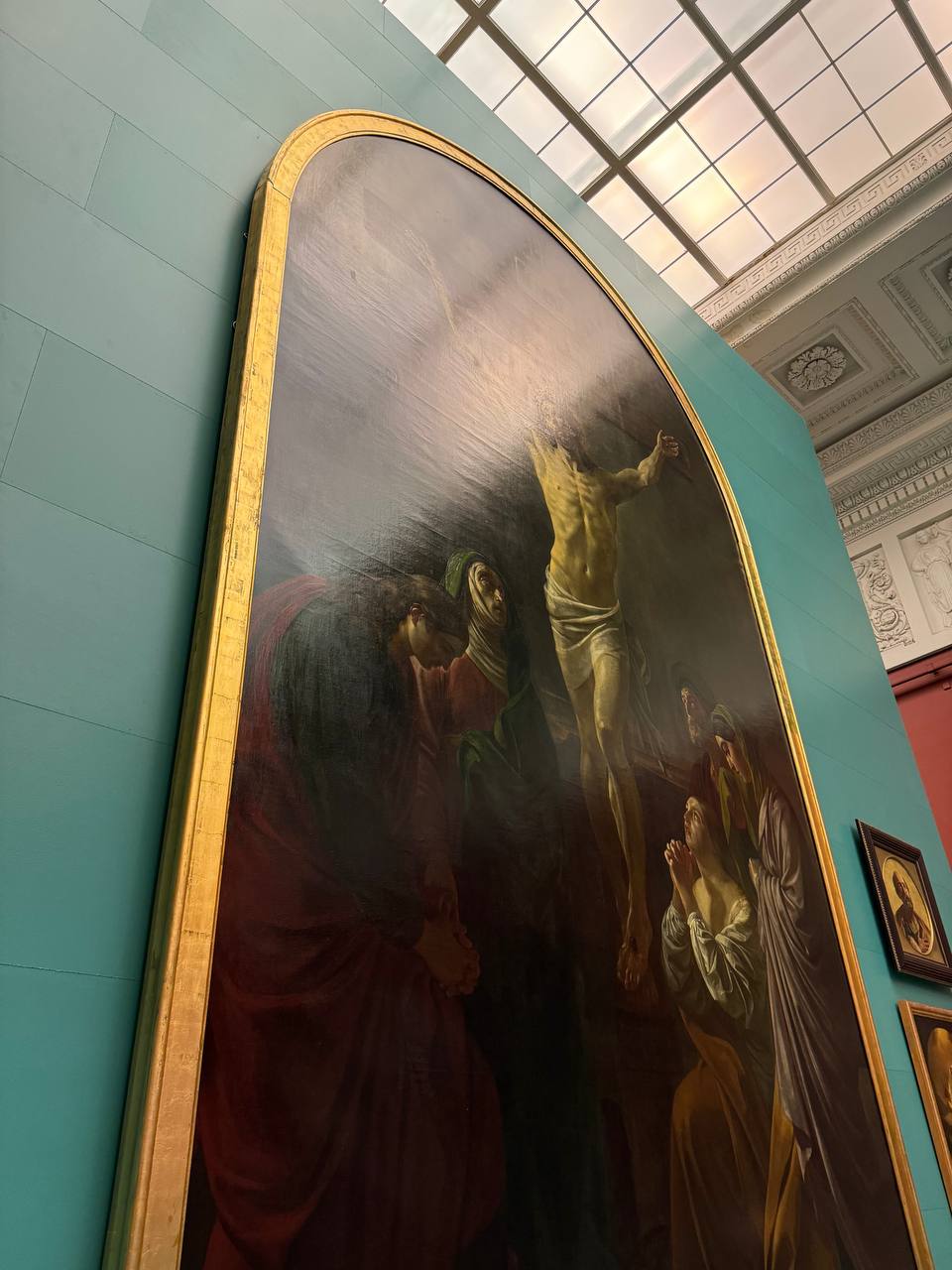
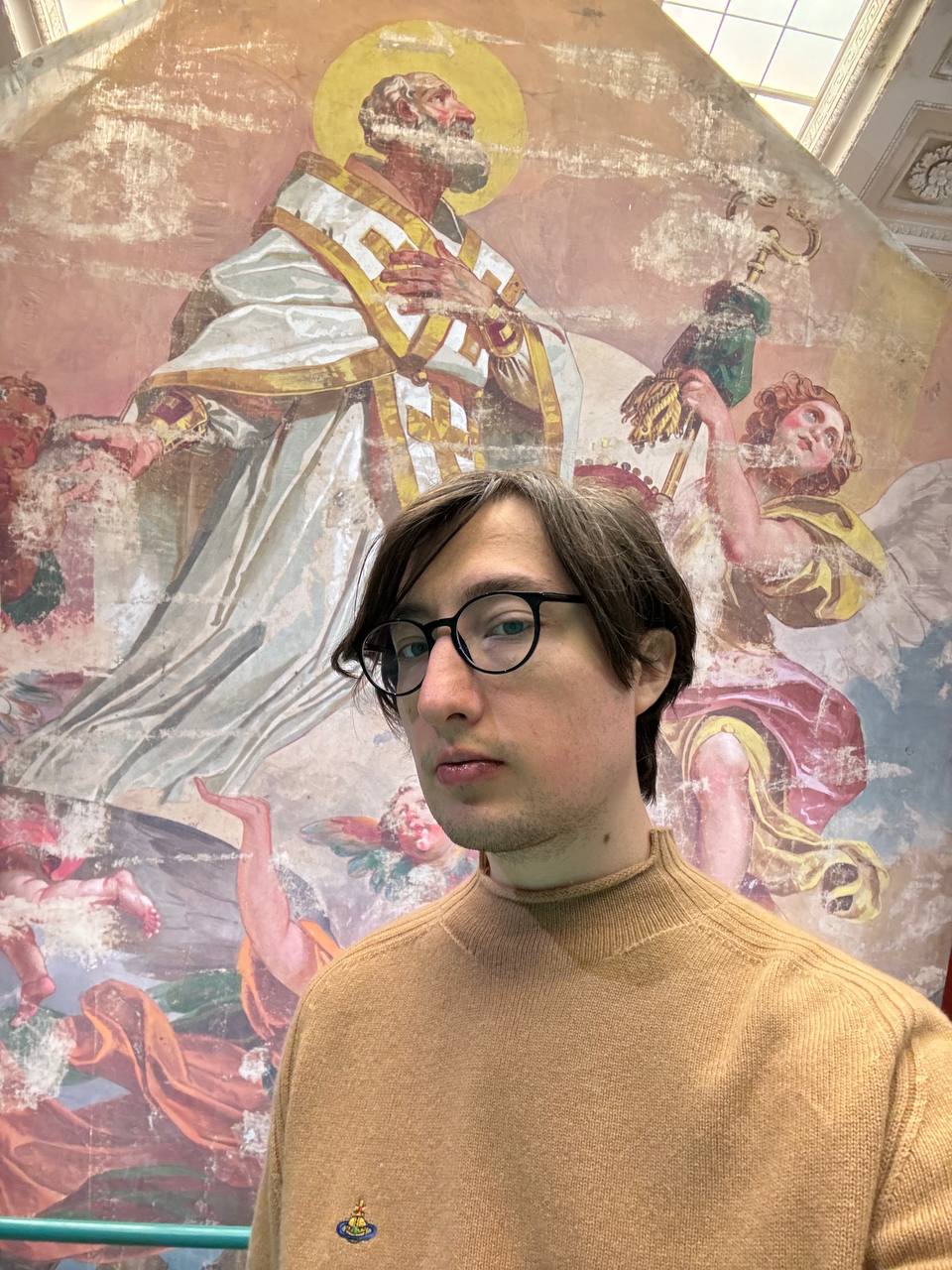
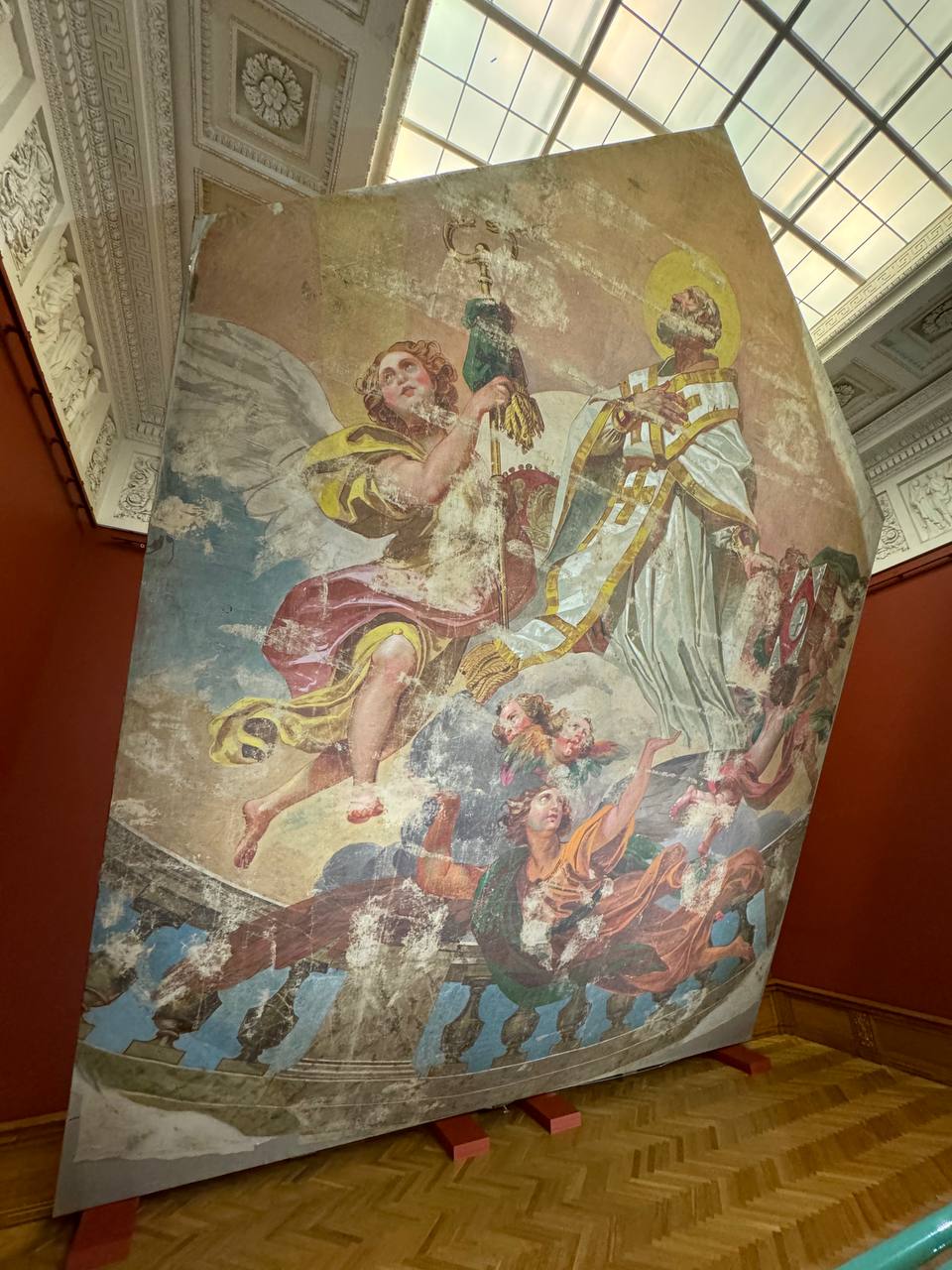
The height of the ceilings has made it possible to place even the largest works to good effect, except for Saint Nicholas of Myra with angels, a group for the original composition of the ceiling of the central dome of Saint Isaac's, set at an angle to the viewer; though even so it is perfectly comfortable to look at the painting this way