Hieromonk Sofontiy of the Kerzhenets, an Old Believer father: his grave, his following and his portrayal by Melnikov-Pechersky
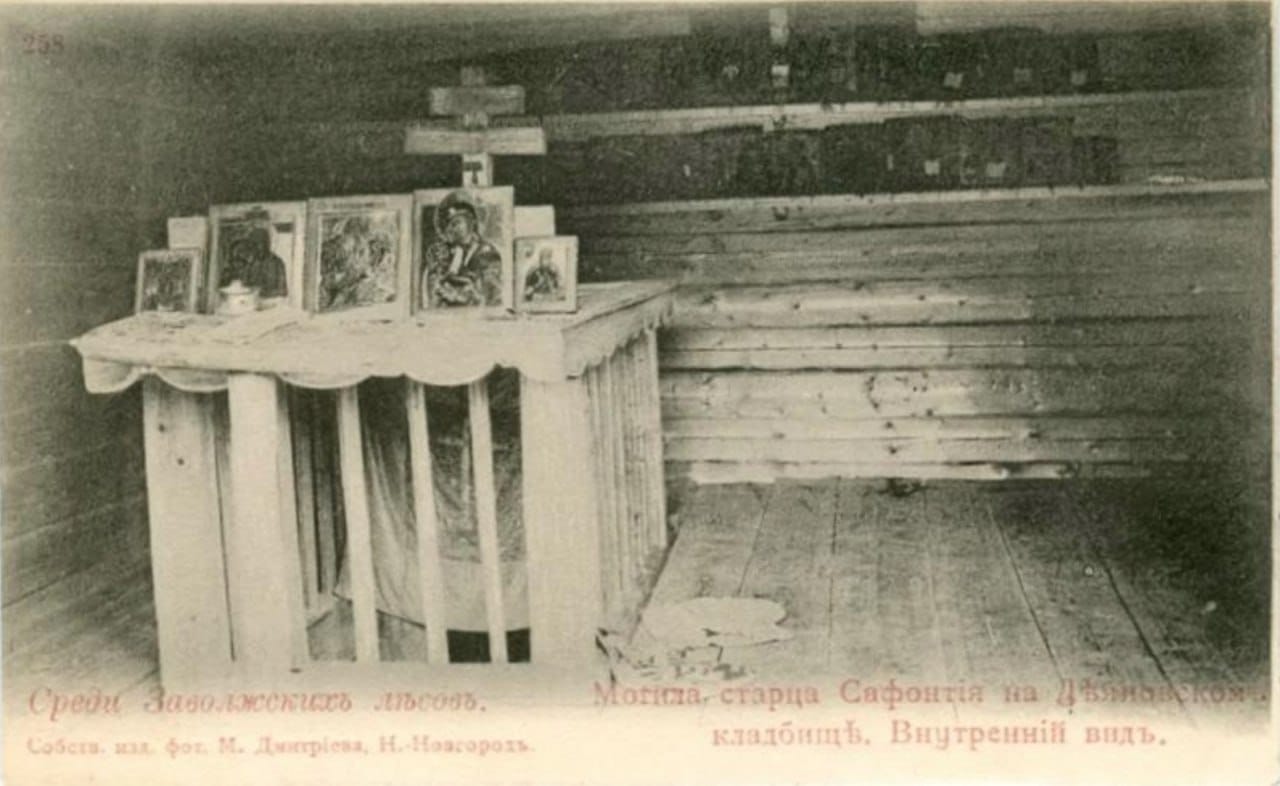
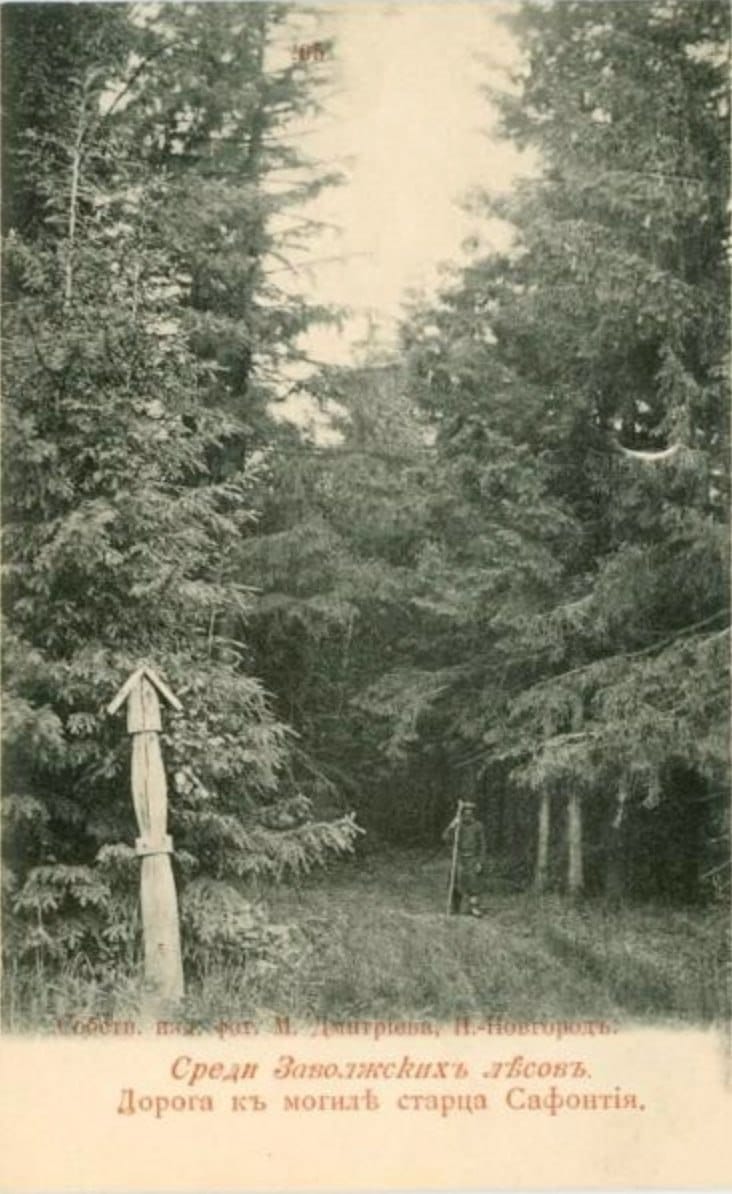
In the Trans-Volga forests on the river Kerzhenets, not far from Semyonov in the Nizhny Novgorod region, stands a cross over the grave of Hieromonk Sophonty, one of the most revered fathers of the Old Believers.
Tradition names Sophonty as one of seven Solovetsky monks who fled the monastery after the suppression of the Solovetsky Uprising of 1676, that is, the monks' years-long resistance to the church reform of Patriarch Nikon. According to one version, he came to the Trans-Volga region around 1677; according to another, he hid in the forests of Galich until about 1690, when the elders of the Kerzhenets summoned him to join them. Near the hamlet of Deyanov, Sophonty founded a hermitage in the name of the Holy Spirit and served in his cell.
Sophonty was baptised before the reform, but was ordained by a new, Nikonian bishop, which is why Melnikov-Pechersky called him the first priest "of the new ordination" in these forests, the origin of the "fugitive" priesthood.
Sophonty headed the largest Beglopopovtsy concord (the "fugitive priests" tendency) of the Kerzhenets, the Urals and Siberia, which was named after him the Sophontian concord. According to the census of 1719 and 1720, 1,275 Sophontians were counted in the Trans-Volga region.
Sophonty was buried in the Deyanov cemetery, on the site of his hermitage. In 1995 the authorities of the Nizhny Novgorod region entered the graves of Sophonty and other Kerzhenets ascetics in the list of historical monuments, and pilgrims still come to them today and set up memorial crosses.
The best-known literary image of Sophonty was created by Melnikov-Pechersky in the novel "In the Forests". In the mid-nineteenth century Melnikov-Pechersky wrote that the Beglopopovtsy regard him as their foremost saint, pray to him and go to venerate his relics. Mother Superior Manefa calls him the saint of the Kerzhenets, speaks of incorrupt relics and healings, and urges her guest to pray at his grave. She also mentions the tradition that Sophonty burned people, that is, that he was implicated in the burning of the monk Varlaam and his brethren, but Manefa considers this accusation a slander that was never proved.