Convention decree of 1793 required French bakers to bake only the bread of equality
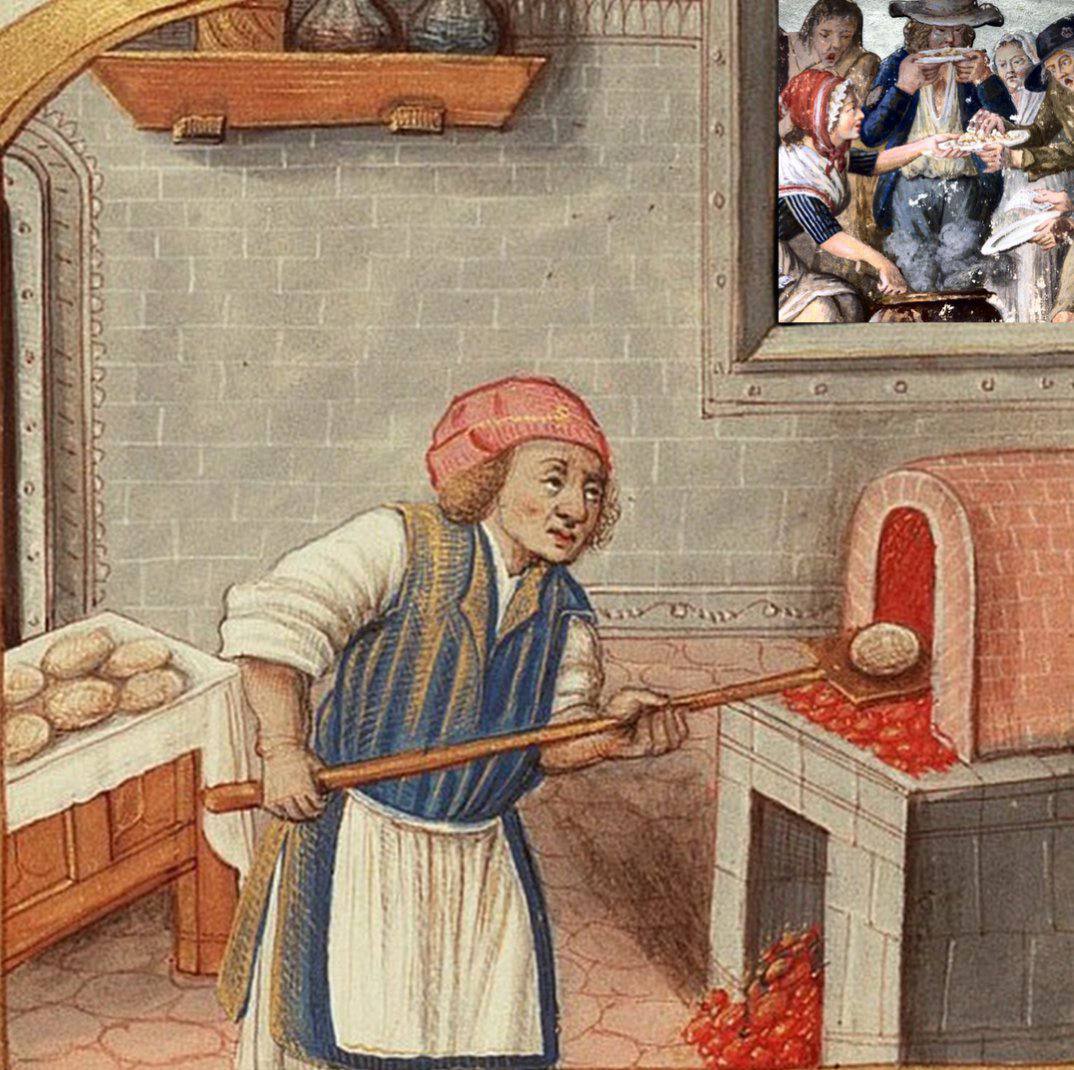
In November 1793 the Convention issued an unalterable decree in France that all Frenchmen must eat "one and the same bread". Under pain of imprisonment, all bakers were obliged to bake only one kind of loaf, known as the bread of equality.
The bread of equality was baked not from white flour but from a mixture of coarsely ground wheat, rye, oat, millet or barley flour, unsifted and with the bran left in. The bread was to be sold by weight. Pastries and white bread made from sifted flour were forbidden, in order to abolish inequality in the most basic of products.
In 1794 the decree was repealed. But in its day it helped to avert the worst consequences of the food crisis, although it also provoked a justified revulsion against the lower-quality, heavy and hard-to-digest mixed loaf, and a growing fondness for the white roll. At the first opportunity people returned to white bread, consuming products of white wheat flour with even greater appetite, not to mention the black market in both white bread and white flour that flourished throughout the life of the decree.
Later, bread regulations were introduced in France in 1856, under Napoleon III, when a standard was set for the size and weight of a loaf, roughly 40 cm and 300 g. After the Second World War a new standard came into use for the baguette: a length of 80 cm and a weight of 250 g.