In the memoirs of Maurice Georges Paléologue, French Ambassador to Russia, there is a curious recollection of meeting the well-known linguist Robert Edmund Gauthiot, who explored the Russian territories of the Pamirs together with the young Russian schola
The story runs as follows. In 1914 Zarubin, as a linguist and ethnographer, was asked to accompany the French explorer to the Pamirs, the journey being paid for by the Russian Committee for the Study of Central and Eastern Asia. For the occasion Zarubin learned the Tajik language and was fully equipped for the task. Gauthiot was already the author of a dozen articles on the Iranian and Indo-European languages and of the "Sogdian Grammar".
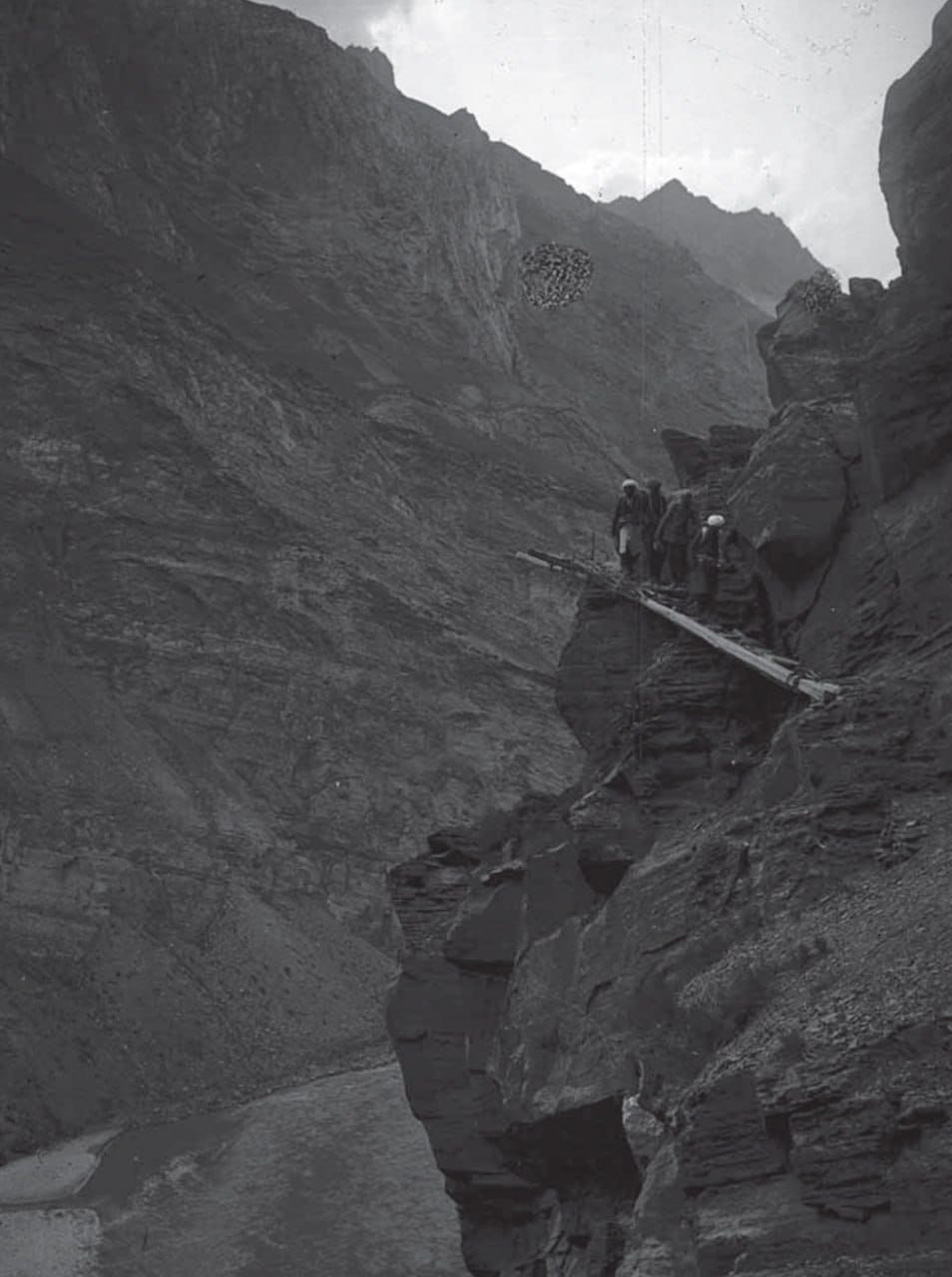
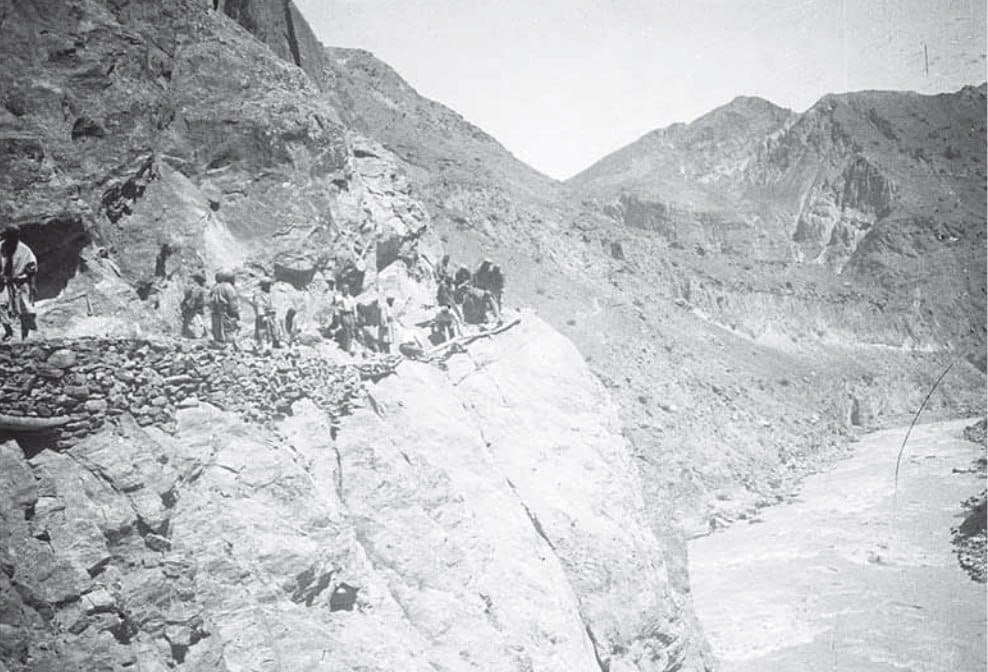
The journey began in the first days of June 1914, and by the end of July the expedition had reached Khorog, where the headquarters of the Pamir Administrative District was situated: territories of the former Khanate of Kokand, recently cleared of Chinese and Afghans and annexed to the empire. On 2 August the scholars learned of the outbreak of war, which cut short their further researches; they decided to turn back, since Gauthiot was a reserve officer. In Europe mobilisation had been declared a full 15 days earlier. Along sheer cliffs, over the hanging footbridges (ovrings) laid across them, through rivers, mountain ranges and valleys, they made their way to the town of Skobelev (Fergana), and from there by rail to Samarkand, Tashkent and Saint Petersburg. It took Gauthiot a month and a half, after learning of the outbreak of war, to present himself to the French ambassador. Maurice Paléologue preserved what is probably the last detailed recollection of this brilliant scholar made in his lifetime:
"This morning I receive at my residence a Frenchman, a professor at the École des Hautes Études in Paris, who has come from the Pamirs, where he was conducting research in ethnology and linguistics. In the first half of August he was exploring, in the environs of Khorog, a valley situated at an altitude of 4,000 metres on the slopes of the Hindu Kush; he had advanced twelve days' journey beyond the farthest Russian outpost, which keeps watch over the Fergana frontier ... when a native, sent for provisions, informed him that Germany had declared war on Russia and France. He set off at once.
I set out for him the extraordinary series of events that has accumulated over the course of two months. He declares to me his burning impatience to return to France to rejoin his territorial regiment. Then we speak of the future; we reckon up the immense effort that will be required to destroy German power, and so on. He says to me: I have had a great deal to do with German socialists, I know their doctrine well and their spirit better still. Be assured, Mr Ambassador, that they will work with all their might for the cause of war and will fight like the most obstinate Junkers, to the last extremity. Besides, I am a socialist myself, even an anti-militarist; and you see that this does not prevent me from going to defend my country.
When he leaves, I reflect that I have just had before my eyes an eloquent proof of the patriotism which, despite so many opposing extremes, animates French intellectuals. Here is one who learns of the war in the depths of the Pamirs, at 4,000 metres, on the "roof of the world". He is alone, left to himself, spared the contagion of the majestic national impulse that is sweeping France along. Yet he does not hesitate for a minute. All his socialist and pacifist histories, the interests of his scholarly work, his personal advantages, at once fade before the image of the fatherland in danger. And he hastens."
Below, Paléologue adds a note: "Robert Gauthiot died in September 1916 of the consequences of a wound received in the war; he was 40 years old. He was a linguist of the first rank. The science of the Indo-European languages lost in him the most brilliant heir of Burnouf and Darmesteter."
In the war Gauthiot was an infantry officer and commanded a company; he was gravely wounded as he led his unit into an attack. He spent a year in hospital and died, having completed, after being wounded, three articles on the Iranian languages.