In 1933 a unique automated bakery was built in Leningrad, in which the bread-making cycle was automated to the greatest possible degree
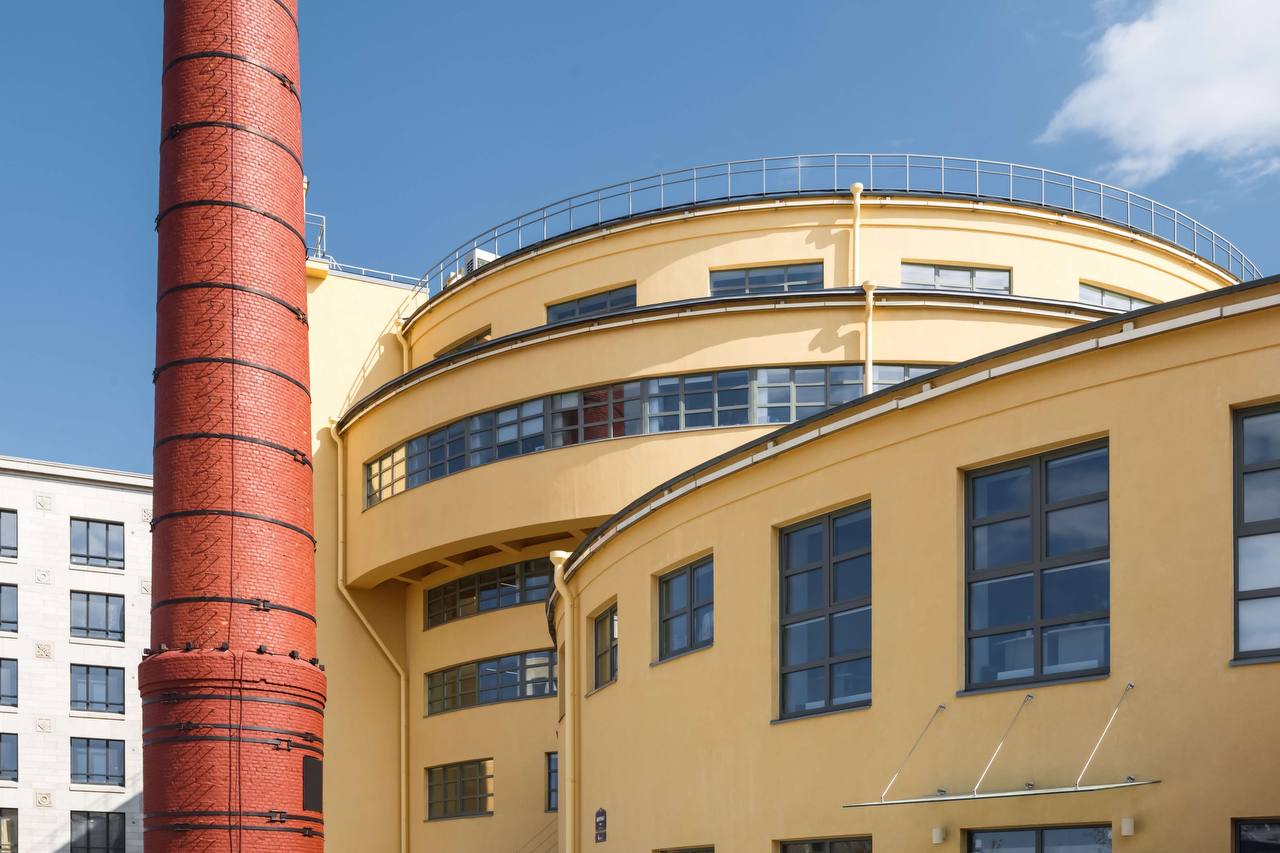
In 1933 a unique automated bakery was built in Leningrad, in which the bread-making cycle was automated to the greatest possible degree. The conveyor line was arranged in rings set on different floors of the building. Flour was delivered to the very top, where the sourdough department was situated. The sponge was lowered into the dough-mixing section, the finished dough went to the dough-dividing department, and from there it passed to the oven department. The bread store was on the ground floor.
Throughout the years of the Siege the bakery went on producing bread. Output did not stop for a single day. When the electricity was cut off, the conveyor was driven by hand-operated gears.
The bakery worked successfully after the war as well, and continued to do so until 2010. In 2012 the main building was recognised as a cultural heritage site of regional significance. From 2018 the building was reconstructed. Yesterday a publicly accessible cultural centre of more than 1,000 square metres opened in the building of the Levashovo Bakery.
What impresses most at the Levashovo Bakery is the hall with a thirteen-metre domed ceiling, where the boiler room used to be. This space now holds a large hall for exhibitions, concerts and festivals. There is also a Siege Memorial, a historical exhibition and a tea lounge.