Thursday, 8 October 2026
Section · 1930 stories

Archive

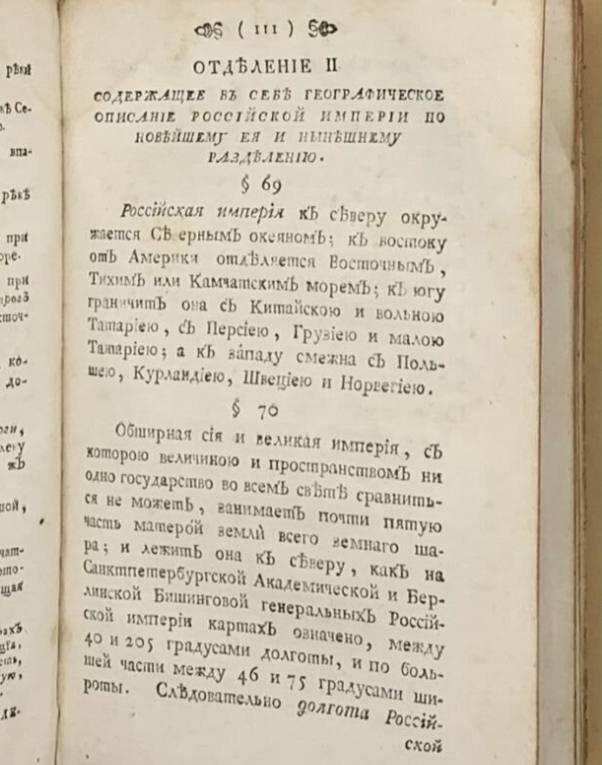
The Russian Empire is bounded on the north by the Northern Ocean; on the east it is parted from America by the Eastern, Pacific or Kamchatka Sea; on the south it borders upon Chinese and Free Tartary, upon Persia, Georgia and Little Tartary; and on the we

Archive · The East · Geography · Books

The Russian Empire is bounded on the north by the Northern Ocean; on the east it is parted from America by the Eastern, Pacific or Kamchatka Sea; on the south it borders upon Chinese and Free Tartary, upon Persia, Georgia and Little Tartary; and on the we

From the Methodical Geographical Description of the Russian Empire, with a Proper Introduction to a Thorough Knowledge of the Terrestrial Globe and of Europe in General, 1776. By Chinese Tartary, in all likelihood, are meant the lands of present-day Mongolia and China; by Free Tartary, the lands of Turkestan

By Alexandr Radayev
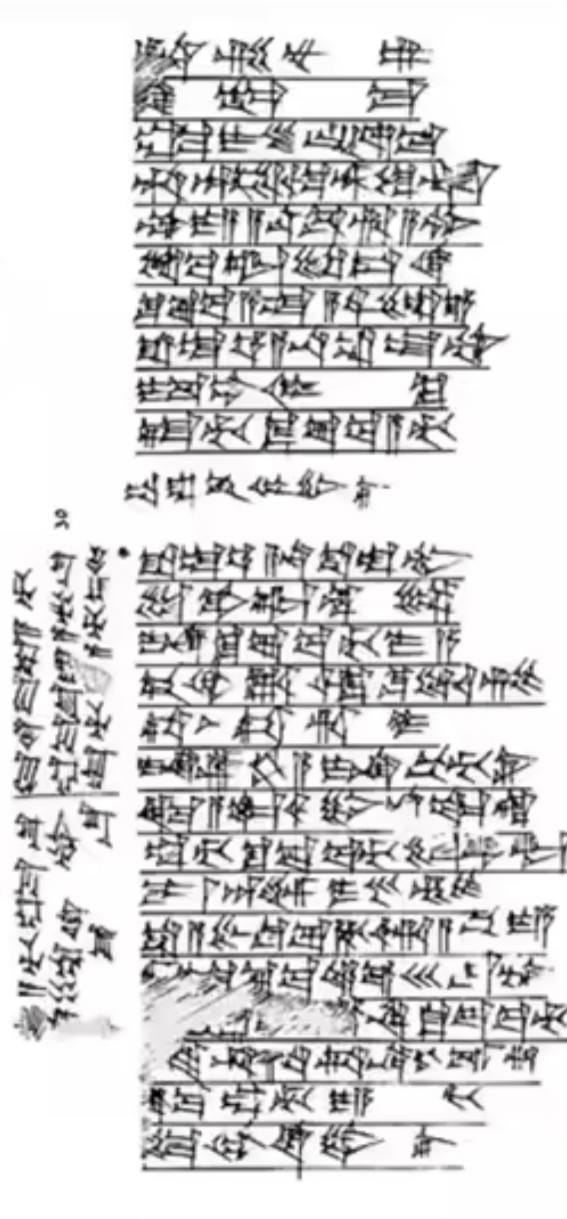
The text of a clay tablet: a letter to his mother from a son who complains that she does not buy him fine clothes, while the clothes of the other young gentlemen grow finer with every passing year

Archaeology · Archive · The East · Observations · Mores · Humour

The text of a clay tablet: a letter to his mother from a son who complains that she does not buy him fine clothes, while the clothes of the other young gentlemen grow finer with every passing year

The boy cites the son of his father's assistant, who has two new sets of clothes. "Even though you bore me, and his mother merely adopted him, his mother loves him, and you do not love me!" 3,500 years have passed, and so little has

By Alexandr Radayev
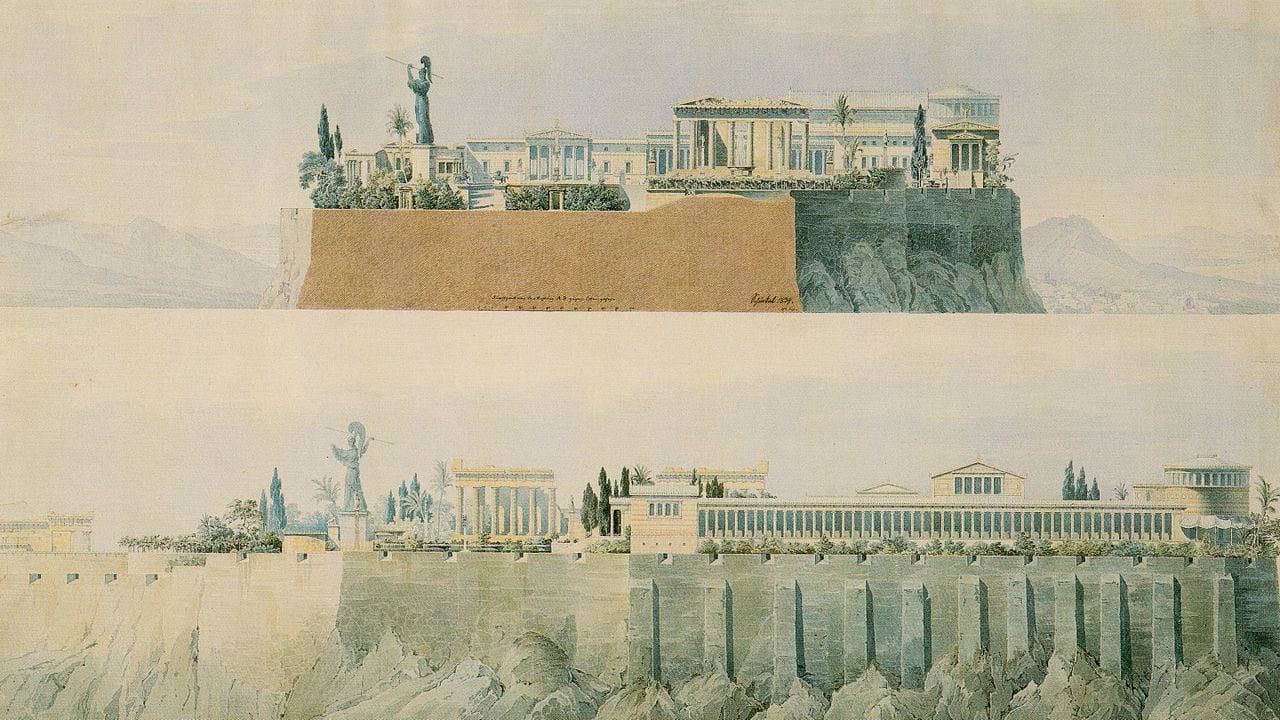
A project to remodel the Acropolis by the celebrated Prussian architect Karl Friedrich Schinkel, whom Otto, the first King of the Greeks, invited to design a royal palace in Athens, a small provincial town of some 10,000 inhabitants…

Archive · Architecture · Monarchies · Heritage

A project to remodel the Acropolis by the celebrated Prussian architect Karl Friedrich Schinkel, whom Otto, the first King of the Greeks, invited to design a royal palace in Athens, a small provincial town of some 10,000 inhabitants…

Schinkel was far ahead of his time in proposing that the palace be built literally on the site of the ancient temples, folding the ruins of the age of Pericles into a residential and administrative royal quarter. In effect, this would have meant the destruction of the Acropolis with all

By Alexandr Radayev