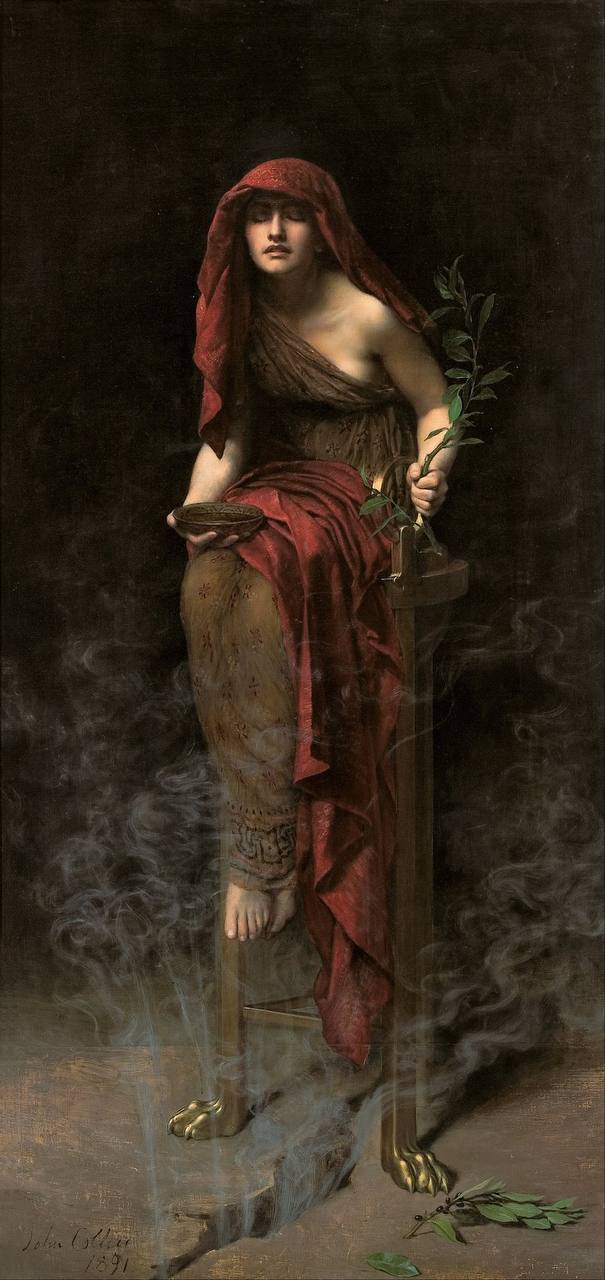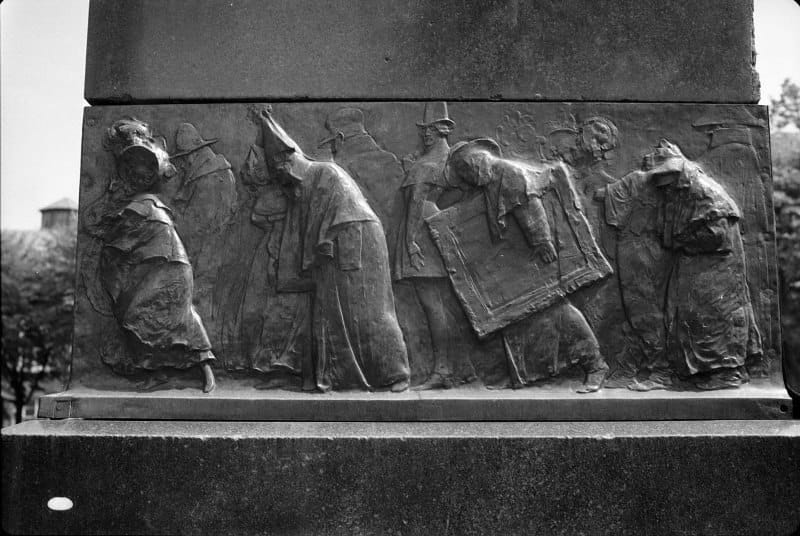
The Pythia, seated upon a tripod over a cleft from which fragrant vapours rose, inhaled them, and thereby her spirit was kindled with divine inspiration
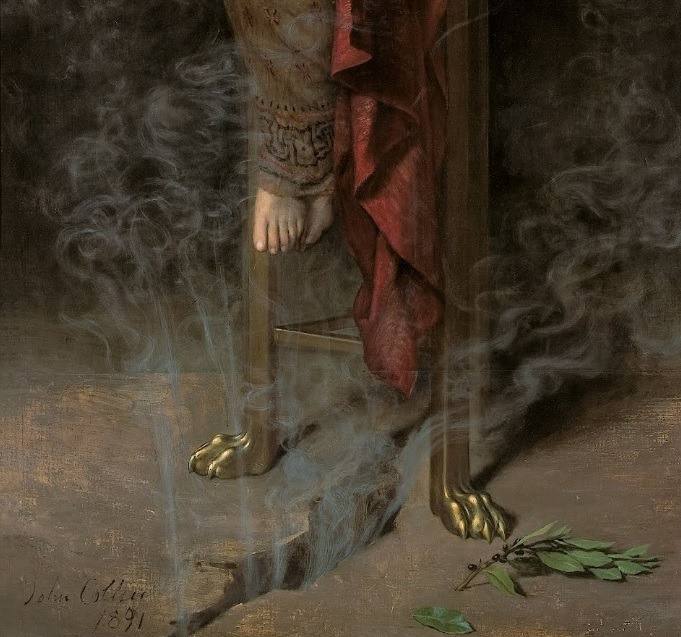
Plutarch, On the Pythian Oracles
Yet neither Plutarch nor Herodotus speaks of these "divine vapours" at Delphi unambiguously. The haze from the rock is rather taken as a metaphor for otherworldly revelations. At least, such is the pragmatic reading of the legend. All the more so since the excavations of the late nineteenth century revealed no chasm beneath the temple.
But where archaeologists and historians fell into doubt, geologists proved convincing, having discovered two active faults, the Delphi and the Kerna, right at the site of the oracle.
It is believed that the seismic activity of these faults heats the underlying limestone strata, which sets in motion gases seeping through the cracks in the rock. One of the gases identified has a sweetish smell and a narcotic effect, and inhaling it in large doses induces a euphoric trance, precisely the kind that was ascribed to the Pythia.