The language of Dostoevsky is a subject not merely interesting but essential to understanding his work
The language of Dostoevsky is a subject not merely interesting but essential to understanding his work. Is it possible to grasp the personality of a character without delving into his vocabulary? This is surely one of the first steps to take. Of course, many of the words will prove to be the ones we expect and will occasion no surprise.
Let us open the Dostoevsky dictionary published by the Academy of Sciences. It does not contain his entire lexicon of thirty-five thousand words, but just over two thousand principal idioglosses: the key linguistic units that make up the author's style and lift a corner of the mystery of his ideas and his understanding of the world. Hell, angel, poor, abyss, demon and demons, unconsciousness, pale, God, illness, delirium, to blurt out, quickly, faith, to be agitated, to love, question, to lie, touchy, contortion, escapade: there would seem to be nothing surprising here. But one need only step back a respectful distance from the realities of the nineteenth century, and the seemingly simple little words "perhaps", "suddenly", "all at once" become essential details, without which Dostoevsky would be unrecognisable.
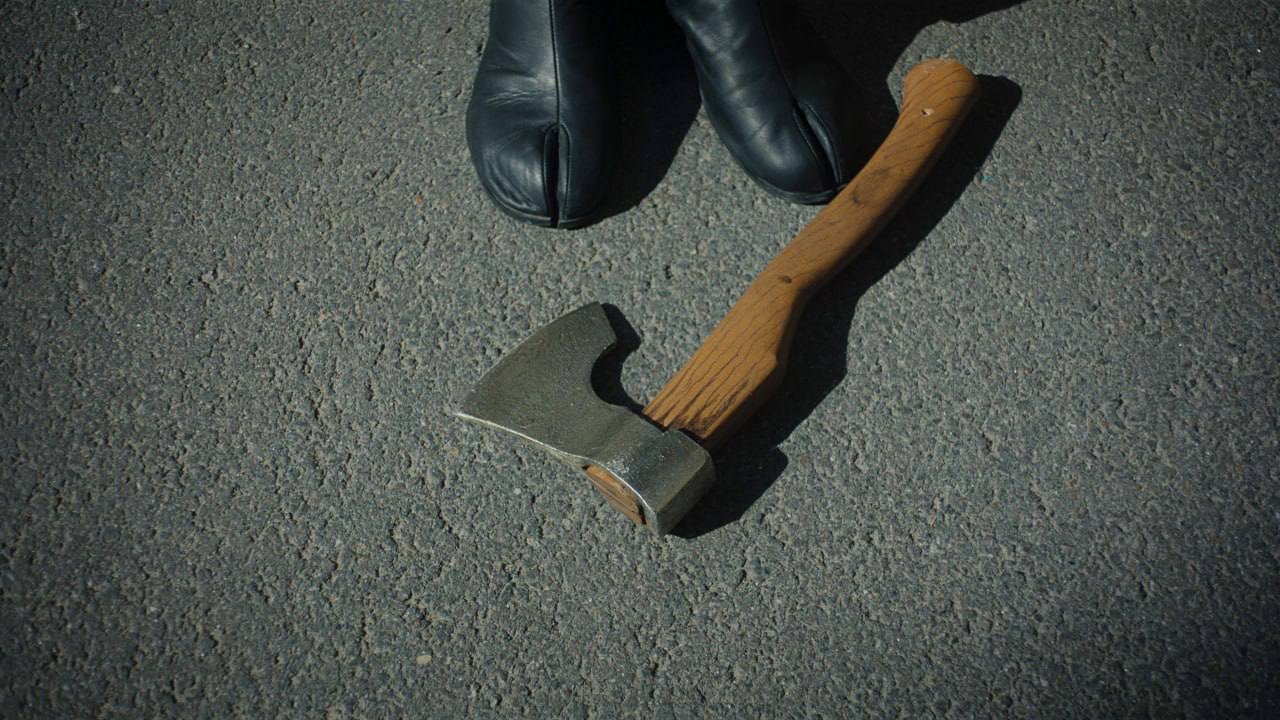
It is precisely this, the language of Dostoevsky, that proves so mesmerising in the new screen adaptation of Crime and Punishment. I do not know how anyone can reproach the series for being theatrical, but do they not have a meditative effect on you, those prestuplenitse (a "little crime"), "let us while away the time", "mercy", "young lady", "to tempt", "nonsense", "I shall overcome"? Incidentally, the homeopathic doses of which the devil speaks are a reference to The Brothers Karamazov, from which the very first episode alone will yield a dozen borrowings. From there comes the passage "What sort of faith is it that comes by force? Besides, no proofs help in matters of faith, especially material ones", or, say, Rodion's story about the piece of bread crumb stuck with pins, which is taken from the tale of Zhuchka.
In short, the linguistic devices by which the makers of the series have achieved authenticity deserve a separate, careful analysis, and I think we shall return to it. For now, let us rest with the fact that the beautiful, pure Russian speech of the nineteenth century, set in a modern setting, is incomparable