Kiel archaeologists link tool reworking in southern Africa to food availability
I have come across an interesting idea about a connection between how intensively the stone tools of early Homo sapiens were reworked and how much food their landscape had to offer.
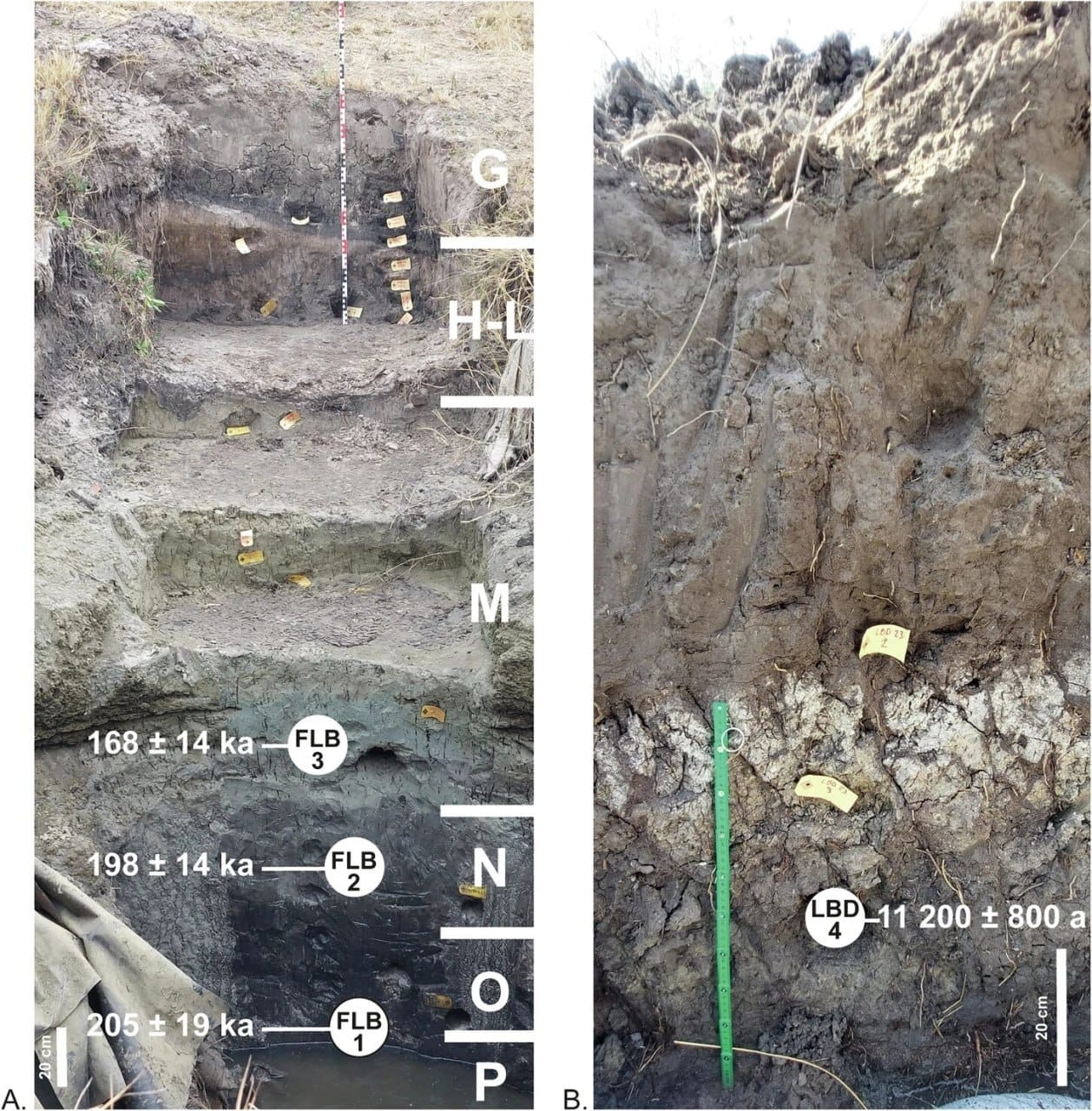
A group of archaeologists from Kiel University studied material from the sites of Florisbad and Lombard's Drift in southern Africa, dating to about 200,000 years ago.
Florisbad is known for a skull that many regard as belonging to an early Homo sapiens and date to roughly 260,000 years ago. The authors were concerned not with the skull but with the environment: using biomarkers from the sediments, pollen and fauna, they reconstructed the landscapes of the Middle and Late Pleistocene and established that these have no modern analogues.
Comparing their reconstructions of the environment with the stone tools and animal bones from the Florisbad excavations, the researchers found a dependence: in periods when food resources were, by their estimate, less abundant or harder to obtain, the tools bore traces of more intensive repeated working of the cutting edge. It appears that tools were used for longer and remade instead of new ones being manufactured.
Of course, for a more coherent theory it would be good to apply the same approach to other sites in southern Africa, in order to assess the role of climatic fluctuations in the history of early humans.