Dental calculus is the last kind of stone an archaeologist expects to find, yet Elena Fiorin and her colleagues have published measurements of mercury concentrations not in bones but in the dental plaque of those buried at two leprosaria: St Leonard in…
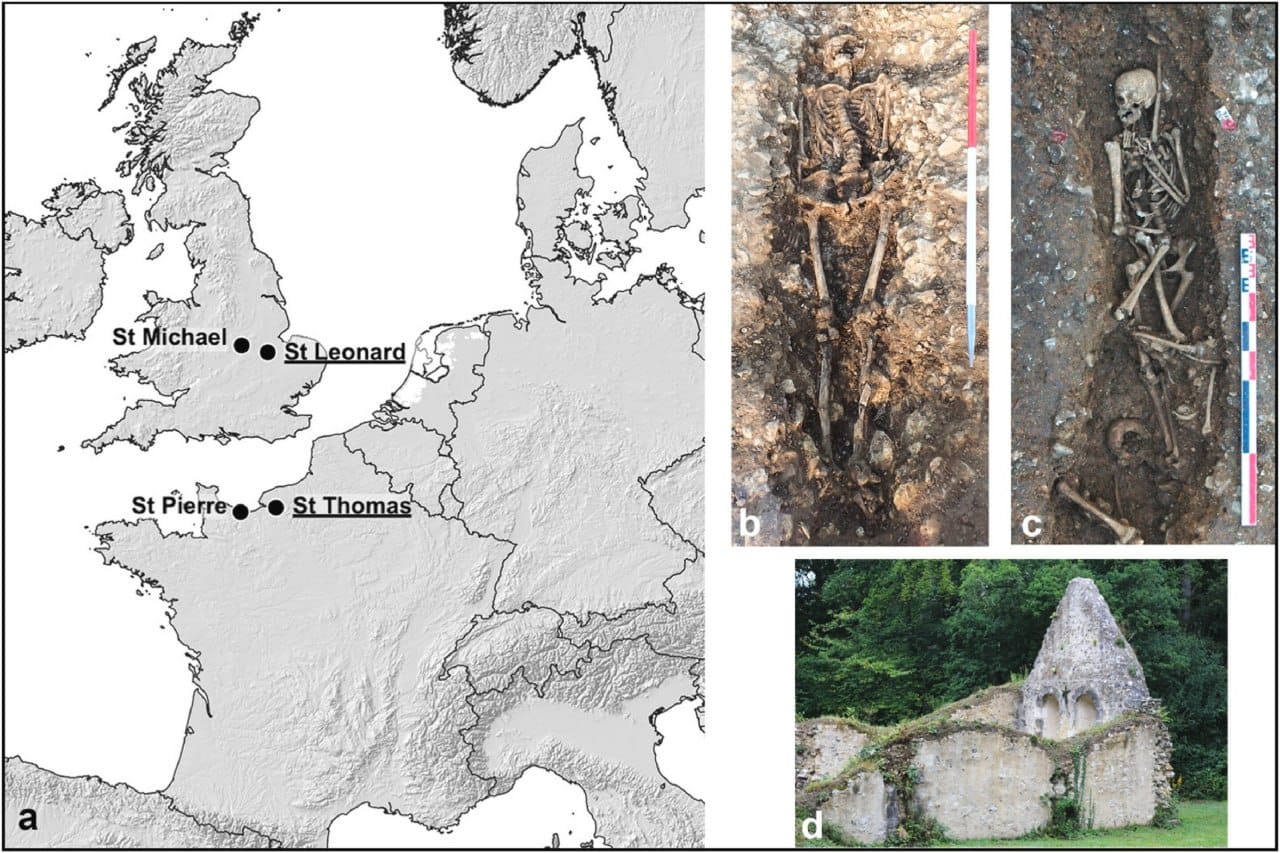
76 samples of dental plaque and 45 of soil showed that the inmates of the leprosaria carried between 0.11 and 9.7 mg/kg of mercury, that is, several times more than the control groups from ordinary cemeteries.
This confirms that lepers were indeed treated with mercury. It was rubbed into the skin, administered internally, and inhaled as vapour.
But the most curious thing is the distribution by status. Those buried in the chapel of Saint-Thomas d'Aizier have more mercury than those lying outside its walls. In other words, the higher the patient's standing, the more intensively he was treated, and the sooner he died, no longer of leprosy but of the cure. The larger the dose of poison, the better the care: some principles of medieval medicine are alive and well to this day.
At Peterborough in England, traces of ginger were found in the same dental calculus. In the eleventh century Constantine the African recommended ginger decoctions to relieve the pains of leprosy. Ginger did not cure, but at least it did not kill.
In the eighteenth century the Swedish physician Isaac Uddman would write that treating leprosy with mercury was pointless. A pity that by then the mercury had already been squandered in vain for six hundred years