Long before the Decembrists were admitted to the canon of the revolution's forerunners, Klyuchevsky called them a historical accident overgrown with literature, and Tyutchev remarked that Russian history was, to his taste, far too perversely arranged…
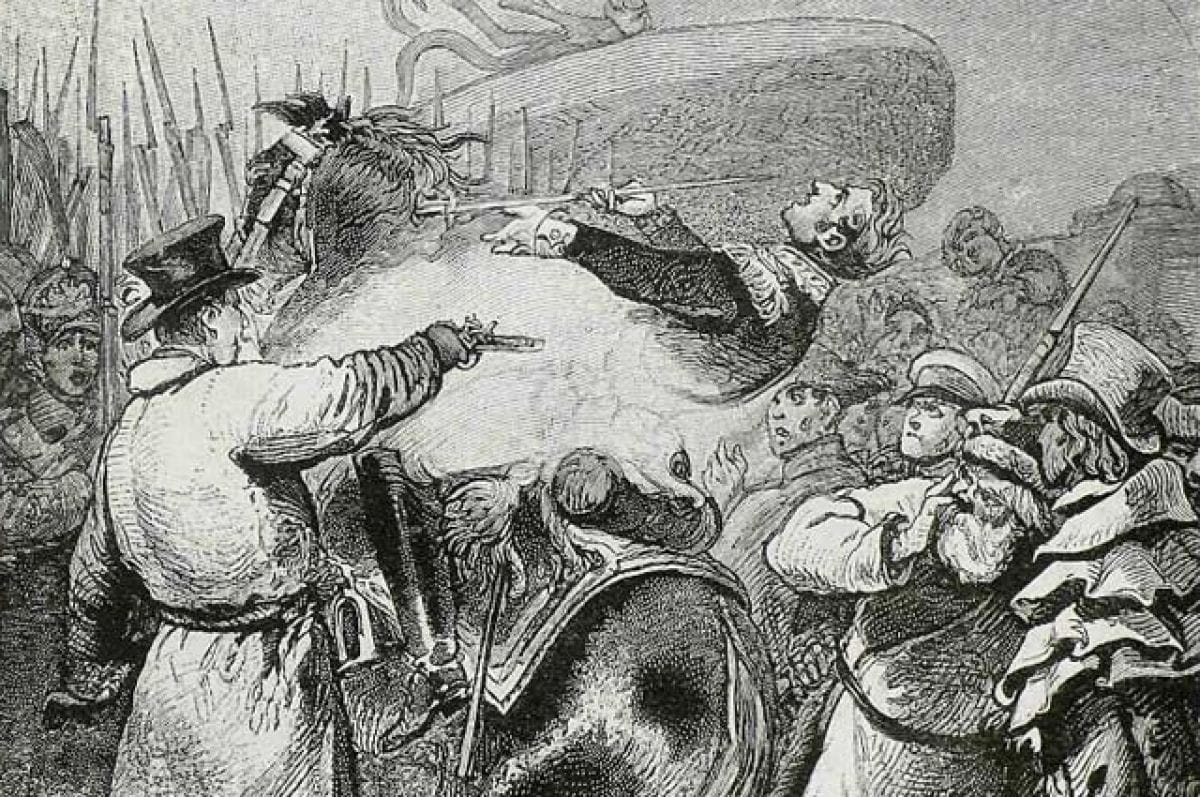
And now, two hundred years after the Uprising, one has the feeling that there is no longer a place for the Decembrists in the official pantheon, and that they will never again be as revered as they were in the middle of the twentieth century, when they were extolled as the first Russian revolutionary intelligentsia, the forerunners of the revolution and the ideologues of popular liberation. The Stalinist post-war ideological standard has become irretrievably obsolete. As early as the 1980s, with the gradual onset of the de-Sovietisation of the historical narrative, interest in the Decembrist movement gave way to closer attention to monarchical history, and their role as an ideological symbol shrank to a neutral scholarly interest.
Ian Gray's thought about a fiery idealism that engendered legends which would influence later generations was discreetly pushed into the background by the words of Plekhanov, that the Decembrists, seen through the prism of their ideological limitations, should be regarded as bourgeois revolutionaries and not as socialists. Not to mention the 2000s, when the image of the whole movement began to be perceived far more ambiguously, with numerous debates about its mechanics, its historical role and its potential contribution to the future. Ideas such as that put forward by Dominic Lieven, of a revolt of Russian officers that was largely provoked by wounded Russian national pride, began to be discussed openly.
Evidently we find ourselves in one of the least expressive of arrangements, but in December 2025, in the bicentenary year of the Uprising, it is hard to say that it occupies the focus of the cultural agenda any more than an ordinary calendar event. Though if one considers that in 2018 the whole country readily consigned the bicentenary of Turgenev to oblivion, one understands that plain slovenliness also has its effect on the course of history.