Remembering Election Night in March 2018
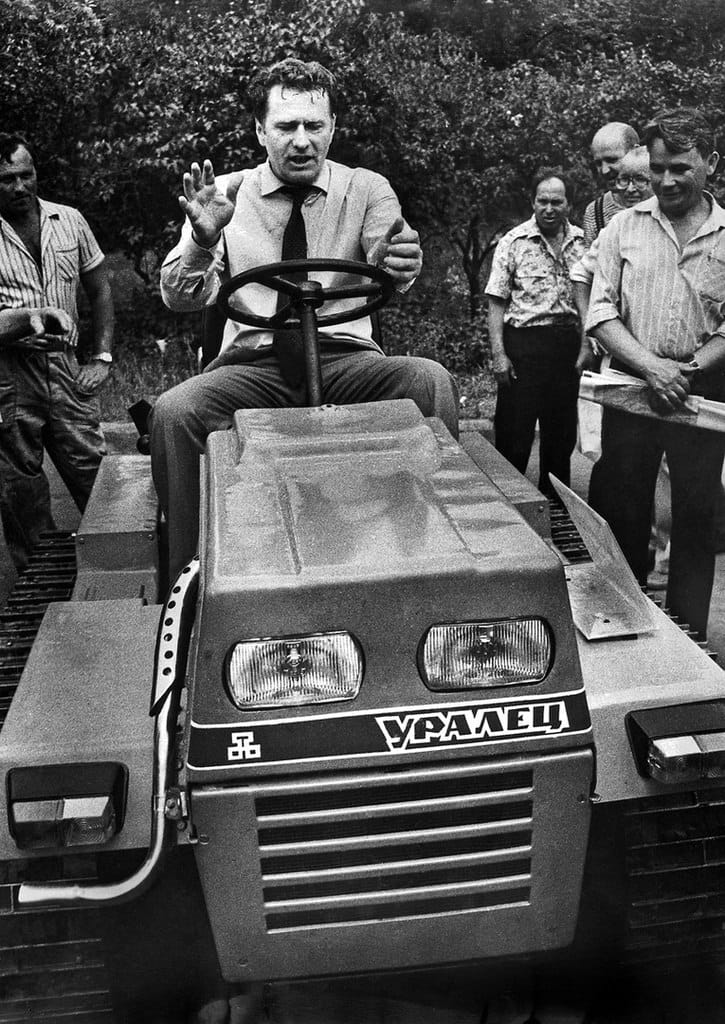
I remember Election Night in March 2018. It was his sixth presidential defeat, yet Zhirinovsky climbs onto the stage without any visible disappointment. A short speech on how the political landscape would change in the years ahead. We applaud more out of inertia: the result has been announced, though everything was clear in advance. People from the campaign headquarters come up to the microphone, and Mikhail Degtyaryov says what at the time sounded like routine staff courtesy: everyone, he says, underestimates the predictive genius of Vladimir Volfovich, yet the accuracy of his political forecasts is phenomenal, and one day we shall still be amazed by it.
Nobody spoke of Zhirinovsky that way then. They called him anything you like: provocateur, walking quotation, disturber of parliamentary calm. Almost no one considered him a forecaster; at any rate, that cliché was not to be found attached to him in the public sphere.
A few years passed. December 2021, the rostrum of the State Duma: “If they refuse, then we can adopt a different programme, and what kind, you will feel at four o'clock in the morning on 22 February.” The margin of error: two days. 2019, on the Middle East: “By 2024 such events will unfold there that everyone will forget altogether what Ukraine is. We are heading towards a third world war.” October 2023: Hamas, Gaza, Iran, all on schedule. 2020, a forecast for the 2024 elections: Putin will run himself, but will announce it no earlier than the end of 2023. It was announced in December. The fall of Assad, the Israeli operation in Syria, the escalation in Kazakhstan: all of it is there in the LDPR's archival recordings.
The paradox of Zhirinovsky is that he was an impeccably systemic politician. The leader of a faction that voted for everything required, a permanent partner of the Kremlin in the parliamentary tandem, and yet almost the only one who, from that same systemic rostrum, said sharp, unpleasant, non-systemic things. Without academic caution, without a glance over his shoulder at departmental interests, without formulations of the “on the one hand this, on the other hand that” kind. He knew four languages, was an orientalist by his first education and a lawyer by his second, and read, and quoted from memory, things his colleagues in parliament had never heard of. So when the hall laughed, he alone did not laugh. The case of the joke about Angela Merkel's grandmother does not count.
The President explained the Zhirinovsky phenomenon briefly the other day: the man was educated and knew how to set out his thoughts clearly. But in Russian politics that turned out to be enough to pass for a clairvoyant.
Today Vladimir Volfovich would have turned eighty. A pity that he is no longer with us. Eternal memory