All week, everyone I know in Paris has been discussing Kirill Serebrennikov's premiere at the Théâtre du Châtelet, where "Hamlet. Ghosts" was presented
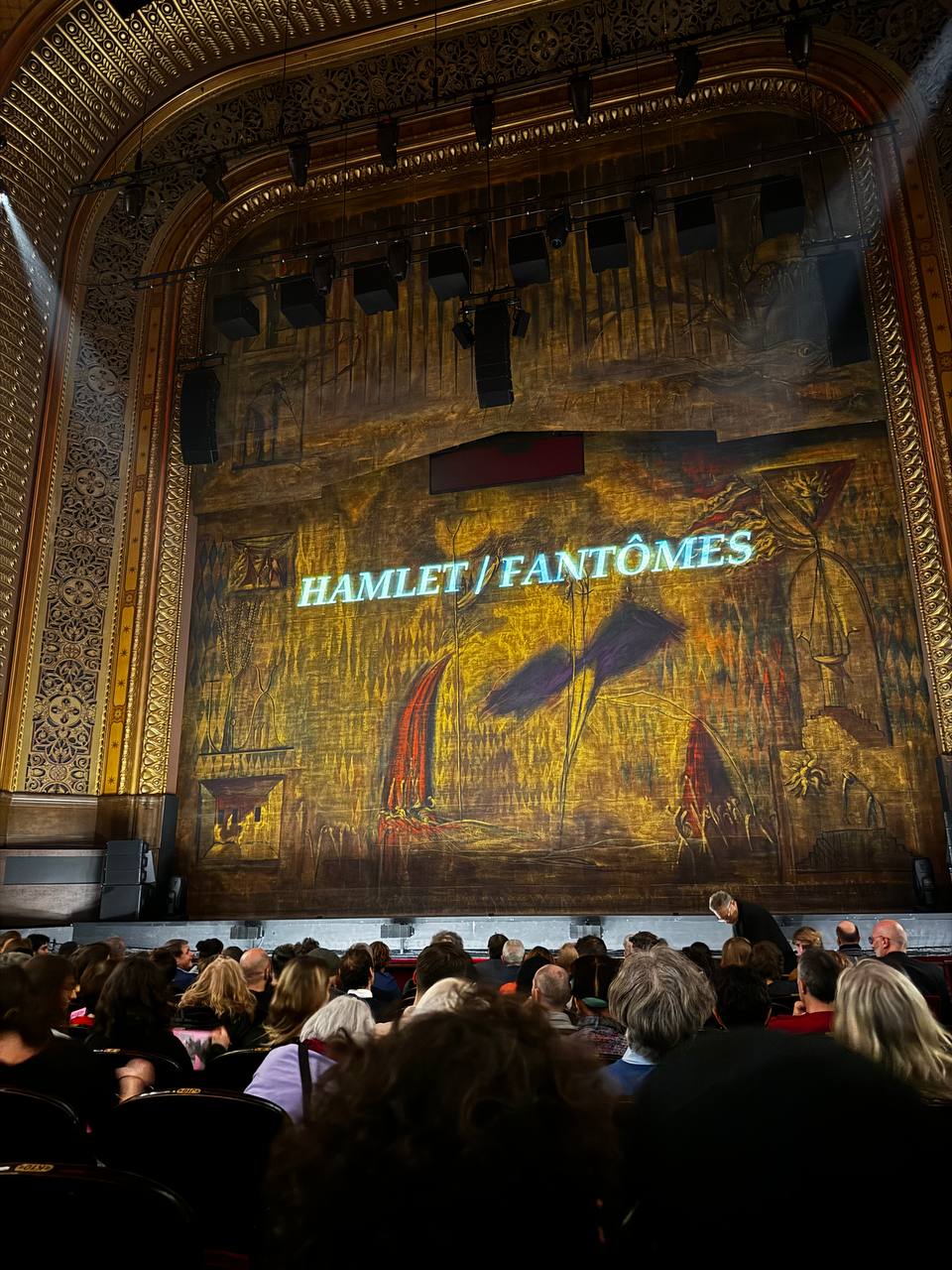
All week, everyone I know in Paris has been discussing Kirill Serebrennikov's premiere at the Théâtre du Châtelet, where "Hamlet. Ghosts" was presented, to a text by Serebrennikov about Hamlet in the context of world culture and modern history. The first thing that distinguishes the production is its multilingualism: the actors speak French, English, German and, happily, Russian. I had been waiting to see whether Russian would be heard not only in the auditorium but also on the stage, and we did indeed hear full-blooded Russian-language passages, first from the lips of the composer Dmitry Shostakovich, who enters the production as the author of the music for the film adaptation of "Hamlet", and then from the eccentric and rather coarse Fortinbras, in the inimitable performance of the actor Kukushkin in tights (though he also appears on stage in the nude).
To put it correctly, Serebrennikov has staged not "Hamlet" but everything about "Hamlet": everything he himself thinks of it, everything the Shakespeare scholars have written about it, everything left unsaid in contemporary contexts. The author summons images tied to the history of productions about Prince Hamlet and to ideas that would trouble that martyr of conscience in our own day too.
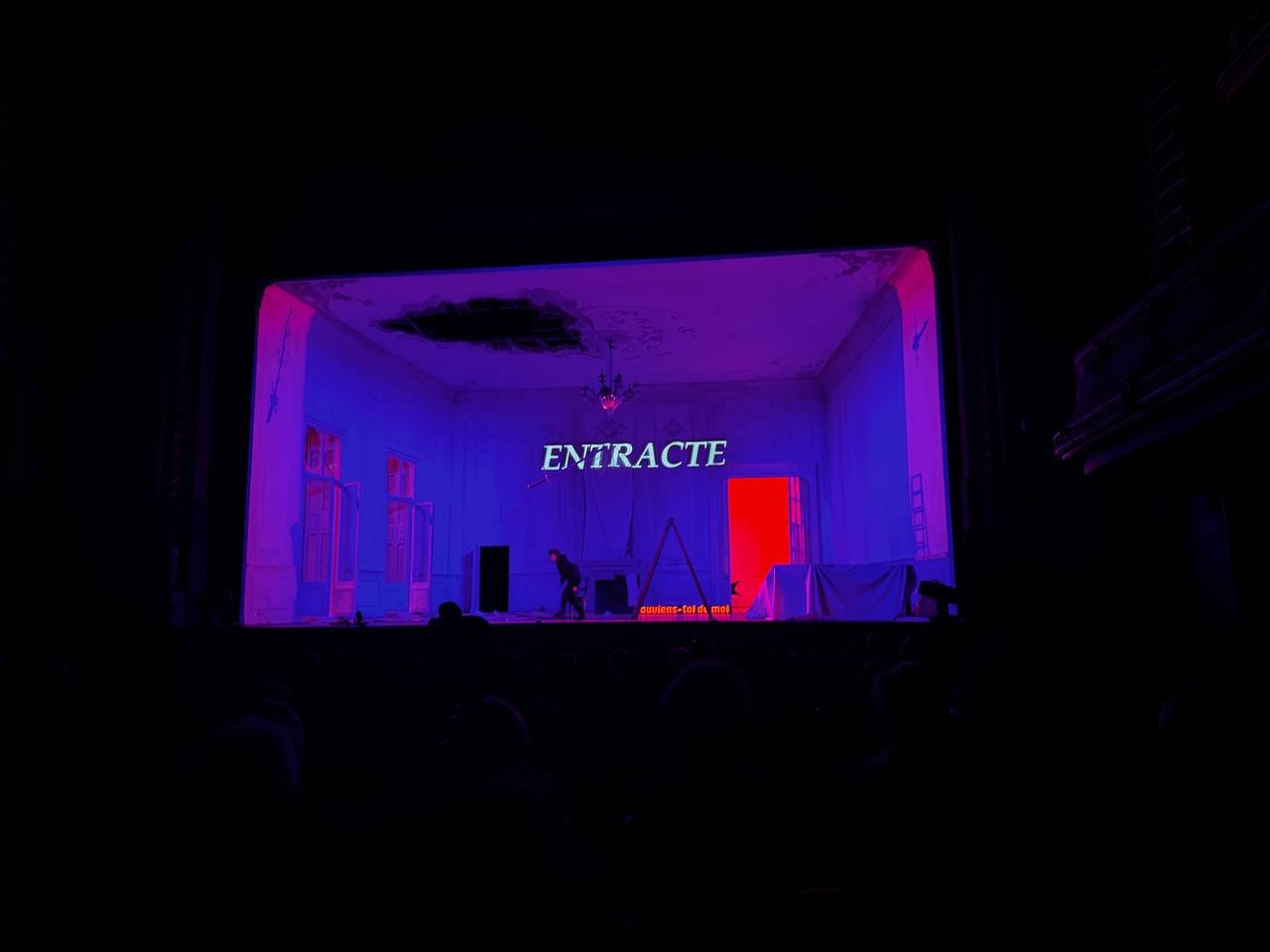
Shakespeare's play, the most universal utterance in the history of the theatre, becomes at the Châtelet, if not a hero, then a set, or more precisely a place of action. Connoisseurs of Kirill Semyonovich's work notice allusions to his other productions; I, for my part, saw the ruined Zoyka's apartment with its leaking ceiling, into which move not NEP men and Chekists but the ghost of Hamlet's father, August Diehl, Horatio, Claudius, Ophelia, suddenly Sarah Bernhardt, and a multitude of restless iterations of one rather well-known prince, all in splendid performances.
The show is large: two acts in ten chapters, very complex and uncommonly beautiful, with vivid choreography and striking costumes, while the work with the lighting is simply a separate work of art. However little I care for music, here I applauded the composer, Blaise Ubaldini, and the musicians on stage and in the orchestra. We still have to work out all the ideas Serebrennikov has built into it, and fortunately there are people to discuss them with.
But as for Shakespeare's "Hamlet", it has not suffered in the least from the expanded authorial vision: genuine quotations in the best translations are heard from the stage and read on the surtitle display, and what the actors add at times is not of their own making but comes from our century.