
Here is another recent study claiming to change our ideas about the origin of humankind
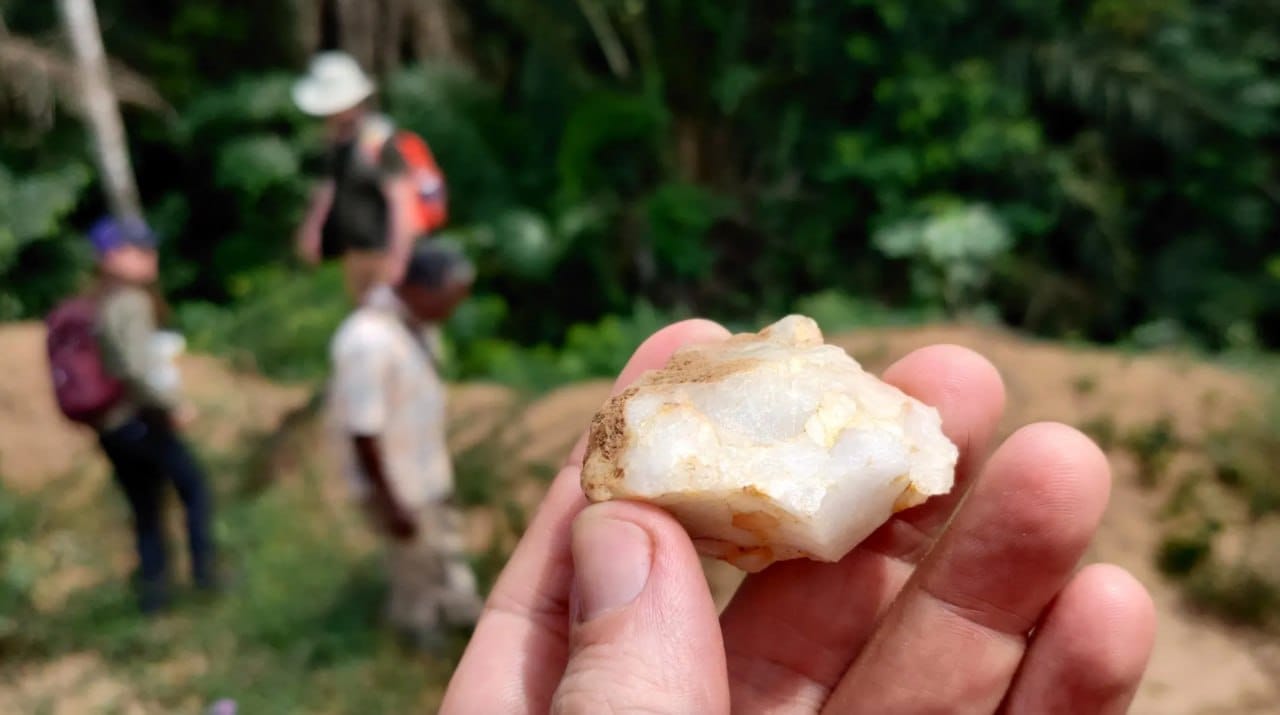
An international team led by Eslem Ben Arous and Eleanor Scerri describes stone tools of Homo sapiens, 150,000 years old, found at the Bété I site in Côte d'Ivoire. The layer has been dated by two independent methods, and the pollen, phytoliths and plant waxes in the sediments have shown that the surroundings were neither a savannah corridor nor sparse woodland by the water, but dense, humid tropical rainforest. Remember that truth from school textbooks, that it was precisely there that primitive men supposedly could not venture?
Before this publication the earliest traces of humans in African rainforests dated to 18,000 years ago, while the world record was held by South-East Asia with 70,000 years. The new dating pushes the antiquity back by more than double.
Curiously, the Bété I site was discovered in the 1980s in the course of a joint Ivorian-Soviet archaeological expedition led by Yodé Guédé of Félix Houphouët-Boigny University. The stone tools were dug up then and there, but science did not yet possess the methods for reliable dating and palaeoecological reconstruction. Guédé kept the coordinates. In the 2020s the international team returned, reopened the very same trench and applied everything that had appeared over forty years. And, incidentally, they came just in time, because by the moment the data were processed the site had already been destroyed by mining operations.
The discovery adds one more argument against the textbook savannah hypothesis, constructed in the 1920s by Raymond Dart around the Australopithecus from Taung and subsequently reinforced by finds from Olduvai, Omo, Koobi Fora, Hadar and Turkana. According to it, our ancestors descended from the trees, walked out onto the steppe and learned to hunt. A mighty foundation was laid beneath the theory: upright walking is needed for surveying the horizon and covering great distances, fur gives way to well-developed sweating for thermoregulation under the steppe sun, the social organisation of hunting is essential for pursuing herd ungulates, and stone and fire serve for butchering carcasses and cooking meat. Tropical forests, with their humidity, small tree-climbing creatures and poor visibility, did not fit very well with this harmonious narrative.
Yet the hypothesis rested in large part on a sampling error. Acidic forest soils dissolve bone within a thousand years and devour all organic matter, whereas the East African rift, on the contrary, pushes ancient strata up to the surface, where fossils are simply easy to see. Hominins were found where they had been preserved and where they could be seen, and not where they had been most numerous.
True, the notion from the school curriculum, that Homo sapiens was born in the savannah, mastered the steppe early, and came to the forest late and warily, has been challenged for a long time now and, to put it mildly, sounds rather archaic today. Since the 1990s archaeology has known both Palaeolithic sites in the rainforests of South-East Asia and Ardipithecus ramidus, 4.4 million years old, from a wooded landscape. The new Ivorian finds are more likely to finish off the structure than to overturn it.
In short, textbooks often fail to keep up with science, so let us remember that Homo sapiens lived from the very beginning simultaneously in semi-deserts, on the coast, in the mountains and in rainforest jungles. In all likelihood this versatility was one of the factors in its successful spread across the whole planet.