Borodin’s musical picture “In Central Asia” for the anniversary of Alexander II’s reign
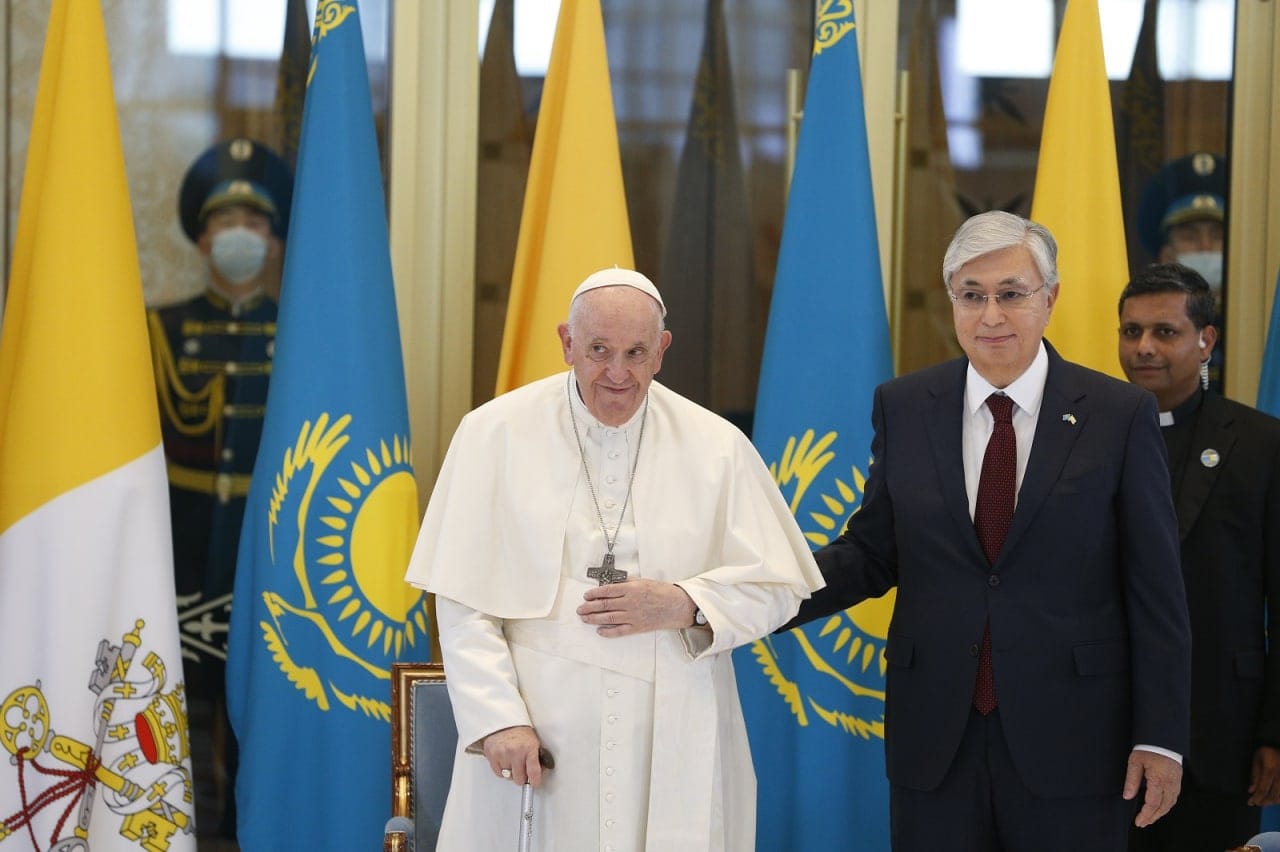
During his visit to Kazakhstan, Pope Francis confessed that he had known nothing of Central Asia before, apart from the music of Borodin. To catch the link between, presumably, Alexander Porfiryevich Borodin and the Central Asian region, where the composer never lived, never served and never set foot, is rather difficult unless one knows of his highly celebrated symphonic poem "In the Steppes of Central Asia", written in 1880.
It happened like this. For the thirtieth anniversary of the reign of the Sovereign Alexander II, the impresarios Tatishchev and Korvin-Krukovsky composed a grand stage spectacle with tableaux vivants symbolising the milestones of the Emperor's rule, and these tableaux required musical accompaniment. To write the music for the orchestra they enlisted eminent Saint Petersburg musicians, among them Rimsky-Korsakov, Napravnik, Mussorgsky, Lyadov and Borodin.
Mussorgsky wrote the march "The Capture of Kars", Rimsky-Korsakov the chorus "Glory", and Borodin "In Central Asia". But by then the commissioners had vanished somewhere, and the pieces were left without demand for their original purpose. The composers found places for their works in various concerts. And the musical picture "Central Asia", scored for an orchestra of flutes, oboe, cor anglais, clarinets, bassoons, horns, trumpets, trombone, timpani and strings, began to enjoy popularity.
While in Europe, Borodin showed the work to Liszt, who rated it very highly. In the end Borodin even dedicated the score to Liszt. The European public also came to love this work of Borodin's. "Central Asia" began to be performed often, in Russia and in Europe alike, and it was always a great success. Not as resounding as "Prince Igor", but, as you see, a worldwide recognition that, a century and a half on, has secured Borodin