Humphry Davy tested nitrous oxide on himself, and the gas became a parlour entertainment
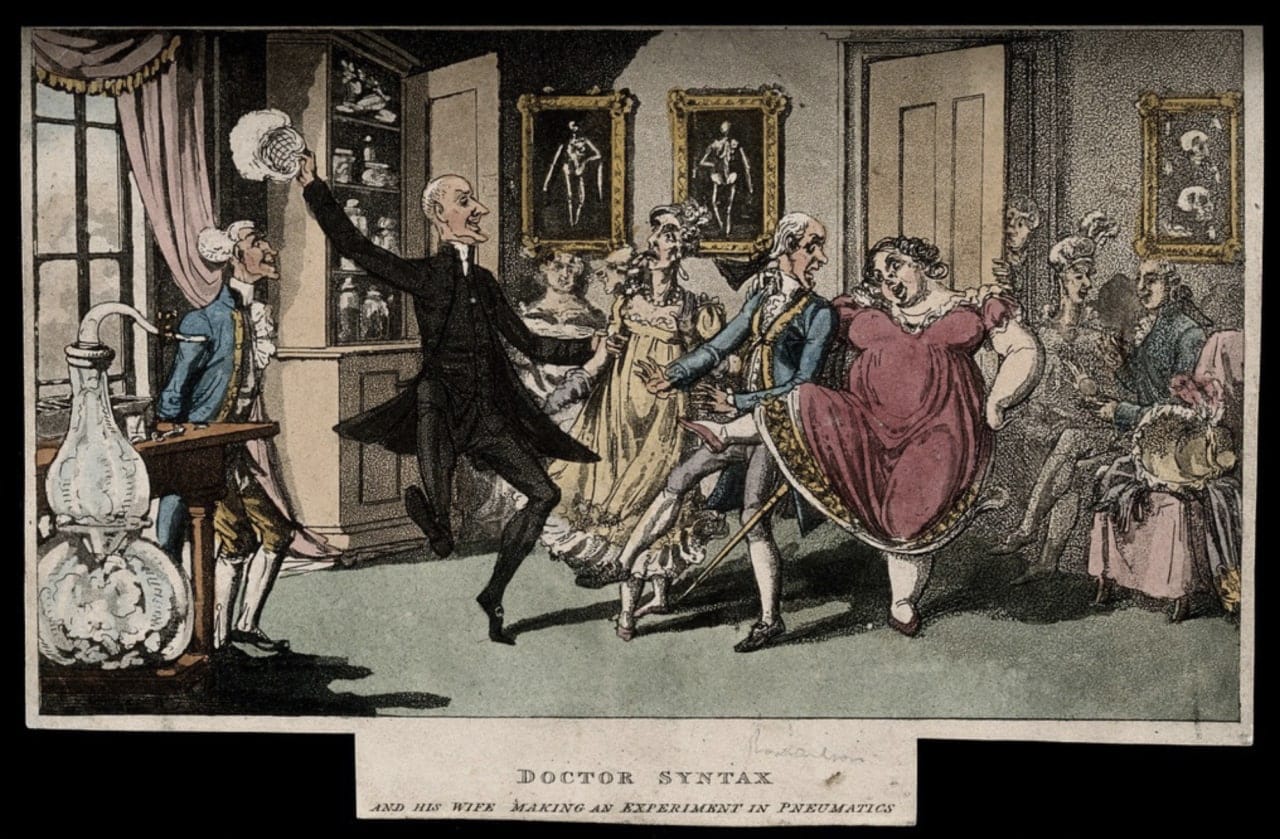
Laughing gas, now widely used in Western medicine as an analgesic and inhalation anaesthetic, first came into use in the 1800s precisely as a substance that provoked fits of merriment when inhaled.
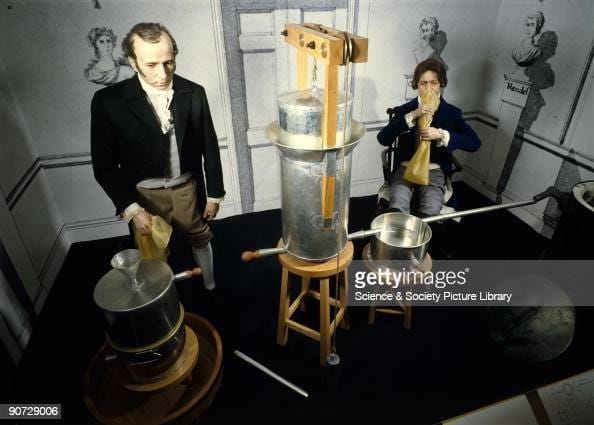
The British chemist Sir Humphry Davy, who was investigating the treatment of disease by gases, was the first to suggest that inhaling nitrous oxide might not be fatal. Contrary to the opinion then accepted in science, which held nitroxide to be dangerous, he resolved to experiment on himself, and was more than content with the result. Inhaling the gas made him dance, leap and rejoice for several hours, inspired him to write verses, and spurred him on in his search for a means of obtaining the gas in pure form, free of the impurities which are considered the most dangerous even in our own day.
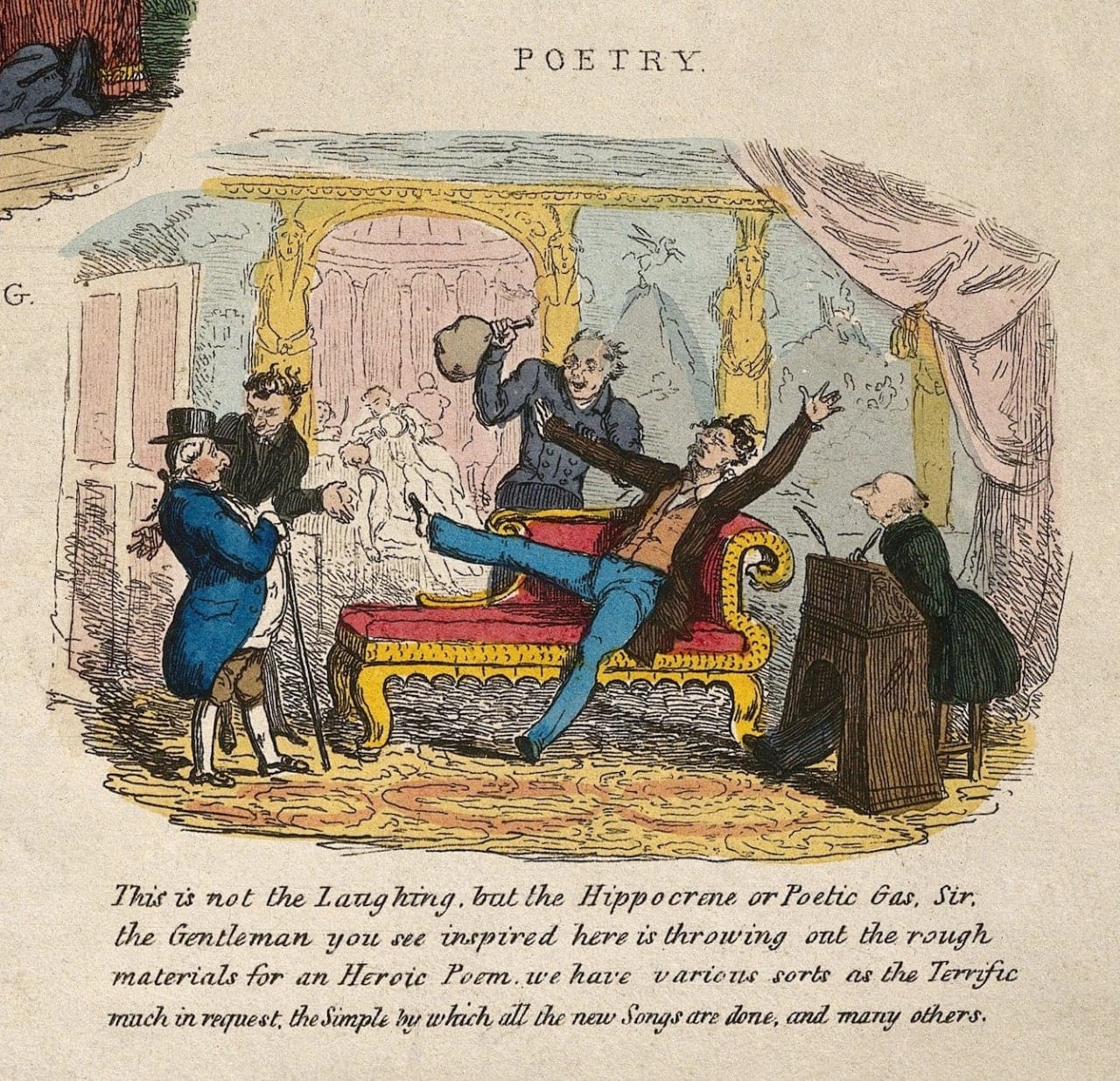
Word of the gas's merry properties spread quickly. Inhaling nitroxide became a fashionable drawing-room diversion and even an attraction of the theatrical stage, where volunteers could try the effect of the gas, while the rest made merry watching the wild dancing of the suddenly cheerful spectators.
The possibility of medical use of this gas was established much later.
Laughing gas remains a means of amusement even today, though there are serious warnings and contraindications, and the consequences can be very grave: from madness and anaemia and other illnesses to a fatal outcome.