The Babylonian Poem “The Dialogue of a Master and His Slave” and Scholars’ Debates on Its Meaning
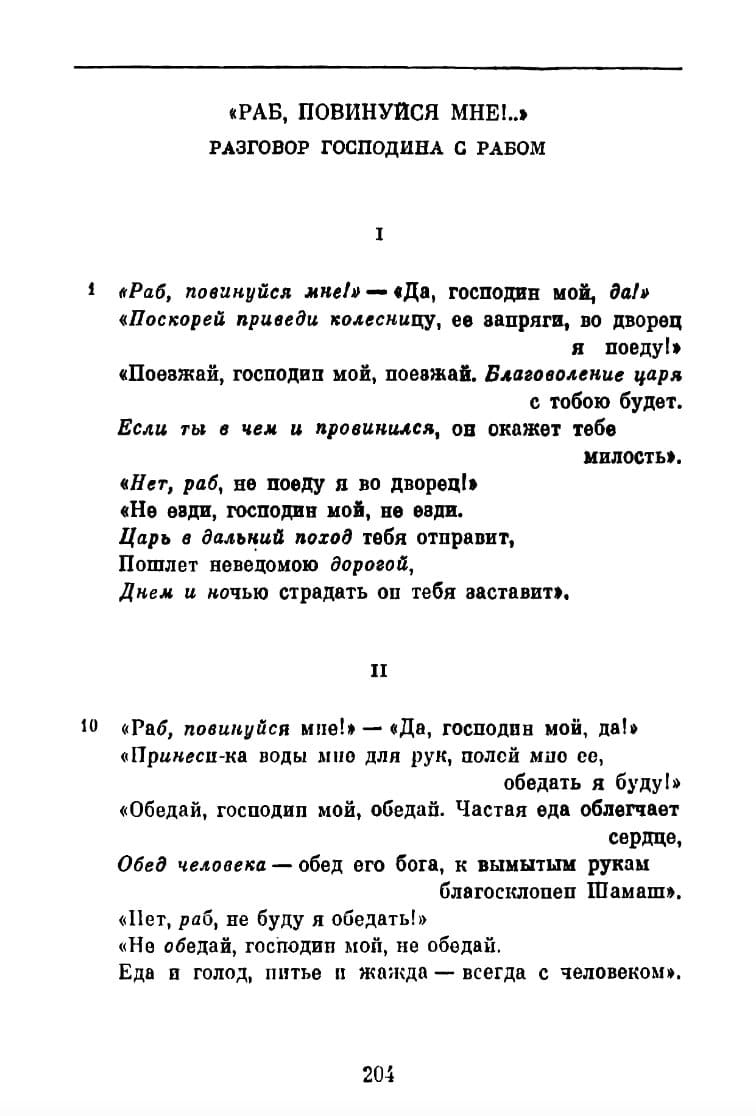
The Babylonian poem "The Dialogue of a Master with His Slave", which English-language scholarship calls the "Dialogue of Pessimism", has come down to us in copies from Assyria and Babylonia, written in Akkadian. It is assigned to wisdom literature, that is, to instructive texts like the biblical Book of Proverbs and Ecclesiastes. Pupils in the scribal schools copied the poem out as they learned to write.
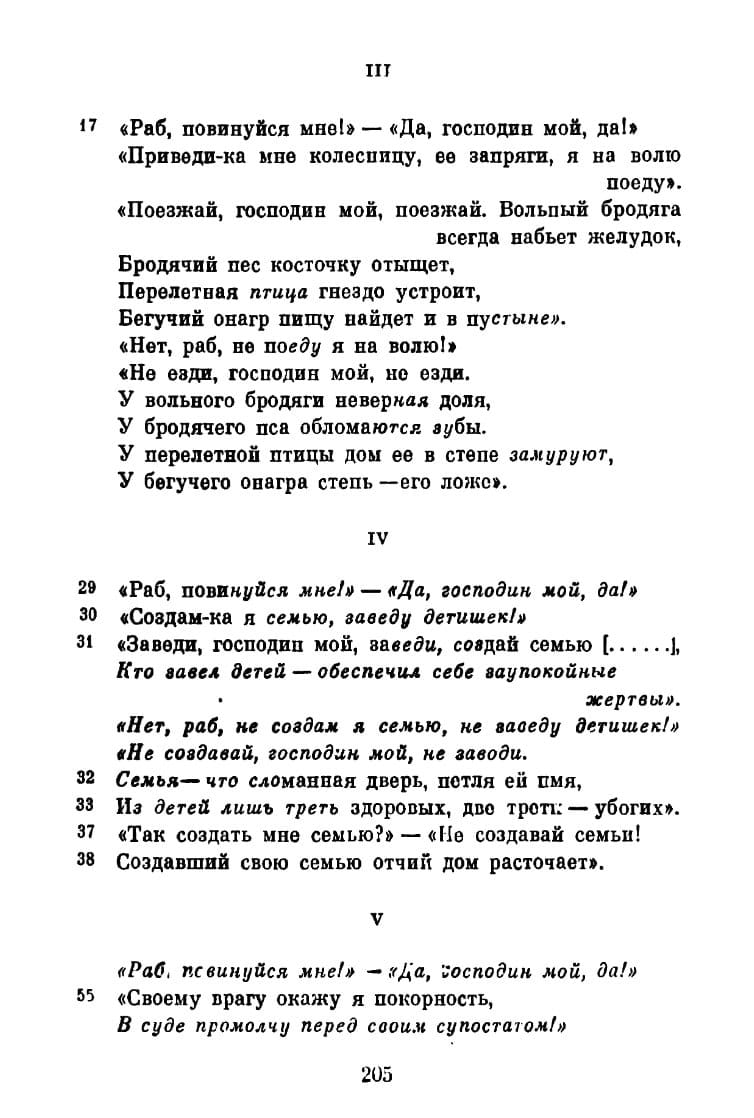
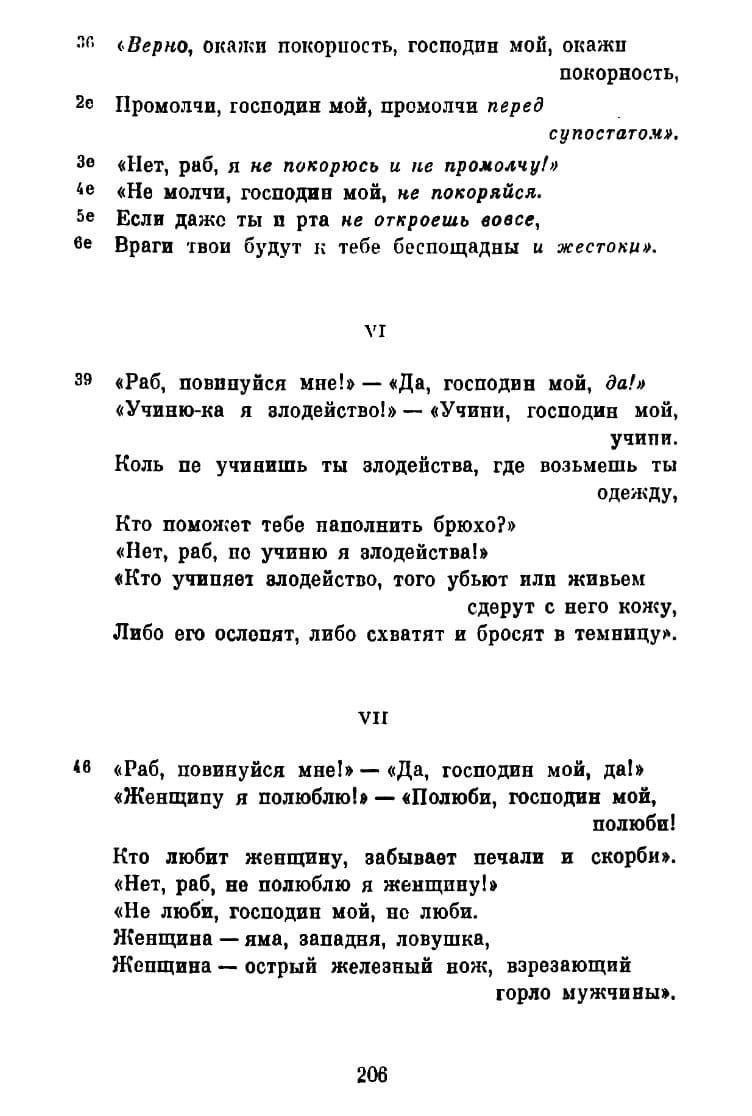
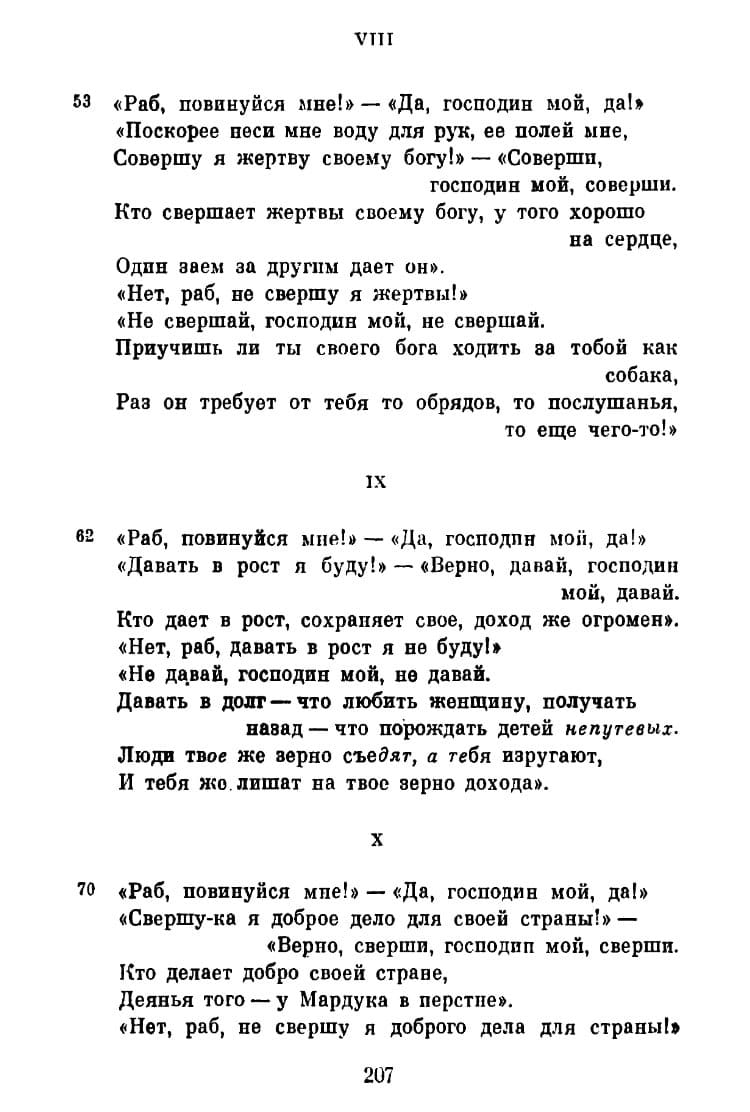
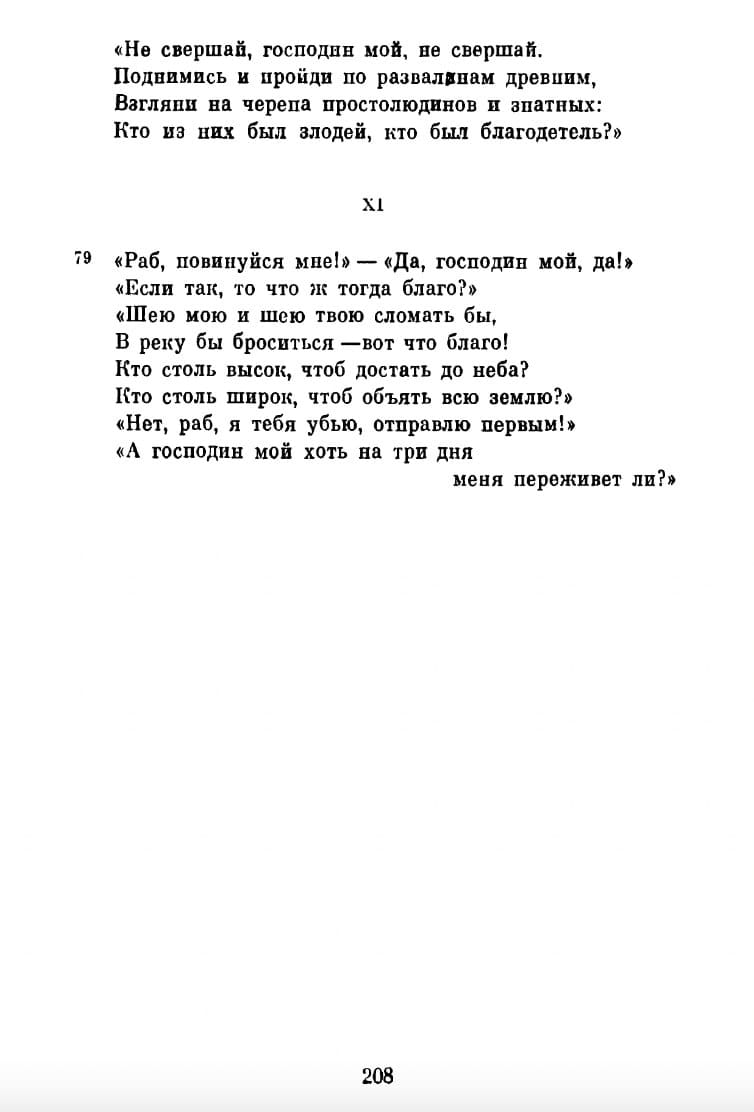
The poem consists of ten scenes. The master announces to his slave that he intends to drive to the king, dine, go hunting, start a family, commit a wicked deed, love a woman, offer a sacrifice to a god, lend money at interest, or do a good deed for the country. The slave approves each plan and backs it with a proverb. Then the master changes his mind, and the slave just as readily finds arguments against. In the finale the master asks what, then, is good. The slave replies that the good is for the two of them to have their necks broken and be thrown into the river. The master threatens to kill the slave first, and the slave answers that his lord would not last three days without him.
The British Assyriologist Wilfred Lambert wrote that, read seriously, the poem proclaims life to be vanity and counts death as the only good. The Assyriologists Jean Bottéro and A. Leo Oppenheim regarded the poem as a comic sketch that makes fun of proverbs: for any decision, popular wisdom will have a fitting saying to hand. Other scholars see in the poem a satire on social inequality. The master possesses enormous means but does not know how to dispose of them, while the slave, who has nothing, understands the advantages and the dangers of every decision.
The Russian translation from the Akkadian was made by the Assyriologist V. A. Yakobson. It was published in the 1981 anthology "I Will Reveal to You a Secret Word: The Literature of Babylonia and Assyria".