Fire at Miller House in Saint Petersburg and bans on building after fires in the laws of several countries
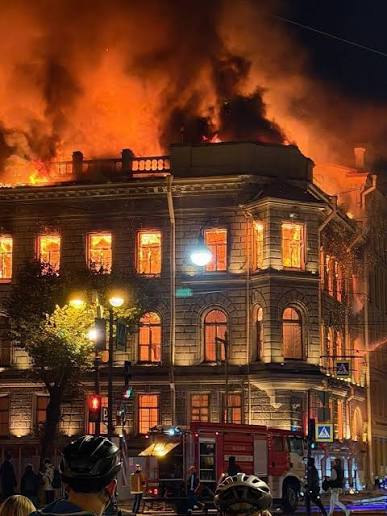
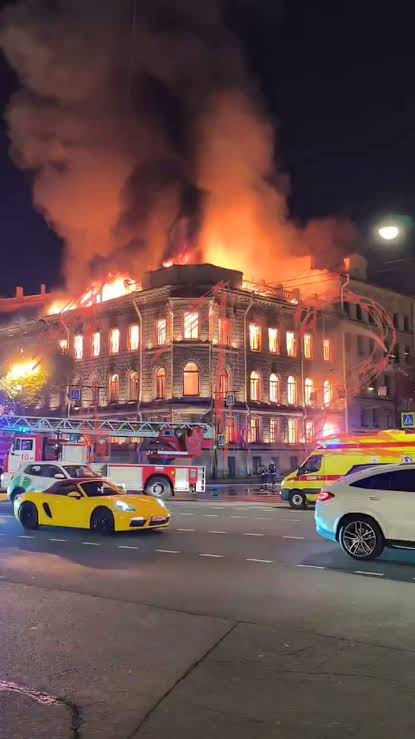
On the evening of 1 October the Miller mansion at 3 St Isaac's Square in Saint Petersburg burned down. A house of the second half of the eighteenth century, rebuilt in 1879-1880 in eclectic forms by the architect Ferdinand Miller, it was granted the status of a regional cultural heritage site in 2021. The fire engulfed an area of some 2,000 square metres and spread to the neighbouring house. The mansion was undergoing reconstruction into luxury housing, financed by a preferential loan of 768 million roubles.
The Investigative Committee has opened a case on the violation of safety regulations during construction work and is examining the welding hypothesis. The official version speaks of negligence.
Such fires, of course, recall a practice familiar in many countries: a forest on an expensive plot, or a monument that stands in the developer's way, burns down, and on the cleared land there appears what it had previously been forbidden to build. Since deliberate arson is hard to prove, several states have taken a different path, removing the motive.
In Italy, Article 10 of the 2000 law on forest fires forbids any building on land after a fire for 10 years and forbids changing its designated use for 15 years. Municipalities, moreover, are obliged to maintain a cadastre of burnt plots. In 2018 the Court of Cassation clarified that building is permitted only if the urban plan had provided for the construction before the fire. True, in this case we are speaking not of burnt historic property but of forest-fund land.
In Spain, the 2003 forest law forbids changing the designation of burnt forest land for thirty years. Exceptions are possible for projects approved before the fire, or by a special regional law with obligatory compensation for the lost forest.
Greece and Turkey have enshrined this rule in their constitutions. Article 117 of the Greek constitution obliges the authorities to declare a burnt forest an area of reforestation. Article 169 of the Turkish constitution requires a new forest to be grown on the site of a burnt one and forbids giving this land over to arable farming and pasture.
In Portugal, a decree of 1990 forbade changing the use of land for ten years after a forest fire, but in 2021 the new system of fire management abolished it. Now the country is discussing a petition for a ban on the sale and development of burnt plots for at least twenty years.
In Russia a similar norm, but for monuments, was proposed as long ago as 2017. The Voronezh Regional Duma submitted to the State Duma a bill that would have forbidden capital construction on the site of lost cultural heritage objects and permitted only their reconstruction. Alas, a prohibition of this kind has never appeared in our legislation on cultural heritage objects.
If one thinks about it, the Italian approach is equally effective for protecting a forest in Sardinia and a mansion in the centre of Saint Petersburg. If on the site of a burnt building, as in the examples with forests, one may only restore what stood before, and building something new and more profitable is forbidden, arson loses its commercial sense.