Variants of the myth of Leda and Zeus and the Dioscuri statues on Rome's Capitoline Hill
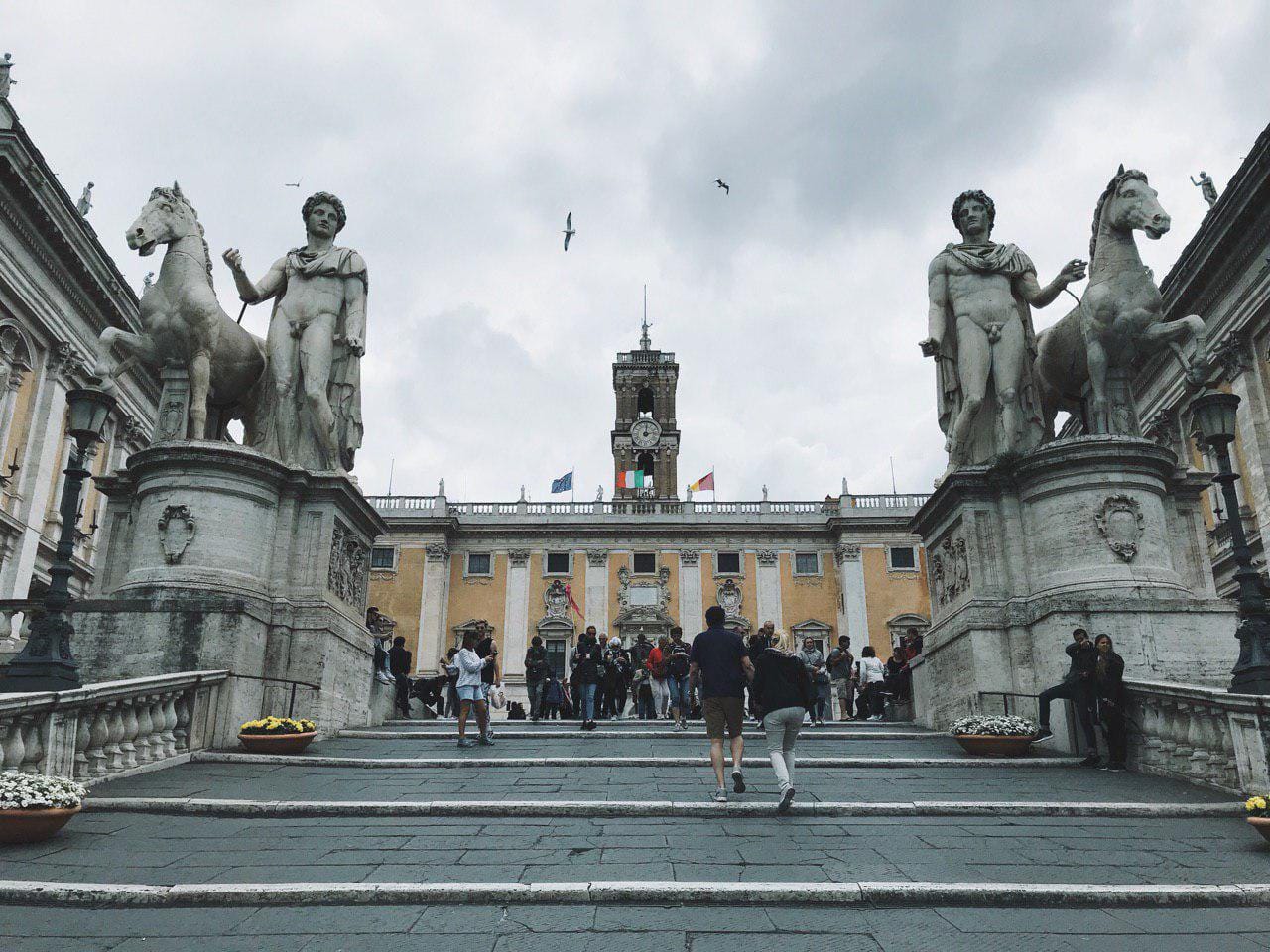
In the myths of the union of Leda and Zeus-the-swan there are several versions of the outcome: Leda bore two eggs and two children, Helen and Clytemnestra; Leda bore four eggs, plus various versions of paternity: some name Zeus as the father of the eggs and Tyndareus as the father of the children born live, others hold that Zeus, having lain with Leda, fertilised only one egg and begot only one child, while the others were born of her husband Tyndareus, who lay with Leda at the same time as Zeus. The mythmakers agree on one point: from the eggs hatched the twin brothers Castor and Polydeuces. In Greek they are called the Dioscuri, that is, the youths of Zeus. In Rome this myth was much beloved, as having a direct bearing on the origins of Romulus and Remus and the founding of Rome, and it is often met with in the city's decoration. These genuine ancient Dioscuri on the Capitoline Hill were set up by Michelangelo, who chose them to adorn his carefully conceived Piazza del Campidoglio. By iconographic tradition, the lads ought to have eggshells on their heads, but I myself, alas, failed to make them out.