In Miyazaki's "Howl's Moving Castle" there is an episode in which Sophie Hatter, whose enchantment is almost undone, gives her plait to the demon Calcifer so that he may revive after the Witch of the Waste has all but snuffed him out, and the demon acquir
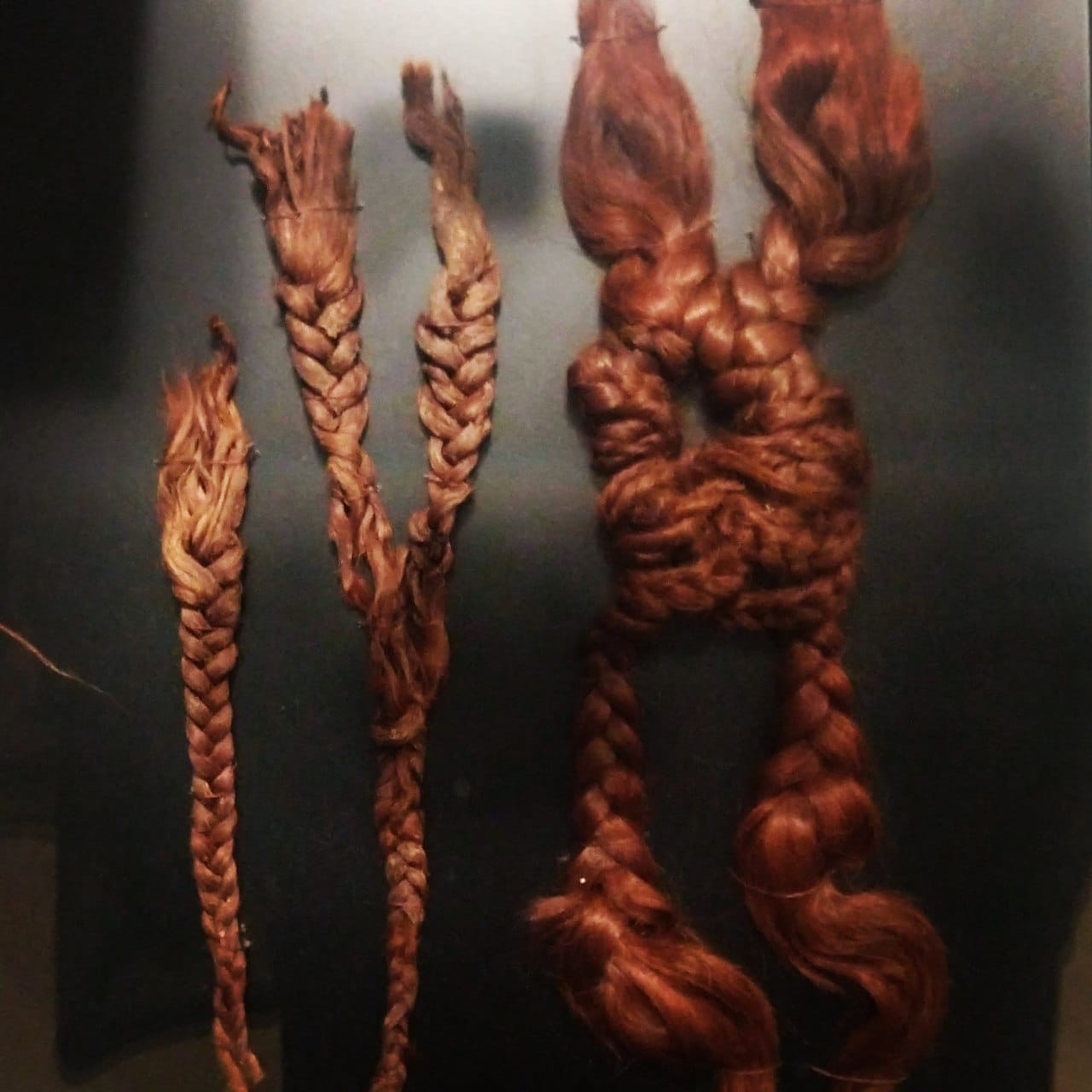
In Miyazaki's "Howl's Moving Castle" there is an episode in which Sophie Hatter, whose enchantment is almost undone, gives her plait to the demon Calcifer so that he may revive after the Witch of the Waste has all but snuffed him out, and the demon acquires unprecedented power by accepting a girl's plait. Strange as it may seem, such a plot has perfectly real roots in the history of world culture. The ancient Danes and Celts, for instance, had a custom of throwing a severed plait into the bog. Girls gave the most precious thing they had as an offering to higher beings. In this photograph from the National Museum of Denmark in Copenhagen are three women's plaits, dated approximately to 350 BC: two blonde and one bright red, braided in the traditional manner of the Scandinavian Iron Age and cast into the bog as a sacrifice to the gods. The plait is a fairly frequent find in Scandinavian archaeology, and not only as a votive object, but sometimes as part of the mummies that are found from time to time, in excellent condition, in the bogs of Denmark. Thanks are due to the boggy environment for the exceptional preservation of the finds.