In 2013 the Library of Congress published a report with the eloquent title “The Survival of American Silent Feature Films: 1912–1929”, from which it follows that we have lost for ever 75% of the creative legacy of the era that raised…
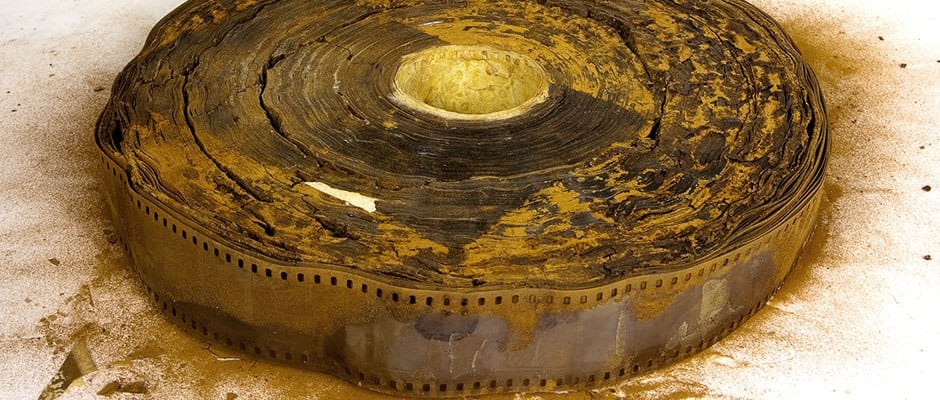
Between 1912 and 1929 some 11,000 silent feature films were released in the United States. Only a small part of them has survived to the present day. The chief cause of the losses was deliberate destruction. Before home cinema and television, films were considered useless once their run was over. Silent cinema, for its part, was regarded as rubbish after the arrival of sound. Studios made money by recycling the film stock to extract the silver.
Catastrophes were added to this: nitrate film was highly flammable. The fire at the Universal vaults in 1924, the fire at Warner Bros. in 1933, the fire at Fox in 1937, the fire in the MGM storage facility in 1965: each time the flames destroyed dozens, sometimes hundreds, of films.
Among the lost works there are films whose loss is especially painful. One of them is the first screen adaptation of The Great Gatsby.
In the spring of 1926 the studio Famous Players-Lasky acquired the rights to Fitzgerald’s novel. The director chosen was Herbert Brenon, who had just made Peter Pan and was one of the most expensive directors of the day. The leading role was played by Warner Baxter, and Lois Wilson was cast as Daisy. Neil Hamilton appeared as Nick Carraway, and the young William Powell played the gloomy mechanic George Wilson.
Fitzgerald and his wife Zelda hated the adaptation and walked out of the auditorium in early 1927 without sitting the film through. The critics were restrained: the reviewer of the New York Times pronounced the picture “not a bad entertainment” but reproached the director for a lack of subtlety, while Variety called it “solid cinema for the average viewer”. The writer John O’Hara, however, a friend of Fitzgerald, was delighted and considered the silent version the best of all the later adaptations.
The film ran for 80 minutes. Today only one minute of it remains: a trailer kept in the Library of Congress. In 2003 Professor Wheeler Winston Dixon undertook a large-scale search for a surviving print, which yielded nothing. There were even rumours that one copy was held in some unknown Moscow archive, but these were dismissed as groundless.
Martin Scorsese, a long-standing campaigner for the preservation of film heritage, wrote of the Library of Congress report: “Every time a silent film is miraculously discovered, it reminds us of the treasures we have already lost. And it gives hope that others are still to be found.” Indeed, the archives continue to be checked. Several dozen “lost” films have been found in recent years: in Australia, New Zealand and France, in attics and in cupboards.