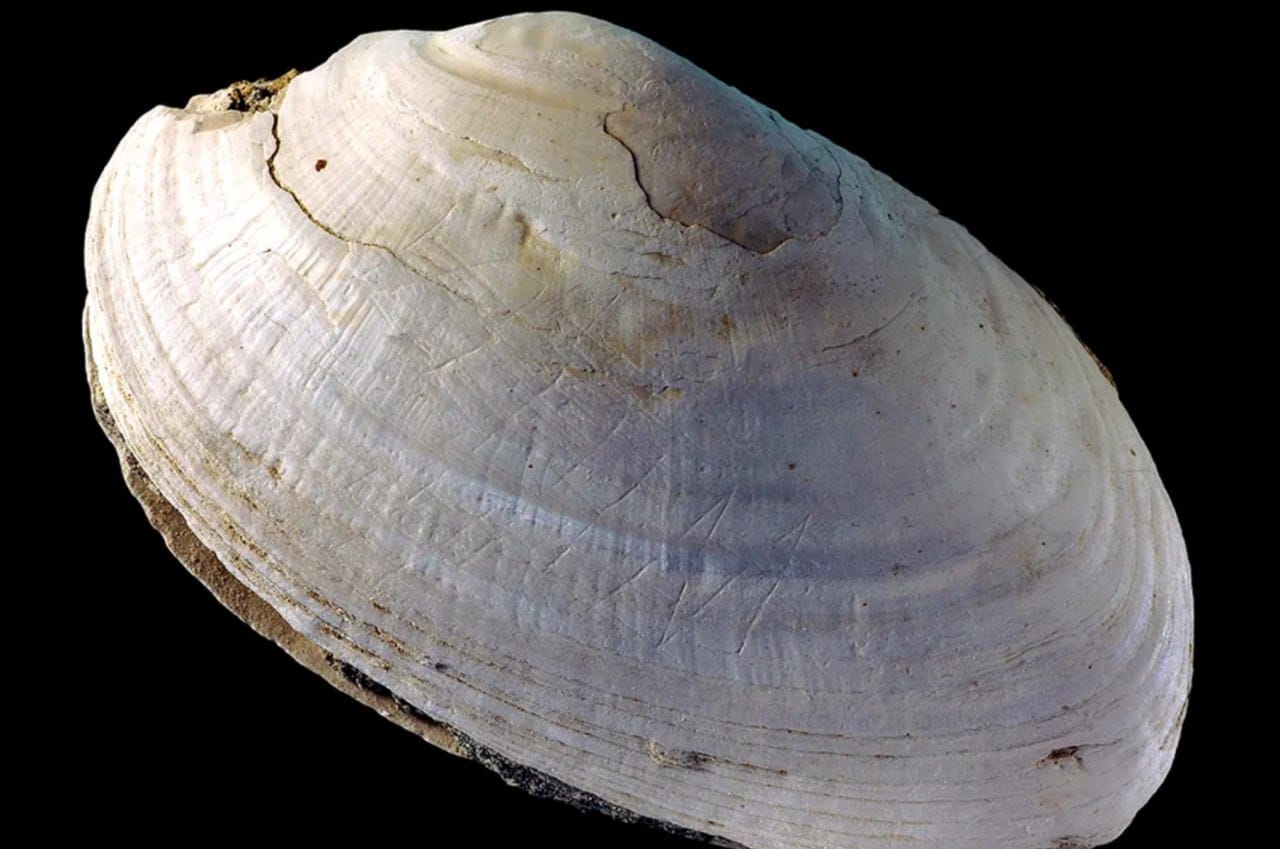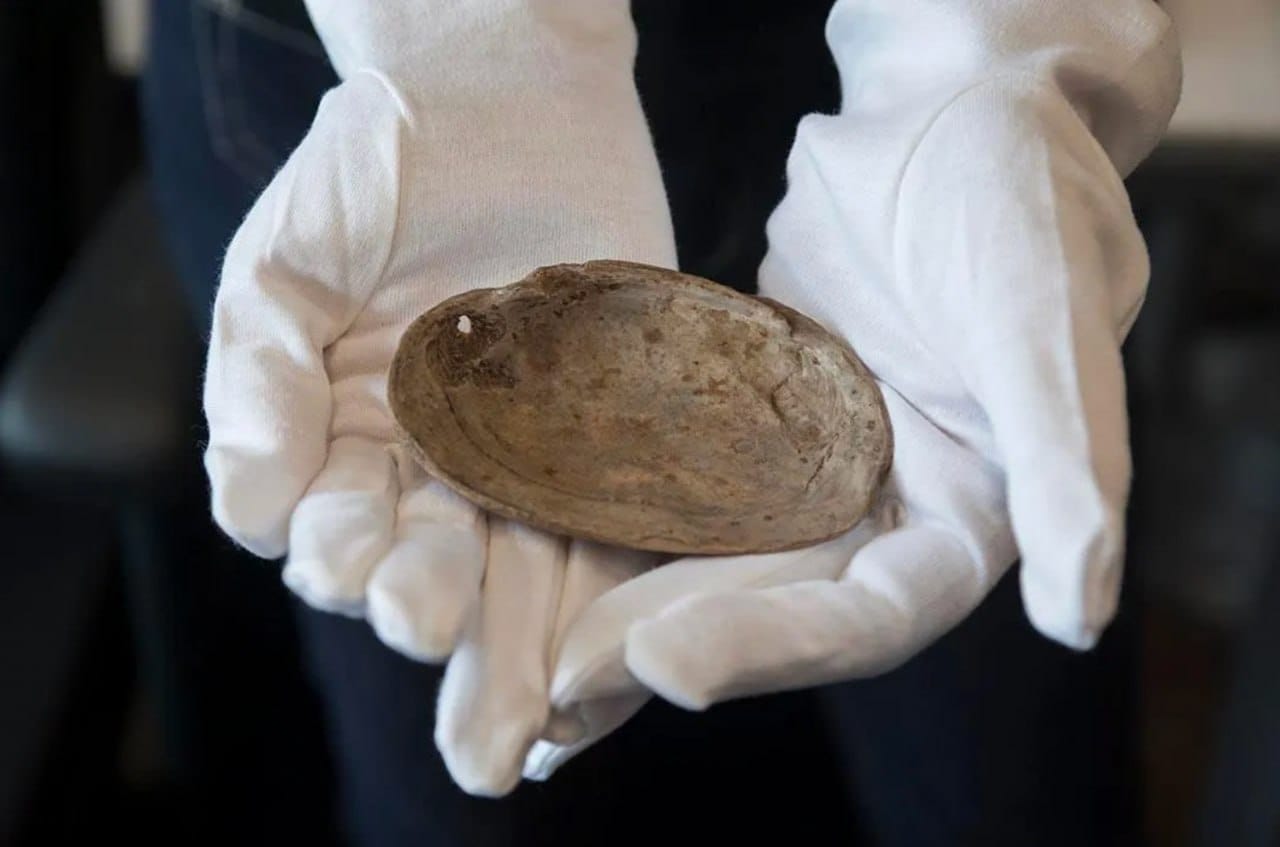
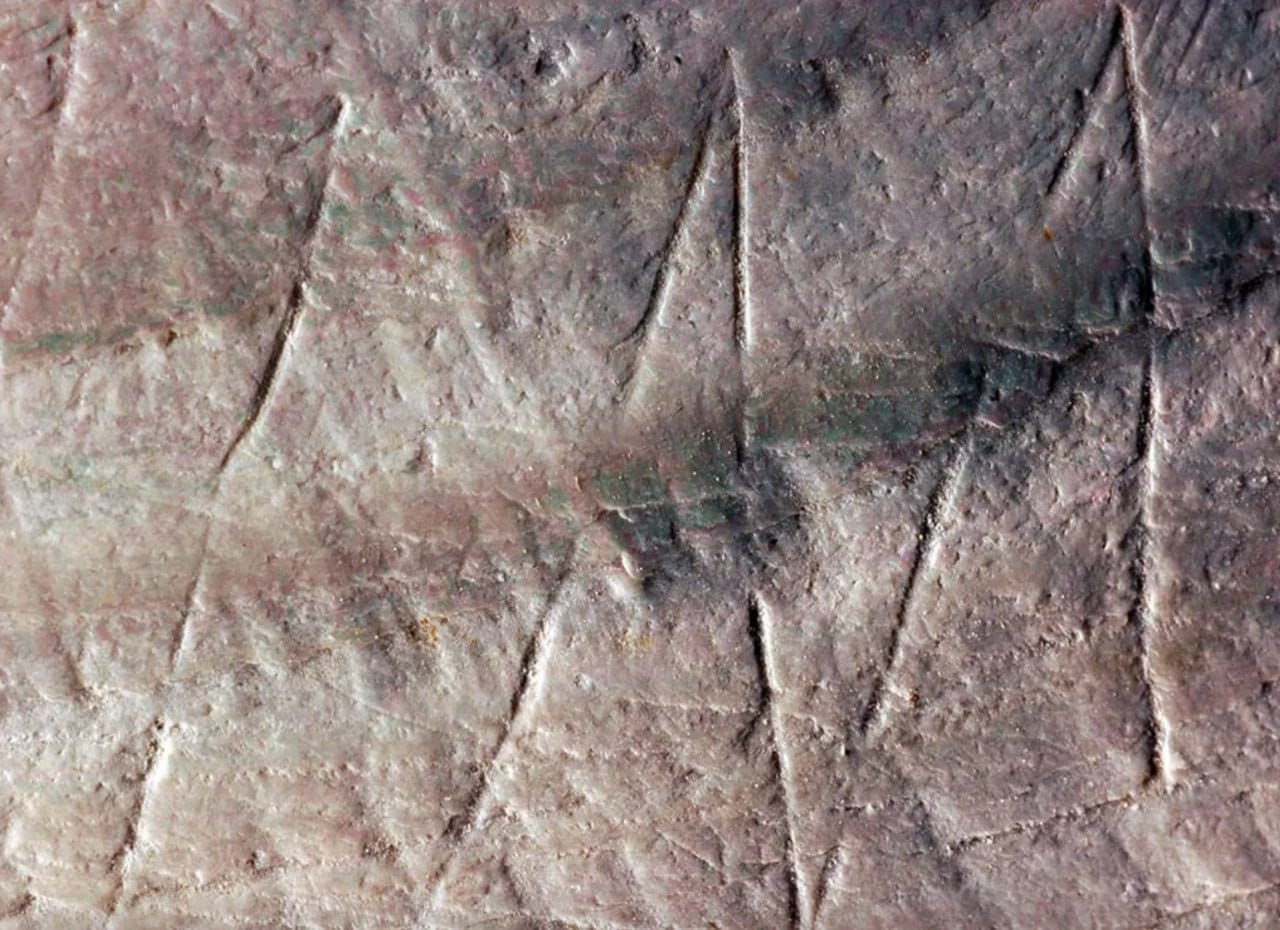
Zigzag on a shell from the Dubois collection recognised as the oldest known engraving
In 1891 the Dutch physician Eugène Dubois found on the bank of the Solo River on the island of Java the skullcap of a creature which he named Pithecanthropus and declared a transitional link between ape and man. Today the find is assigned to the species Homo erectus. Together with the bones Dubois gathered shells of freshwater molluscs, and his entire collection was kept for more than a hundred years at the natural history museum in Leiden.
In 2007 an Australian postgraduate student, Stephen Munro, was using fossil molluscs to study the habitat of ancient humans. In Leiden he photographed shells from the Dubois collection and on one of them saw a scratched zigzag. He later recalled that on seeing photograph number 298 he almost fell off his chair. At first Munro decided that the pattern had been left by one of the museum's curators as a joke, and he wrote about it to the Dutch archaeologist Josephine Joordens.
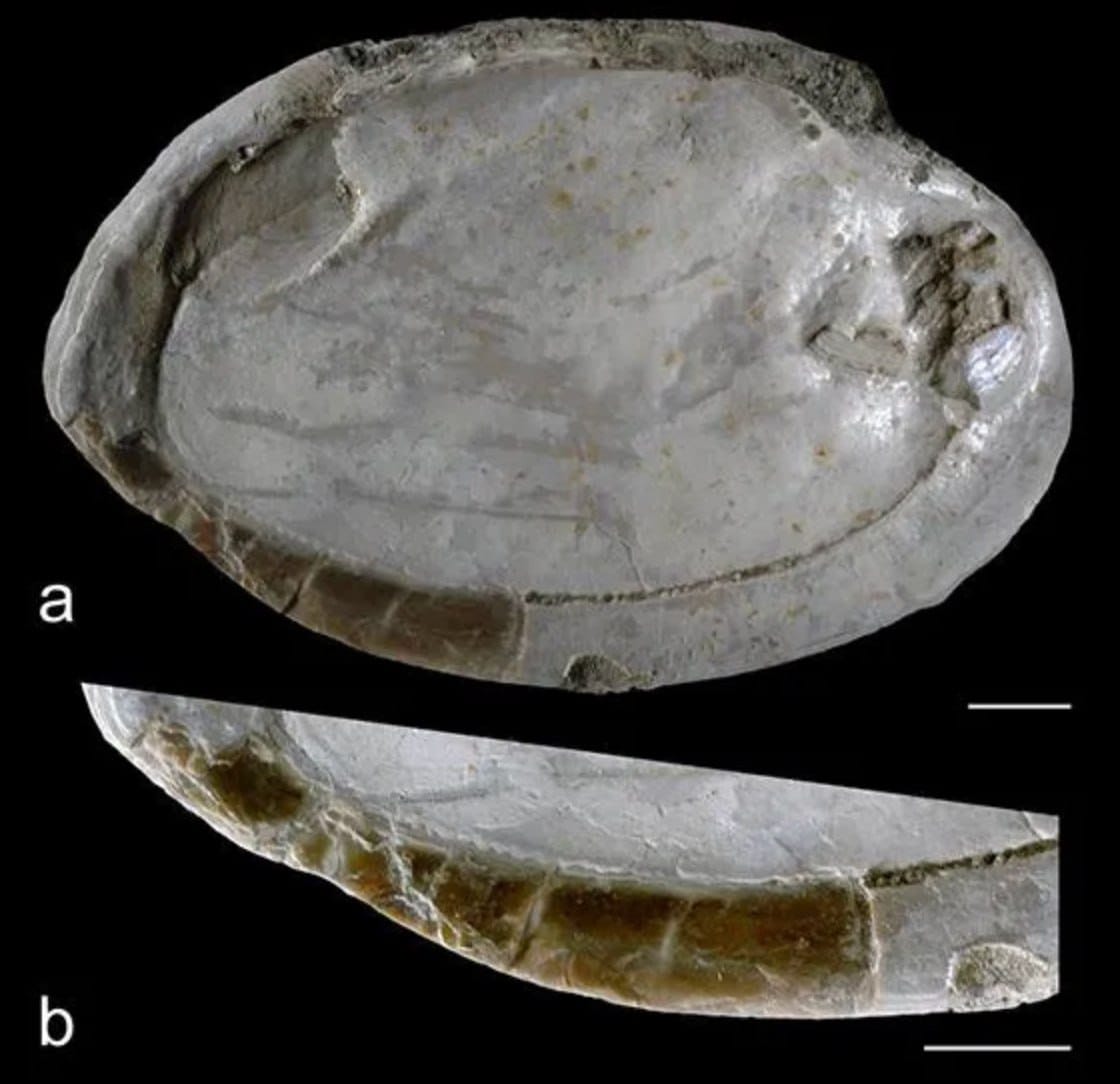
The verification took seven years. Holes in other shells showed that the inhabitants of Trinil opened molluscs always in the same place, where the shell's muscle attaches to the valve, and this required knowing its structure. One shell they ground down and used as a cutting tool. The researchers dated the layer to 430,000-540,000 years ago.
And in 2014 the team published its results in the journal Nature, according to which the zigzag on the shell proved to be the oldest known engraving, and it was made not by Homo sapiens but by Homo erectus.
Until then the oldest example of pictorial activity had been considered a piece of ochre from the South African Blombos Cave with a cross-hatched pattern about 100,000 years old. The engraving on the Trinil shell, discovered by chance, turned out to be roughly five times older.