One is tempted to write: time to wake, beauty, wake!
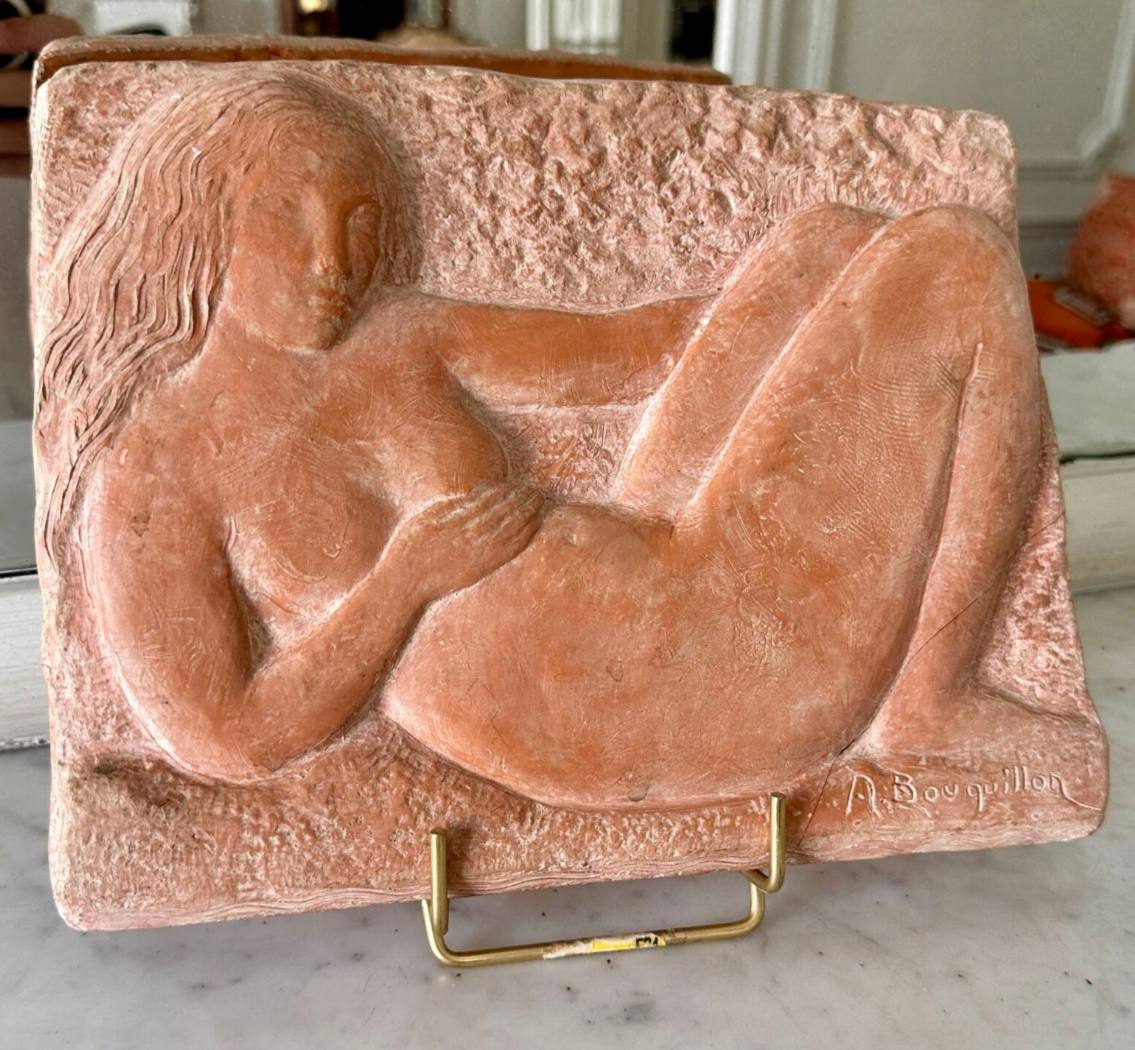
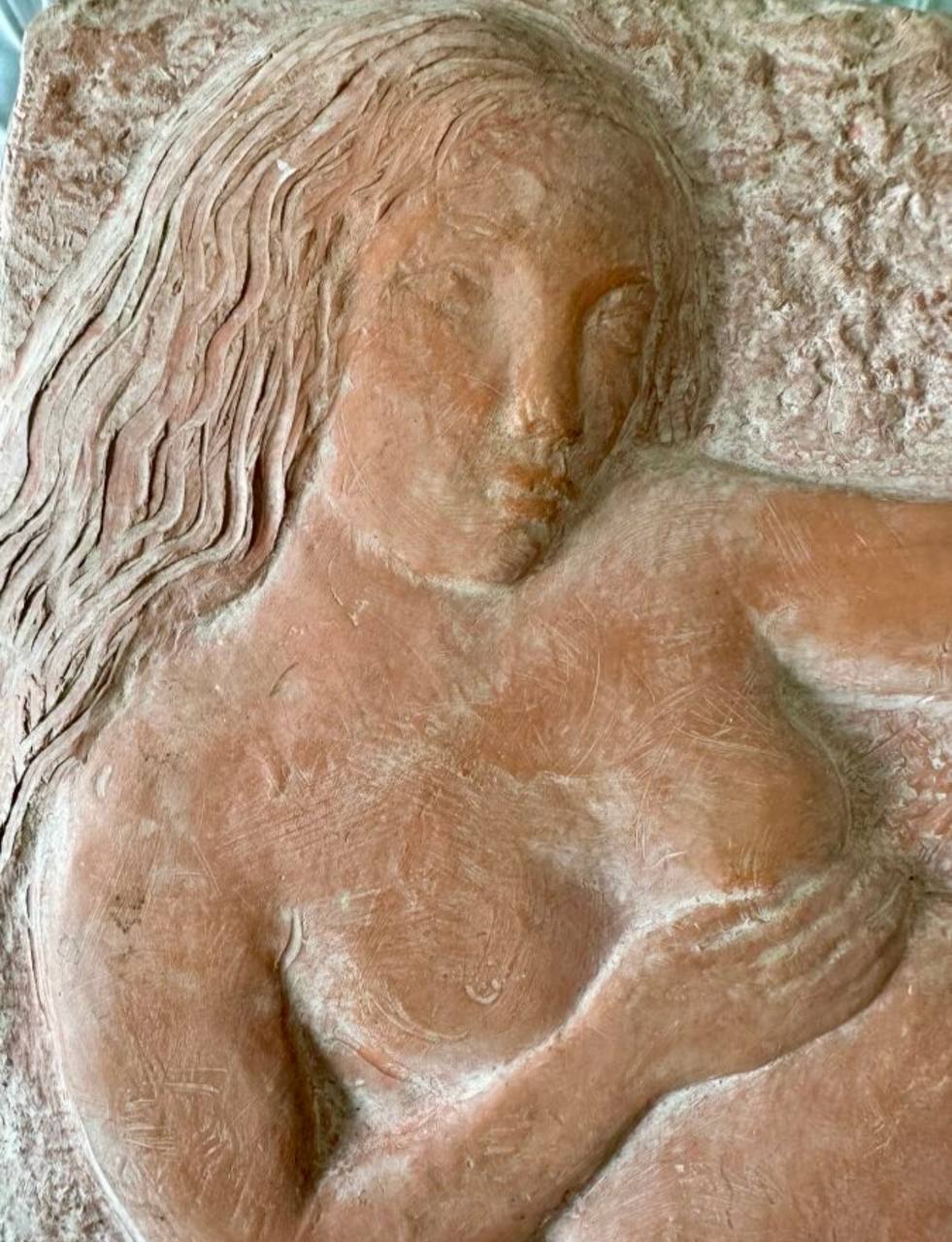
Let us try to wake my terracotta Venus together.
Frost and sunshine; a glorious day!
You are still slumbering, lovely friend:
Time to wake, beauty, wake!
Open your eyes, closed in languor,
To meet the northern Aurora,
Appear as the star of the north!
Literal translation
Last night, you remember, the blizzard raged,
Mist swirled across the clouded sky;
The moon, like a pale blotch,
Showed yellow through the gloomy clouds,
And you sat there sorrowful:
But now… look out of the window:
Literal translation
Beneath the blue skies,
Like magnificent carpets,
Gleaming in the sun, the snow lies;
The transparent wood alone shows black,
And the fir tree greens through the frost,
And the river glitters beneath the ice.
Literal translation
I wonder who this beauty is. "A flower in the desert, a nightingale in the forest wilds, a pearl in the sea", as Pushkin described her: Maria Vasilyevna Borisova, daughter of a landowner of modest means, who lived in the Wulf house in the village of Pavlovskoye, where he wrote this poem? Indeed: "I intend to fall in love with her in the next few days", Alexander Sergeyevich wrote on the very eve of his arrival at the house where "Winter Morning" would be composed.
Very well. But since I have no liking for the hunting of literary prototypes, let us look for the roots of this beauty somewhere other than in the province of Tver.
Is she not the one who falls asleep in Zhukovsky's ballad "Svetlana", "before the mirror, alone in the middle of the chamber", and sees a terrible dream of the dead betrothed, from which she wakes when
"Through the thin curtain of the window
The ray of dawn shines;
The cock beats his wings noisily,
Greeting the day with song;
All is gleaming… Svetlana's spirit
Is troubled by the dream".
Literal translation
Is it not the same Aurora who, as in Pushkin, replaces the terrible night?
And perhaps she is also in Nikolai Lvov, who addresses his beauty, "O my soul's friend", thirty years earlier, in "A Night in a Finnish Hut in the Wasteland", filled with horror, in which the hero can be delivered from the oppressive night phantoms only by his beloved:
Who will dare to share with you the cruel,
Calamitous lot of one living in the midst of the steppes,
In a cramped, collapsing hut,
Where eternal poverty hovers,
And a cold, stormy night?
You alone, O my soul's friend!
..
Oh, if only you were here with me,
Despondency would not dare
To touch us when you are here, my friend!
..
Storm, gloom, wasteland, hut,
In close, ardent embraces,
Under the wing of tried love,
Would have multiplied our happiness.
Literal translation
And of course she is the same beauty who, some ninety years later, wakes in Kornilov's poem.
The morning greets us with coolness,
The river greets us with wind.
Curly-headed girl, why are you not glad
At the merry singing of the factory whistle?
Don't sleep, get up, curly-headed girl!
Ringing through the workshops,
The country rises in glory
To meet the day.
Literal translation
Who is she? Perhaps Russia herself?