This Is How the British Museum Displays the Library of Nineveh
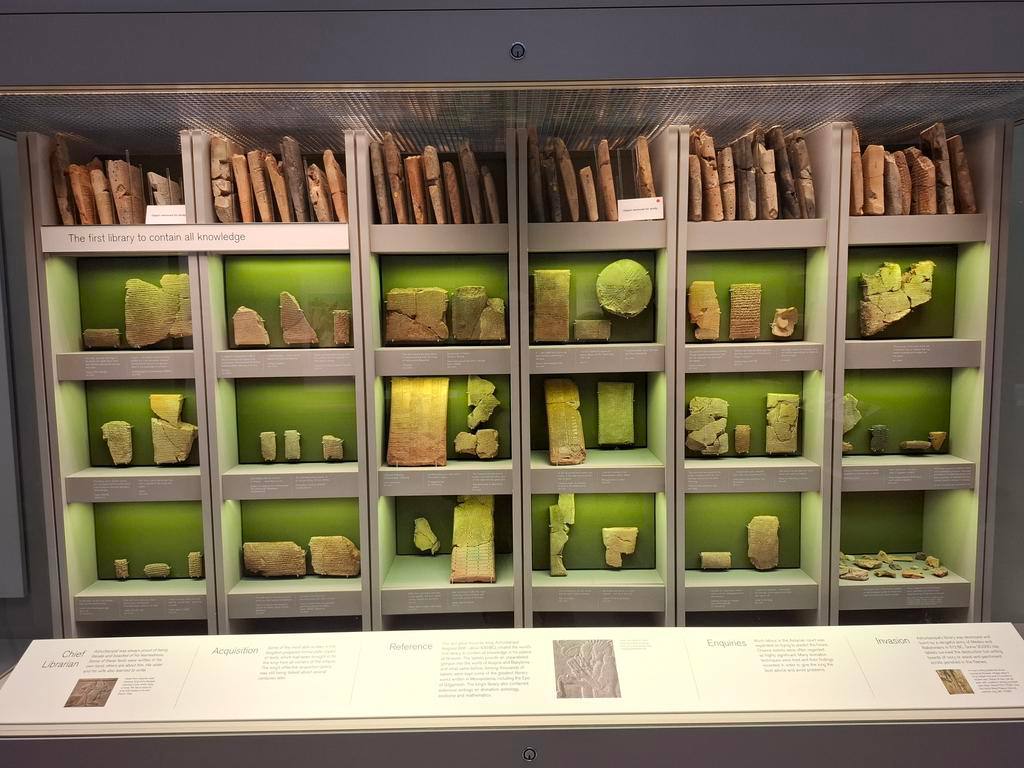
The legendary Library of King Ashurbanipal was discovered by the Englishman Austen Henry Layard in 1849. He managed to unearth one part of the vast library, which had been kept in the north-west palace on the banks of the Euphrates. And he brought the epoch-making find to England in its entirety: more than 25 thousand clay tablets inscribed in cuneiform, written in parallel in Sumerian and Akkadian.
Today the best-known library of cuneiform texts has for the most part already been deciphered by scholars.
To those who love to scold the English for carting off treasures, and to admirers of jokes about the British Museum, which would have stolen the Moon too, one would like to put a question: what would have become of this library had it stood on the territory of Iraq? The "Gates of God", which had stood for thousands of years at the entrance to Nineveh, near the modern Iraqi city of Mosul, were, for instance, simply destroyed by militants in 2016, as were the monuments of Palmyra, the triumphal arch, the statue of the Lion of Allat, the funerary towers, and the temples of Baalshamin and Bel