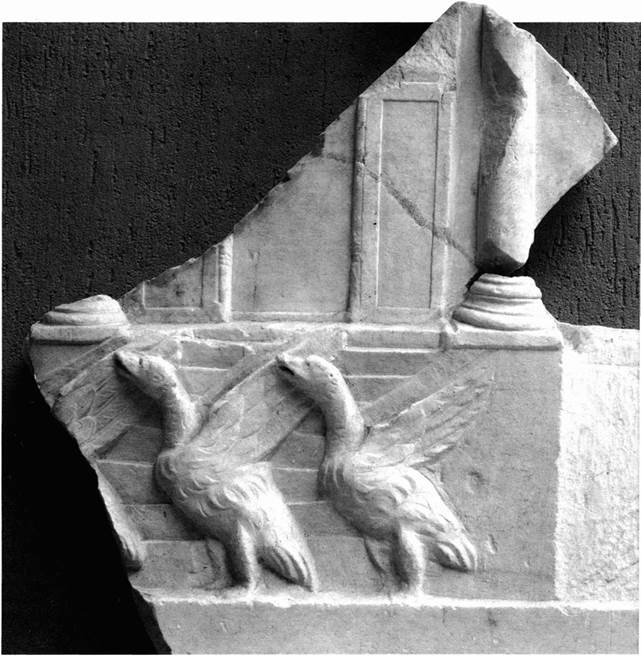
The Sacred Geese before the Temple of Juno Moneta on the Capitoline Hill
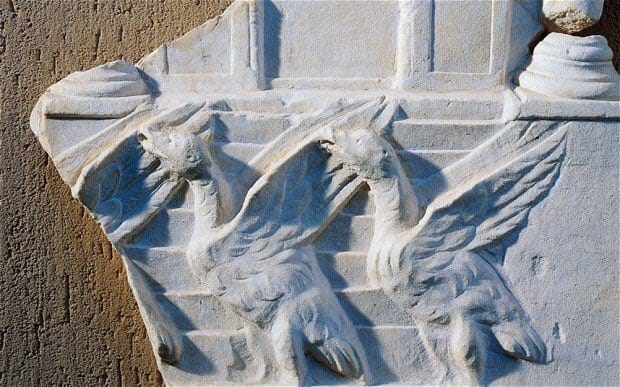
The historical chronicles, including the works of Titus Livius, offer no reliable confirmation that it was the geese who played the decisive part in saving the Capitol. The legend seems rather to have arisen as a symbolic tale reflecting the importance of vigilance, and its value is chiefly emotional.
In 390 BC a band of Gauls, possibly on their way to seek mercenary service in southern Italy or Sicily, routed the Roman army on the banks of the River Allia near Rome. The Gauls plundered Rome, though this had no lasting effect on the development of the city, even if it left a deep scar on the Roman psyche.
A later tradition held that the garrison of the Capitol stood firm and repelled a night attack by the Gauls, having been roused by the cackling of the geese kept in the temple of Juno.
It is known, however, that the few defenders of the Capitol were obliged to buy their safety with an enormous sum in gold. Naturally, so shameful a page of history called out to be papered over, and so there appeared the tale of the sacred geese of Juno Sospita, which soothed the pride of Rome.
There was, besides, the legend of the exiled commander Camillus, who returned at the last moment to crush the raiders just as they were receiving their gold. In practice, the damage done by the Gauls was comparatively small and was made good fairly quickly; the invaders, to all appearances, did not linger long in the occupied city and carried out no systematic destruction.
In time people even began to speak of a special breed of Roman watch-geese, adding that they were prized not only for their symbolic religious significance but also for qualities of breed that made them dependable guardians of the Roman Capitol. The Roman goose, it was said, possessed some peculiar hardiness (though how one is to be hardier than an ordinary goose is hard to say), and a particularly loud and prolonged honking (yet everyone knows that geese are quite aggressive and territorial enough as it is, and can frighten an intruder with more than mere noise when they sense danger).
Thus the trauma of the Gallic sack left behind not only fear and hatred of the northern barbarians and a sense of vulnerability, but also a handsome legend of miraculous deliverance. And the invention, meant to lend a heroic gloss to a rather humiliating episode, acquired embellishments in history, religion and such fields, far removed from folklore, as zoology and husbandry