“The yearling fillies pretend to be grown up and staid, and only rarely do they skip about or join the merry companies
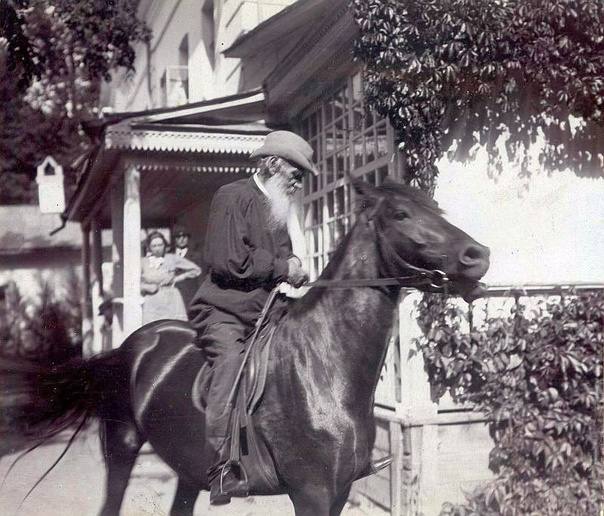
“The yearling fillies pretend to be grown up and staid, and only rarely do they skip about or join the merry companies. They graze decorously, arching their swan-like, close-cropped necks, and, as though they too had tails, they flick their little brooms. Just like the grown-up ones, some lie down, roll, or scratch one another. The merriest company is made up of the two- and three-year-olds and the unmated mares. They go about almost all together, and apart, in a merry girlish crowd. Among them one hears stamping, squealing, neighing, kicking. They come together, lay their heads across one another’s shoulders, sniff one another, leap, and sometimes, with a snort and a tail raised like a trumpet, at a half-trot, half-canter, they run proudly and coquettishly past their companions. The foremost beauty and ringleader among all this youth was the mischievous brown filly. Whatever she started, the others did too; wherever she went, the whole crowd of beauties went after her. The mischief-maker was in an especially playful mood that morning. A merry vein had come upon her, just as it comes upon people. Already at the watering place, having played a joke on an old horse, she ran along the water, pretended that she was frightened of something, snorted and dashed off into the field at full gallop, so that Vaska had to gallop after her and after the others who had tagged along with her. Then, after eating a little, she began to roll about, then to tease the old mares by getting in front of them, then she cut out one suckling foal and began to run after it as though meaning to bite it. The mother took fright and left off eating, the little foal cried in a pitiful voice, but the mischief-maker did not so much as touch it, only gave it a fright and provided a spectacle for her companions, who watched her pranks with sympathy. Then she took it into her head to turn the head of a roan gelding on which, far beyond the river, a peasant with a wooden plough was riding across the rye stubble. She stopped, proudly, a little sideways, raised her head, shook herself and neighed in a sweet, tender and long-drawn voice. Mischief, feeling and a certain sadness were all expressed in that neighing. There was in it both desire and the promise of love, and sadness for it.”
One has the feeling that in “Kholstomer” Leo Tolstoy is describing not horses frolicking in a meadow but inveterate coquettes who have made their way to a society event. Confess, dear mischief-makers, do you recognise yourselves? Who does not love to tease the old dowagers!