Origin of the English phrase skeleton in the cupboard and the ban on doctors working with corpses
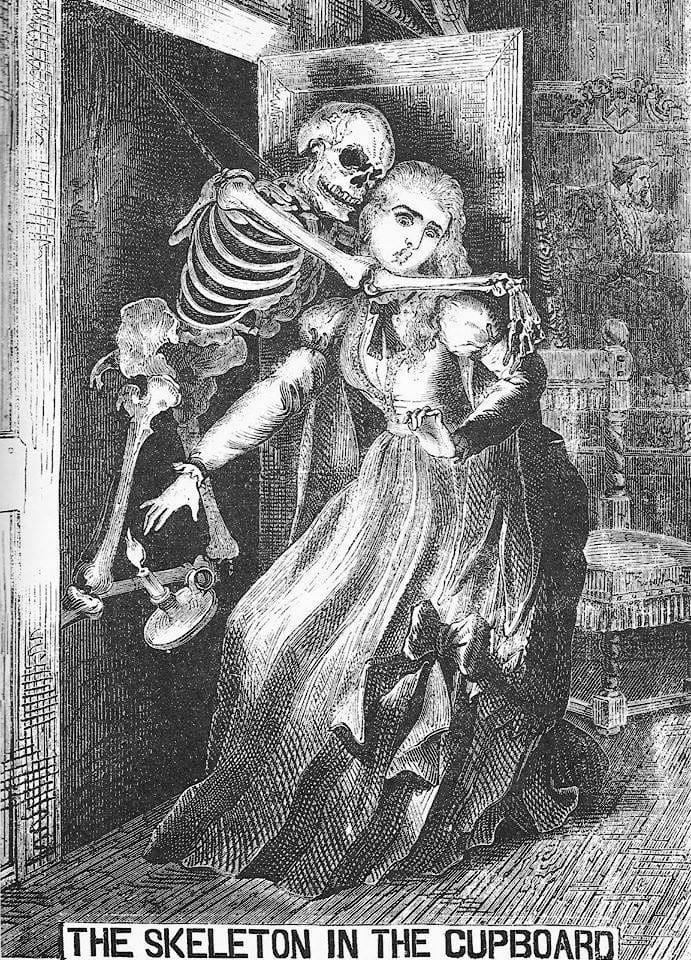
A skeleton in the cupboard. The expression came to us from English and is connected with the history of medicine, or, to be more precise, with the ban in England on physicians working with dead bodies, the bodies of executed criminals alone excepted. This "scientific material", being very rare and much in demand, was therefore carefully kept for years, naturally far from prying eyes: it would simply have been indecent to put mortal remains on public display. Like everything forbidden, the place where medical skeletons were kept greatly interested the public, and since few had ever seen them, whether in doctors' consulting rooms, beside a luxuriant ficus, or on the soft sofa of the drawing room, public opinion settled on the view that the cunning doctors hid their experimental skeletons somewhere in a dark cupboard. The phrase became a synonym for a jealously guarded secret, a spine-chilling mystery of the past. And although the ban on the dissection of corpses remained in force in England until 1830, the "skeleton in the cupboard" appears in literary usage as early as 1810, with the very meaning we give the phrase today: a secret, a matter guarded from outsiders.