The first animals are thought to have appeared in the Ediacaran, some 635 to 539 million years ago, but then came millions of years of calm, until a sudden diversity burst forth
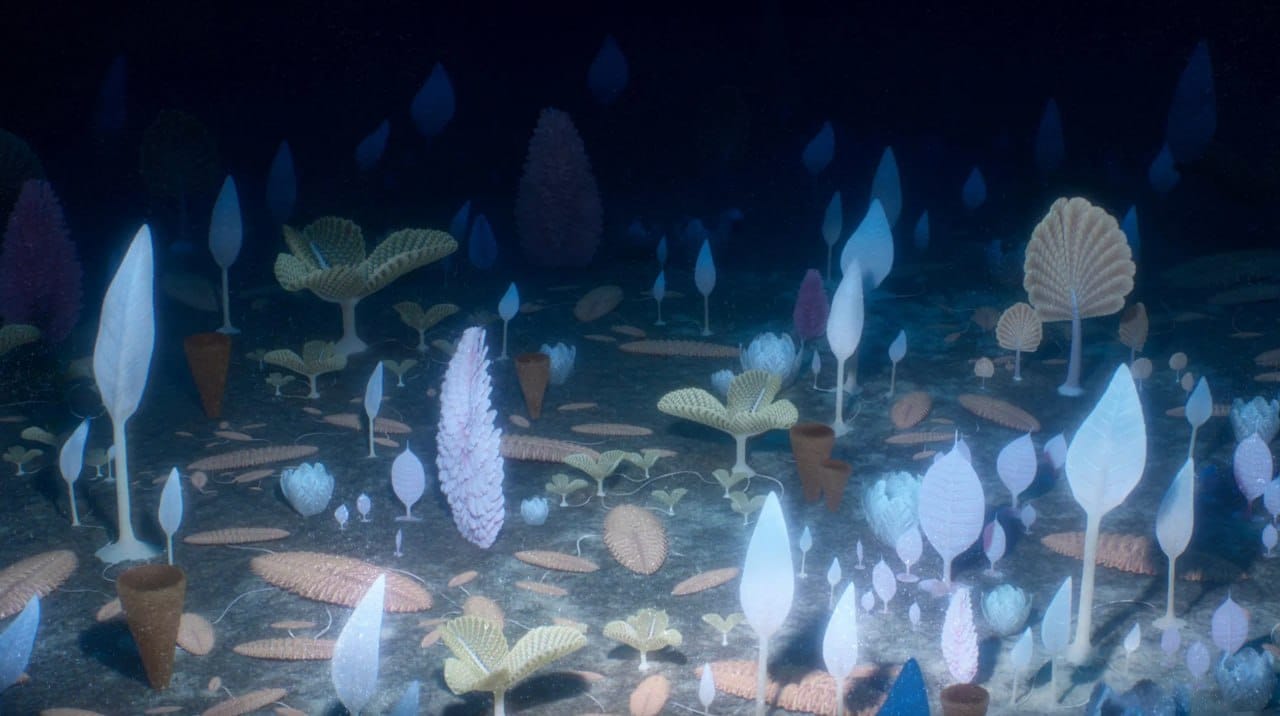
A study from Cambridge, published in Nature Ecology and Evolution, tries to answer the question of where this pause came from. The version runs as follows. Early animals reproduced asexually. They spread by stolons, runners, like the modern strawberry, producing copies of themselves. In the bountiful Ediacaran seas this worked perfectly well. Neighbours joined by runners shared nourishment rather than competing for it, and without competition there is no incentive to change. But when life moved into the shallows, where storms and swings of temperature made food less plentiful, the stress pushed it towards sexual reproduction, and with it towards dispersal over long distances, competition and a surge of diversity that prepared the ground for the Cambrian explosion, that is, the abrupt appearance of almost all animal phyla around 540 million years ago.
The study is based on data from the imprints at the celebrated site of Mistaken Point in Newfoundland.
This, naturally, is only one version. The Cambrian explosion has also been explained by rising oxygen levels (large, mobile animals, after all, need something to breathe), by the arrival of predators (constant participation in the race of "eat or be eaten" spurs evolution), and by the maturing of the regulatory genes of development, which made it possible to assemble new body plans. The hypothesis of sexual reproduction is one more addition to this list.