From June 1937 to February 1938, four Soviet researchers took part in the first expedition in history to the drifting station "North Pole-1"
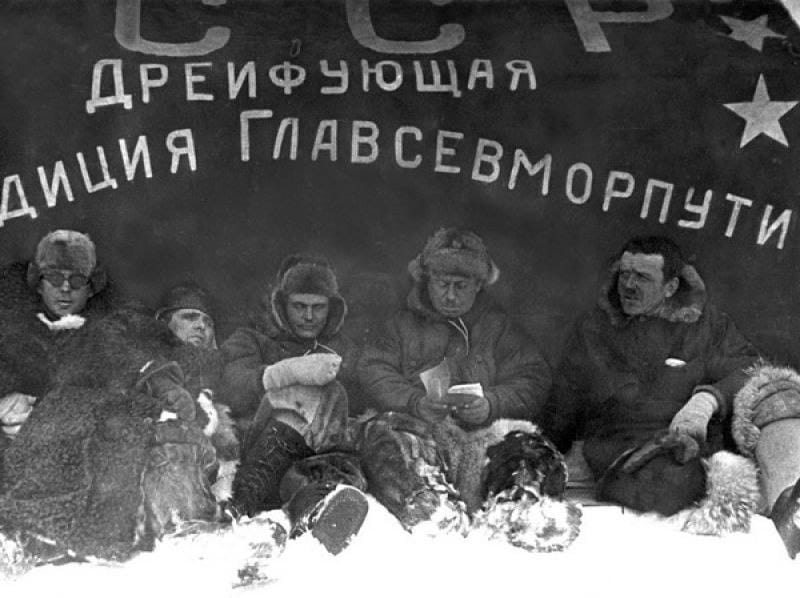
The station was headed by the geophysicist Ivan Papanin; his team consisted of the meteorologist and geophysicist Yevgeny Fedorov, the radio operator Ernst Krenkel and the hydrobiologist Pyotr Shirshov. The organisation of the whole enterprise was directed by Otto Schmidt, head of the Soviet Arctic Expedition.
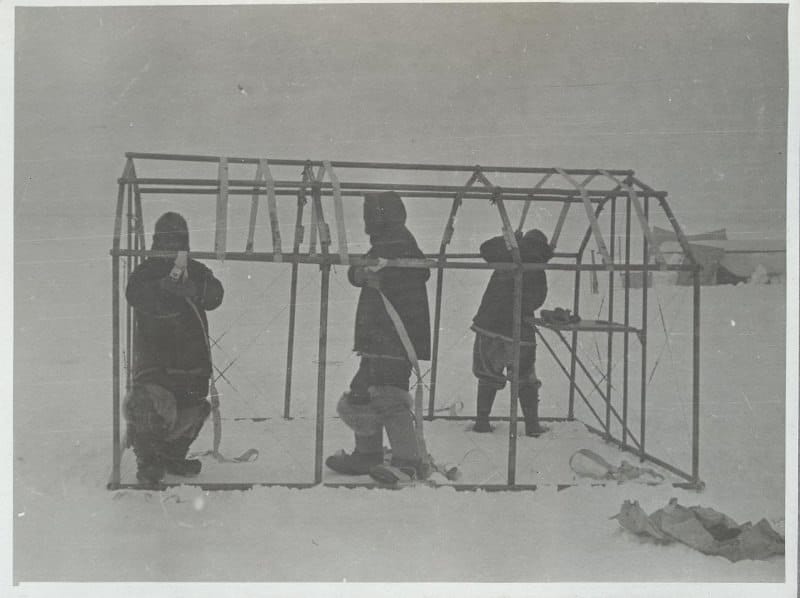
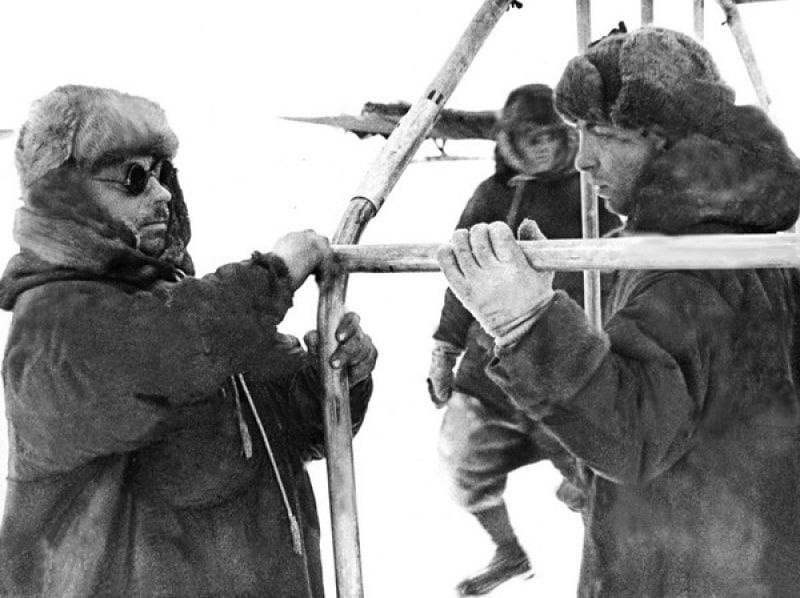
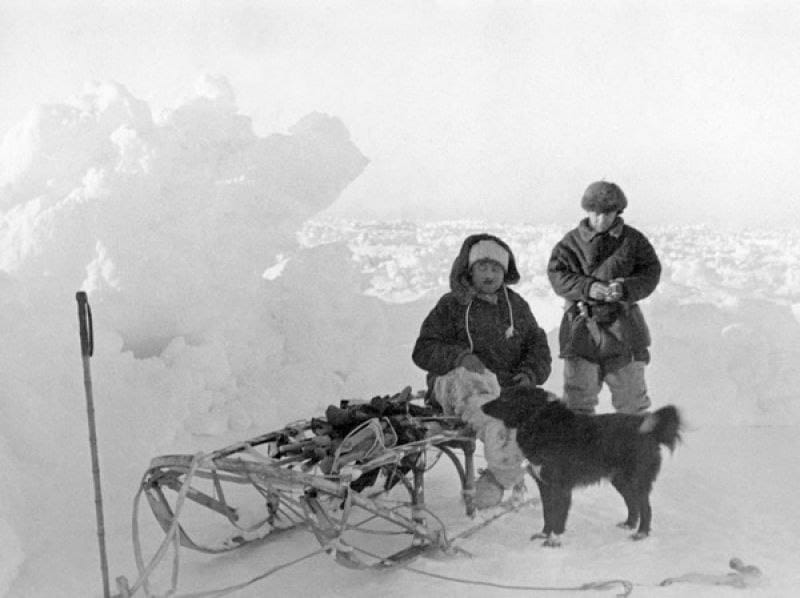
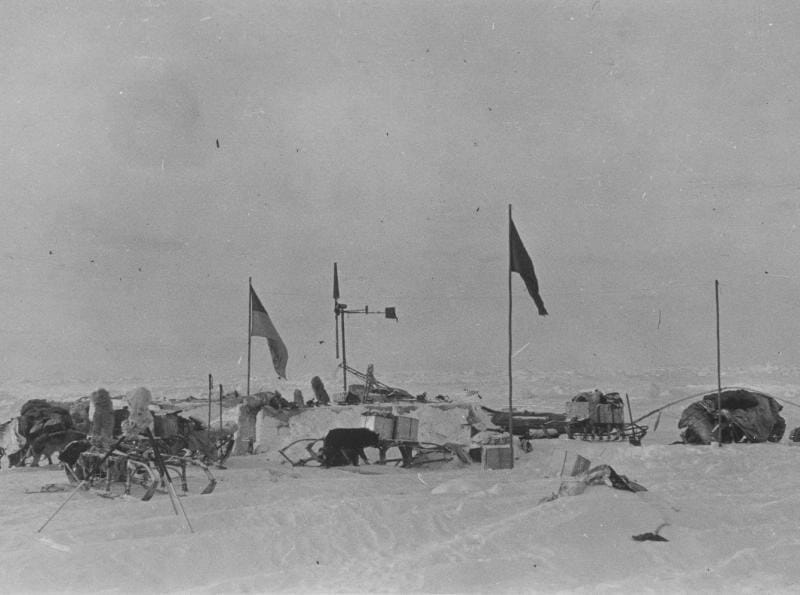
The members of the expedition and the necessary cargo were delivered by aeroplane to an ice floe drifting in the region of the North Pole. A camp was pitched on the floe, a tent specially designed for wintering in extreme conditions was put up, stores and permanent bases for scientific research were built, all the equipment was set up, and tonnes of provisions and essential supplies were laid in. In all, 45 people took part in preparing the opening of the "North Pole" station, but by the time the expedition was launched they had all flown away, leaving only the by now celebrated "Papanin four" and a dog named Vesyolyi.
The floe was enormous, 3 by 5 kilometres. During the drift, all manner of research was carried out on it, from biological and hydrological to geophysical and magnetic. Reports were sent to Moscow every month. Even before the start, the approximate course of the drift had been calculated: the floe was to move in the direction of Greenland. And so it did. But at the end of January the floe began to shrink, and one of the storms damaged it badly, splitting it with cracks a kilometre long into several pieces, so that the various buildings of the station ended up on different fragments. In the end the members of the expedition had to move into a snow house, since a crack had opened in the ice beneath the high-tech tent, devised by the Research Institute of the Rubber Industry. The scientists drifted for 274 days and covered 2,500 kilometres, genuinely drawing near to the shores of Greenland. Icebreakers and an aeroplane were sent to rescue them. The Soviet explorers left their "scrap of ice" at the coordinates 70 degrees 54 minutes north, 19 degrees 48 minutes west.
For their part in the Arctic scientific expedition all four were awarded doctorates and the title of Hero of the Soviet Union; the four pilots who had delivered the expedition to the Pole also became heroes.