Since they write that the Northern War was recalled at today's negotiations, I too shall turn to the events that preceded the conclusion of the Peace of Nystad
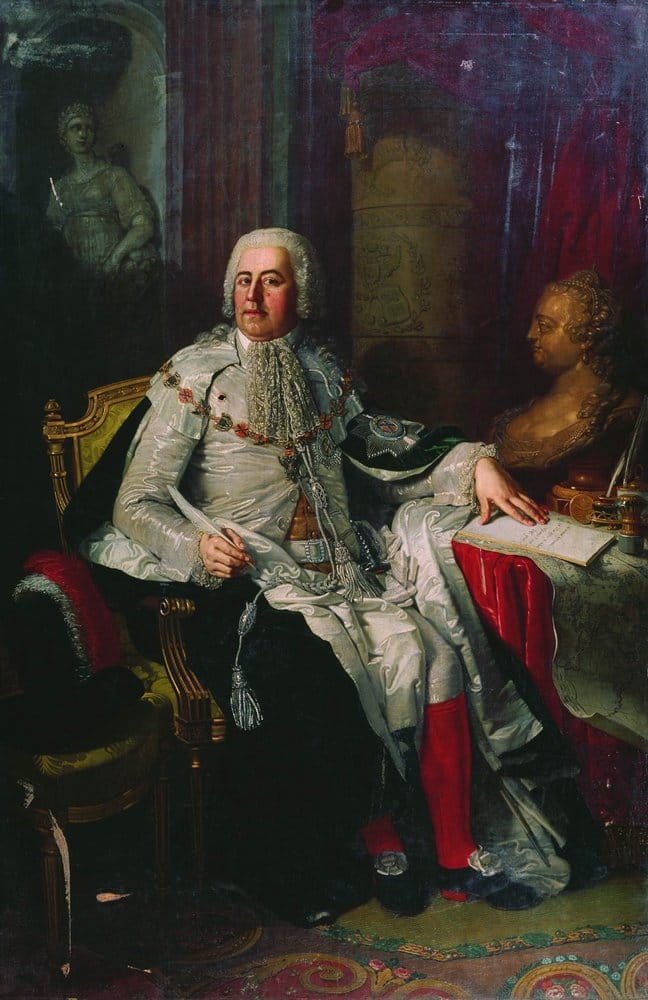
So. The embassy to Sweden in September 1720, ostensibly to congratulate Frederick I on his recent coronation, was headed neither by a courtier of consequence nor by a diplomat, but by Adjutant General Alexander Ivanovich Rumyantsev, who carried out special commissions for Peter, and particularly weighty ones at that, such as bringing the Tsarevich Alexei back to Russia.
(29 September)
Before discussing the matter of greatest moment, the question of peace, or, as they said then, the "making of an armistice", according to the instruction issued by Peter, Rumyantsev took up such particulars as the issue of a passport to the Russian envoy Dolgoruky for travel to Petersburg, the provision of information on prisoners of war and the payment of money to them, the exchange of Russians for Swedes on the principle of one for one and rank for rank, and, finally, a truce.
(30 September)
The last question was passed on to the King, who inquired what proposals Rumyantsev was empowered to make. None whatever: he was empowered to notify His Royal Majesty of Peter's esteem, consideration and desire for particular neighbourly friendship, for the ending of the bloodthirsty war and for the establishment of a lasting peace.
The Swedish King denied any connection with the Viennese rumours that the Swedish side desired a truce, but asked whether Rumyantsev had powers in the event that the talk should nonetheless turn to a truce. Yes, he had: should a representative be appointed on the Swedish side for negotiations, he would announce his powers.
(2 October)
The Swedes proposed to exchange prisoners not one for one but by cartel, that is, all for all. No, a general exchange would not suit Peter. Rumyantsev's powers allowed him to determine the terms of a truce.
"Have you a tsar's decree on the conclusion of peace?"
"No proposals have yet come from you, but if you wish for peace, a place for negotiations must be appointed."
(3 October)
"We shall not exchange prisoners in the Petrine manner, only generally. And to conclude a truce is inexpedient. And yet, have you powers to conduct negotiations for the conclusion of peace?"
"No. A counter-proposal: free movement of non-military vessels in Russian and Swedish waters, and a letter of leave for return to Russia."
"Free movement is agreed, under a white flag. As for the letter, kindly wait."
(5 October)
There will be no free sailing of Russian and Swedish vessels under a white flag. All contacts between the belligerent parties will be conducted through Hamburg.
(6 October)
Audience of leave-taking.
(10 October)
A request to delay departure because of bad weather.
(15 October)
The King announces that he insists on an exchange of prisoners by cartel. The Swedish side agrees to a truce if negotiations for the conclusion of peace are begun. Free sailing under a white flag is permitted. Rumyantsev asks that a place be named for the peace negotiations.
(16 October)
The intention to carry out the exchange of prisoners by cartel is confirmed once more. The negotiations are to be held at Åbo.
(17 October)
Farewell dinner.