Professor Mie Oba proposes Japan as ASEAN's third partner alongside the US and China
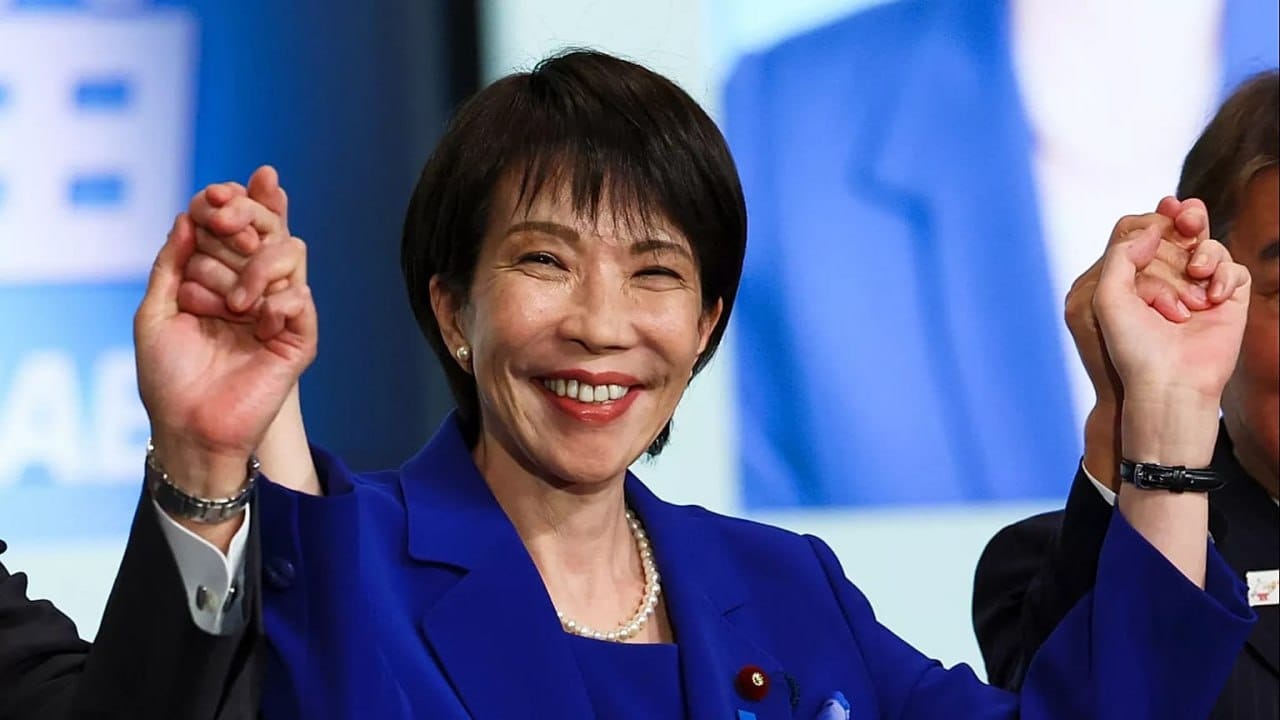
Professor Oba Mie of Kanagawa University writes that Japan could become a third partner for the ASEAN countries alongside the USA and China.
The Association of Southeast Asian Nations preserves its independence under the slogan of "centrality": the bloc's members seek to remain the principal forum of regional politics and not to depend excessively on any single external power. To this end they widen cooperation in trade, investment and infrastructure with as many partners as possible, and the author calls this approach an omnidirectional strategy.
The author sees the main difficulty in relations with the USA and China and in the balance between them. The USA remains the largest military power, occupies a central place in the global financial system, invests more than anyone else in ASEAN and serves as the largest export market for many countries of the bloc. However, the unpredictable policy of the second Trump administration is undermining America's soft power, that is, its ability to influence others through the attractiveness of its culture, values and policies. China, meanwhile, is stepping up its work with the Global South.
Beijing is promoting four initiatives: the Global Development Initiative, the Global Security Initiative, the Global Civilisation Initiative and the Global Governance Initiative. The first two form the core. It calls for mutually beneficial, "green" and balanced development, and proposes a common, cooperation-based approach to security.
For all that, ASEAN has not abandoned its course of independence. In March 2025 the bloc created a Geoeconomic Task Force, and in March 2026, because of the crisis in the Middle East, it transformed it into the ASEAN Geoeconomic Group. The group is seeking answers to geoeconomic competition, that is, to the rivalry of powers that use trade, investment, tariffs and sanctions as instruments of foreign policy.
In the author's view, Japan should become a third option for ASEAN. It can cooperate with the bloc in energy security, "green transformation", digital infrastructure, including artificial intelligence and semiconductors, in infrastructure construction and in the sphere of security, through the transfer of defence equipment and assistance to armed forces. The vision of a "Free and Open Indo-Pacific", updated in May 2026, also shows Tokyo's intention to give more attention to issues that matter to ASEAN.
The author proposes making use of mechanisms that already exist: the Asia Zero Emission Community, the POWERR Asia energy partnership, the Official Security Assistance programme, under which Japan supplies equipment to the armed forces of friendly countries, and official development assistance, which now more readily attracts private money. In 2027 the largest free trade area, which includes Japan, the ASEAN countries and other states of the region, is due for review, and the author urges Japan and ASEAN to defend together an open, rules-based economic order.
The "State of Southeast Asia" survey, conducted annually by Singapore's ISEAS–Yusof Ishak Institute, consistently shows that among external countries Japan inspires the most trust in ASEAN. In 2026, 41.4% of respondents explained their trust by saying that Japan behaves responsibly in international affairs and respects international law, while 22.7% pointed to its economic resources and political will for global leadership. The author considers this reputation Japan's most valuable asset in its dealings with ASEAN