Signs of violent death found on skulls from burials beside the royal tombs at Abydos
An American archaeologist has carried out a forensic analysis of skulls of people who were buried beside the tombs of Egypt's first kings at Abydos, and has found on many of them traces of violent death.
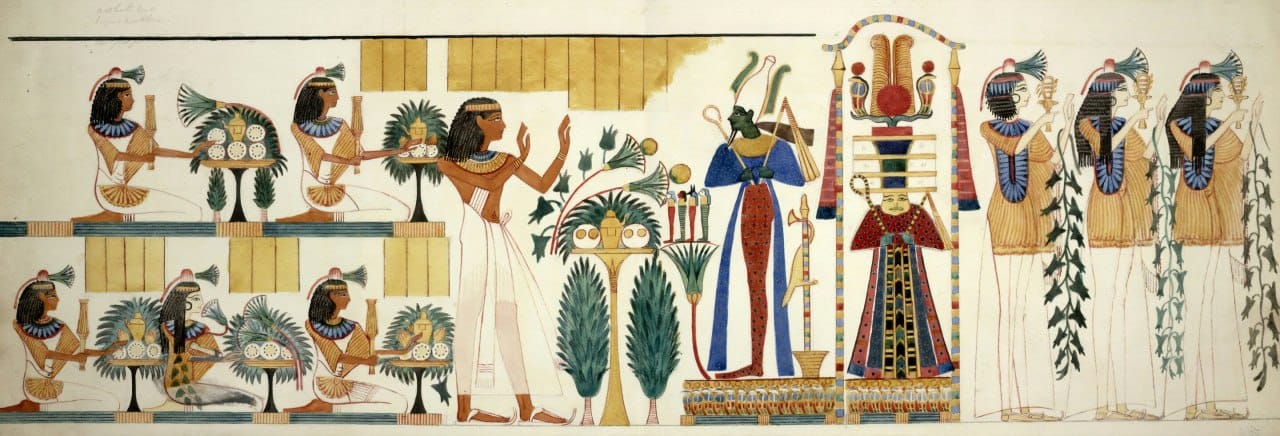
Abydos in Upper Egypt served as the burial place of the kings of the First Dynasty, who ruled from roughly 3100 to 2900 BC, that is, some five hundred years before the building of the Great Pyramid at Giza. The royal funerary complexes at the necropolis of Umm el-Qa'ab included the tombs of the rulers, chamber tombs, ritual enclosures and hundreds of subsidiary burials, which the builders arranged in rows around the principal tombs. On the funerary stelae of some of these graves names and titles have survived, which is why scholars know that those buried there were chiefly officials of lower and middle rank and craftsmen. Together with them, ceramic vessels, copper tools, arrowheads and ivory figurines were placed in the graves.
The British Egyptologist William Flinders Petrie excavated these burials in the 1920s. He supposed that servants had been killed after the king's death, since there were too many graves for any other explanation, but he found no clear proof of murder. Most of the bones Petrie reburied, keeping only the skulls, and the damage on them he apparently took for natural decay.
Roselyn Campbell of Purdue University tracked down 46 skulls from Petrie's excavations in the Duckworth Collection, the anthropological collection of the University of Cambridge, and examined them with the methods of modern forensic science. She looked for perimortem trauma, that is, injuries sustained around the moment of death, when the bone had not yet had time to heal. Serious cranial injuries turned up in 18 of the 46 individuals, or 39% of the sample. In most cases these are linear fractures, that is, cracks in the vault of the skull without depression of the bone. Such an injury causes rapid loss of consciousness and internal bleeding and, in all likelihood, leads to death. On some skulls Campbell found traces of blows from a sharp weapon, including a chopping blow to the eye socket, as well as a penetrating wound to the head.
Campbell links these finds with retainer sacrifice. This is the term researchers use for the custom whereby, after a ruler's death, people close to him were killed. People of that time believed that the slain would go on serving the ruler in the afterlife, and the rite itself also served as a demonstration of royal power. Some of these people may have gone to their deaths of their own accord for the honour of serving the king for ever, while others may have been chosen or compelled.
It has not been established how exactly these people were killed. Egyptian royal iconography shows the ruler smiting an enemy with a mace, yet a blow from a mace leaves a depressed fracture, not a linear one. Linear fractures usually result from a blow with a flat, broad implement or from a fall, but a fall of such force would have left fractures in other bones too. Others may have been killed in a manner that leaves no traces on the skeleton, for example by strangulation. Complete skeletons might have revealed more injuries, but Petrie did not keep them