British author finds her autism in “Amélie” as the post's author voices doubts
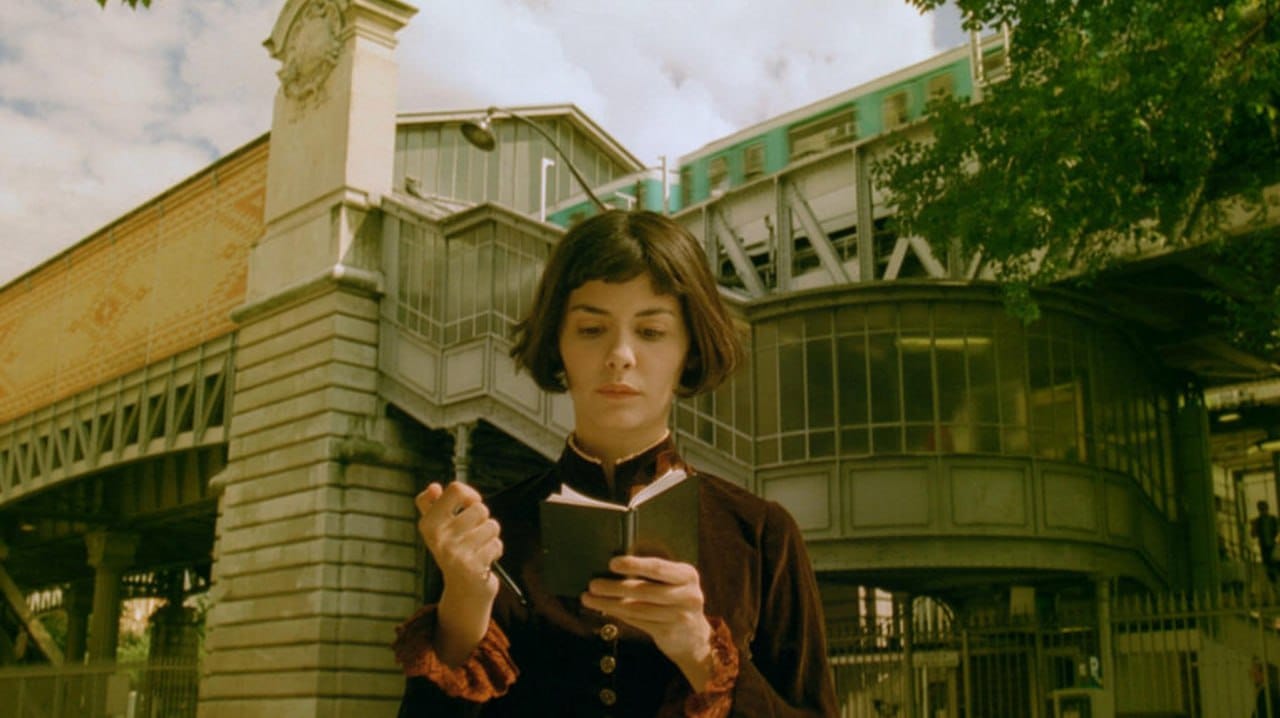
I have been reading how a young British authoress recognised herself in the heroine of the film "Amélie".
She was, so we are told, diagnosed with "autism" in her early twenties, although her parents had suspected it since childhood, because she had no friends and could not understand why other children behaved as they did. The doctors looked for the typical signs of autism, but she maintains that girls more often resort to masking, copying the behaviour of neurotypical people, which is why their autism is noticed later.
She recognised herself in other films too, what a revelation! In Margot Tenenbaum, for instance, or in Suzy Bishop from Wes Anderson's "Moonrise Kingdom". Might it not simply be a wish to be the heroine, with a few slight resemblances dragged in by the ears? Look, look, Harry Potter, why, that is surely me!
But Amélie was the first character for her who stands at the centre of the story. She loves the sound of a teaspoon cracking the crust of a crème brûlée, loves plunging her hand into a sack of grain and turning round in the cinema to watch the faces of the audience. Good heavens, how rare! Madame observes that she, too, loves the smell of books and cinemas: how unexpected, for ordinary, run-of-the-mill, stupid healthy people do not love the smell of books and cinemas. And she cannot bear it when people chew popcorn in the cinema: now that is neurodivergence for you!
In the opening credits the little Amélie claps her palms over her ears, spins a coin and runs her finger round the rim of a glass. Our authoress identified this as stimming, repetitive movements that help one cope with a flood of sensations and emotions. The sensory overload of the grown-up Amélie is supposedly conveyed by the cinematography as well, when in the Métro the wide-angle lens and amplified sound create a feeling of sensory pressure.
She first watched "Amélie" ten years ago; I was surprised at first, but then I checked and found that she was born in 1998, so in principle that is fine. In her second year at Cambridge (mark that: Cambridge) she watched the disc, played it through twice in one evening, and then decided to draw a creative impulse from it, began organising film screenings for neurodivergent viewers and finally wrote a book about her autism. She would like to tell her 19-year-old self what the Glass Man tells Amélie: your bones are not made of glass, and you will withstand the blows of life. And I would like to tell her: calm yourself, if a girl of 19 did not compare herself to Amélie, she simply has no heart.
And by the way, it is sometimes worth testing oneself for the "Ess-Burger syndrome", as Cartman has it, because all this may look like the assigning of fashionable disorders to oneself, not so much to obtain benefits (we are, after all, not in certain regions where mass sham disability flourishes for the sake of social payments) as to hoist upon oneself the halo of a rather special person, to whom something different is permitted or revealed. Remember how at some point there appeared a great many of these "I'm autistic, I have ADHD" declarations on social networks, almost like "Leo ascendant" or Myers-Briggs typing on VKontakte ten years earlier. For on the one hand it can explain a certain awkwardness, and on the other it can even hint at a hidden genius, almost in the spirit of "Rain Man" or the BBC's Sherlock. He, incidentally, called himself a high-functioning sociopath, which at once brings to mind dozens of people who claimed to be sociopaths without even knowing the lexical meaning of the word. Or the journalist and poor student who called himself dyslexic, trying thereby to explain his illiteracy and silly mistakes, and I assured him that, if one wishes to conceal plain educational neglect, it is better to cite dysgraphia.
So, the irony is that the identification and publicising of a diagnosis here comes, quite unexpectedly, bundled with the marketing packaging of an authoress. Remember the episode of The Simpsons in which the publishing house first assembles an author out of survey data, and Lisa, Bart, Principal Skinner and even Reverend Lovejoy combine into one successful writer, though the book is later stolen all the same by Neil Gaiman. So it is here: personal trauma, being misunderstood, a fragile identity, the voice of a generation, touching essays, how neatly it has all come together! And what, I wonder, will happen when this Zoomer, who has only just discovered Amélie, unearths the cassette of "Two, Me and My Shadow", "Fight Club", "Requiem for a Dream", or the film "Spring", for that matter?