First of all, the inscription cut into the cornelian of Pushkin's ring seemed a riddle
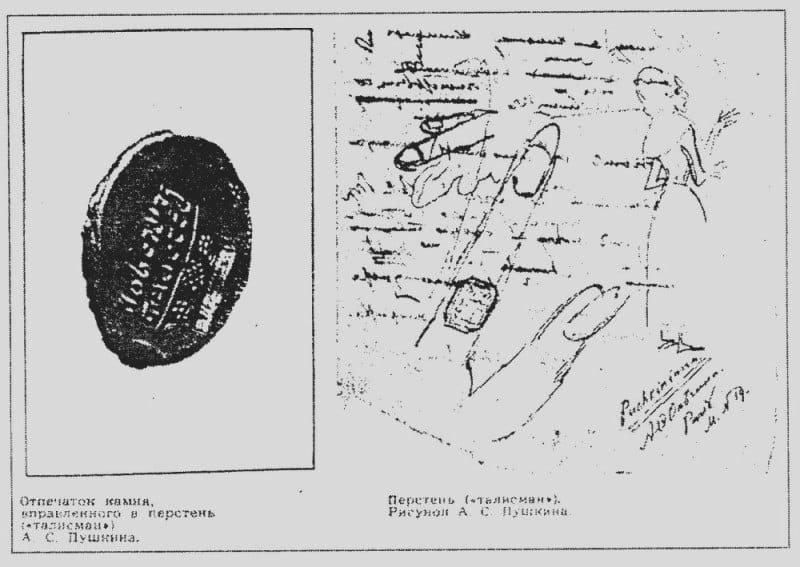
First of all, the inscription cut into the cornelian of Pushkin's ring seemed a riddle. The poet, according to numerous accounts, was convinced of a special, almost magical significance in the incomprehensible words, now referring them to the Kabbalah, now to other mystical formulae, and even assuring his friends that it was precisely in this ring that the magic of his talent was partly concealed. Whether this is so is hard to verify; perhaps Alexander Sergeyevich simply treasured this beautiful and rare trinket, and bequeathed it to his friend Zhukovsky as a keepsake. Nevertheless, for some reason the inscription remained a riddle right up to the 1870s, when several experts at once concluded that the cornelian ring was a personal seal of the 17th-18th-19th centuries with a Hebrew inscription: "Simcha, son of the most holy Joseph the Elder, may his memory be blessed", indicating that the owner of the ring descended from the line of Rabbi Joseph, and nothing more. Be that as it may, the ring was stolen from the very first exhibition and sold to a second-hand dealer for next to nothing.