Pisa Cathedral, occupying the most conspicuous site in Pisa, is unfortunately usually eclipsed by the Leaning Tower and attracts little attention
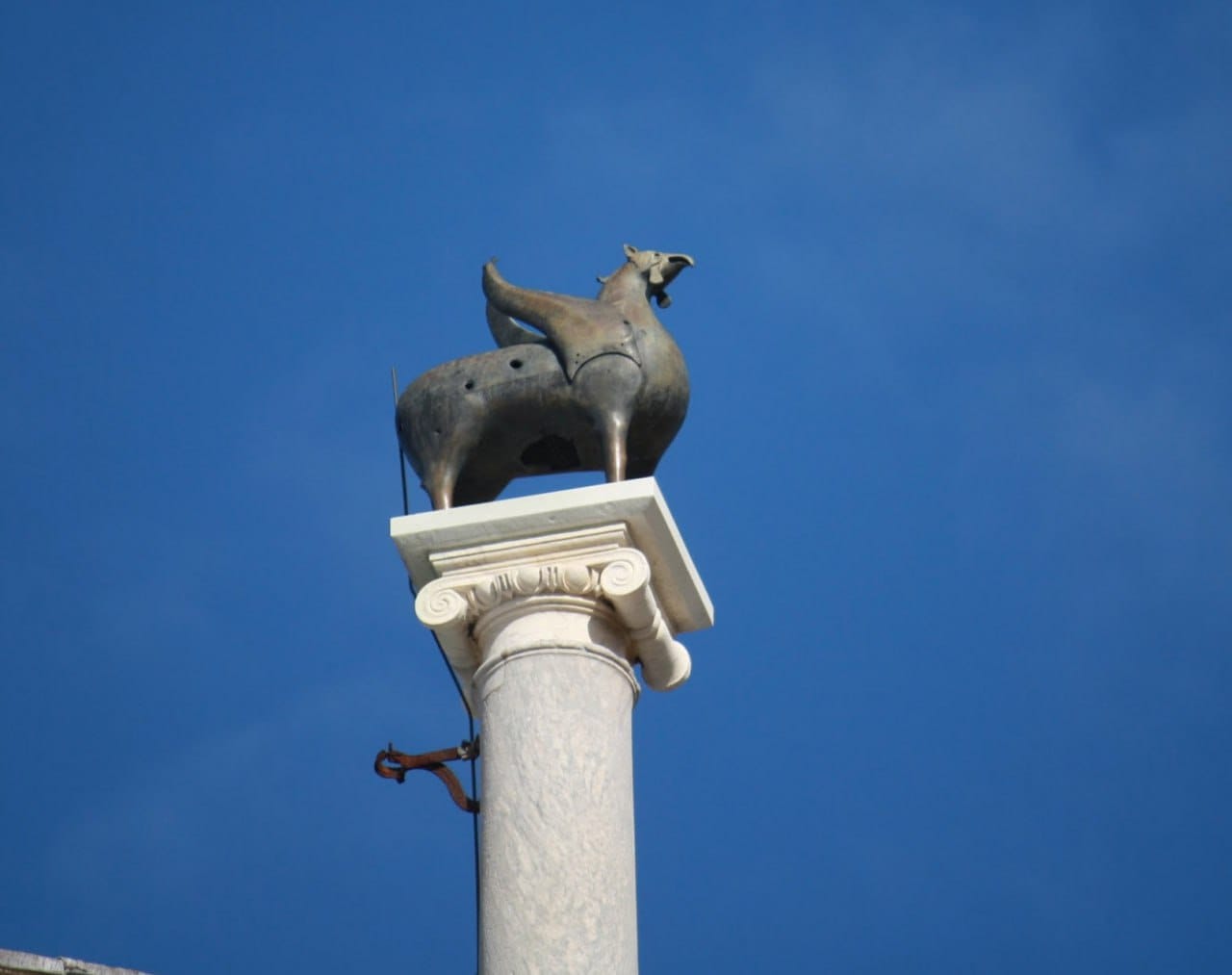
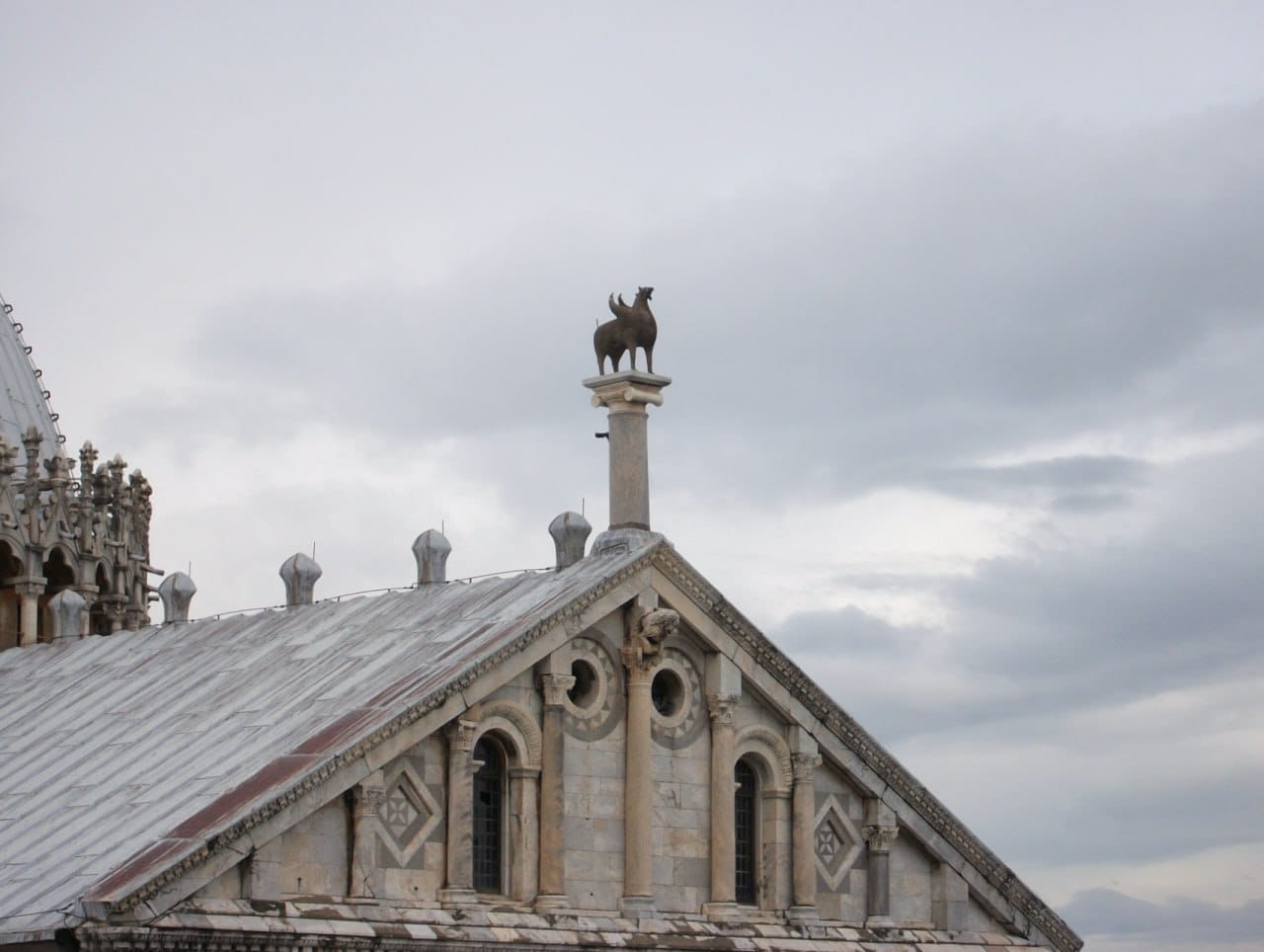
Pisa Cathedral, occupying the most conspicuous site in Pisa, is unfortunately usually eclipsed by the Leaning Tower and attracts little attention. The building is, nevertheless, extraordinarily interesting. And most interesting of all is the eleventh-century griffin atop a column on the cathedral's apse.
How did it come to be here, and, above all, what exactly is it?
It is known that this metre-high bronze griffin, with the head of an eagle and the body of a lion, is the work of craftsmen of al-Andalus, that is, of Muslim Spain. The usual story is that the griffin was war booty of the mighty Republic of Pisa, taken in the course of its campaigns against al-Andalus. But I recently came across a brochure listing recent research which indicates that the griffin was most probably a diplomatic gift from one of the Muslim emirates on the territory of the declining Caliphate of Córdoba.
The assumption about the figure's original purpose has also proved mistaken: it was not, after all, part of a fountain, but an intricate sound-making mechanism, inside which sits a spherical construction that allowed the griffin to "roar". Islamic written sources mention similar musical automata that produced a sound resembling that of bagpipes.
Specialists from the Louvre, however, basing themselves on a similar griffin in their own collection, maintain that this is not a musical device at all, but a zoomorphic clock mechanism.