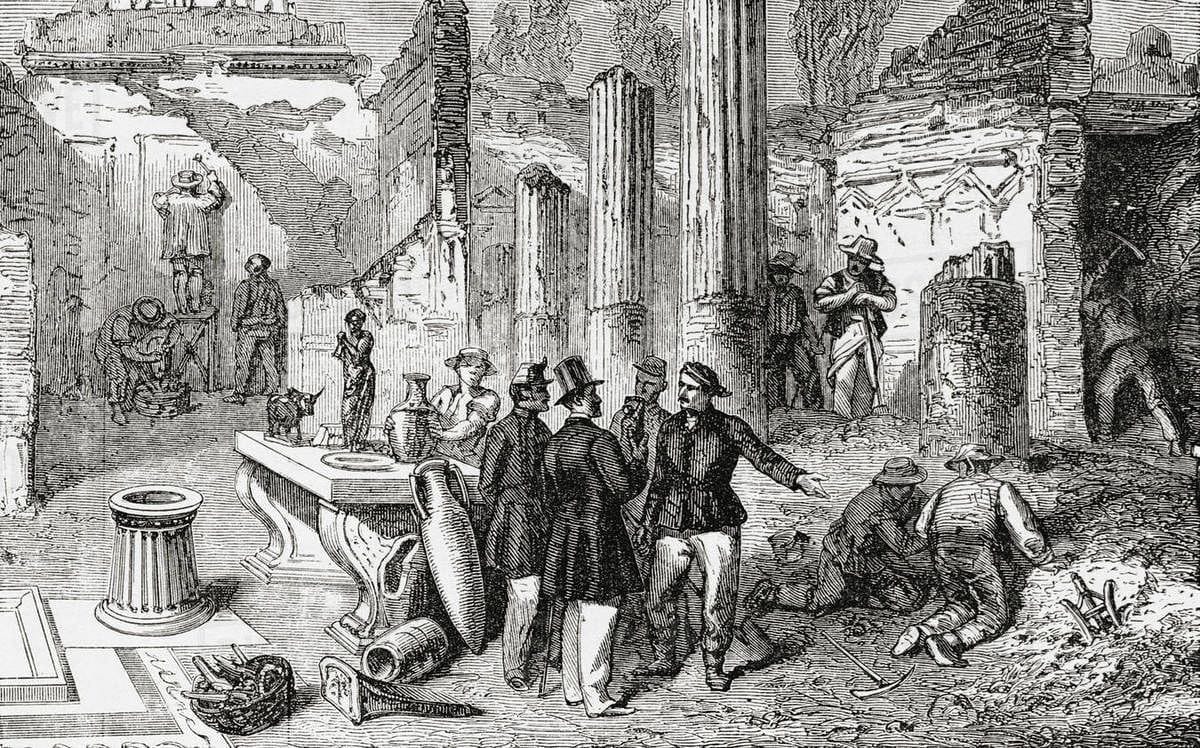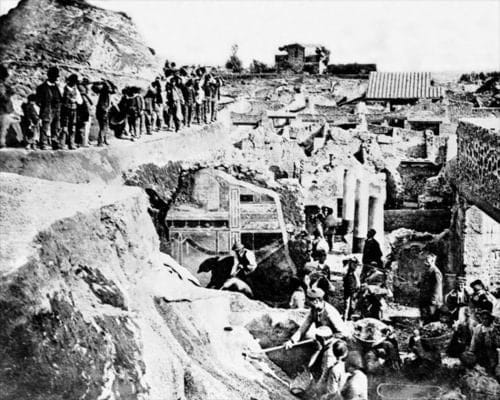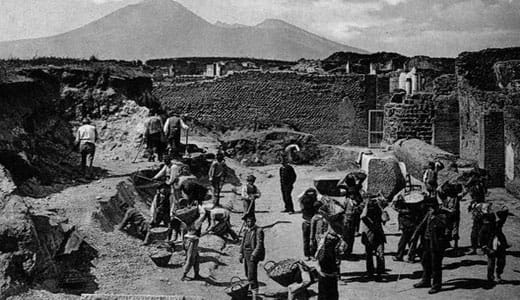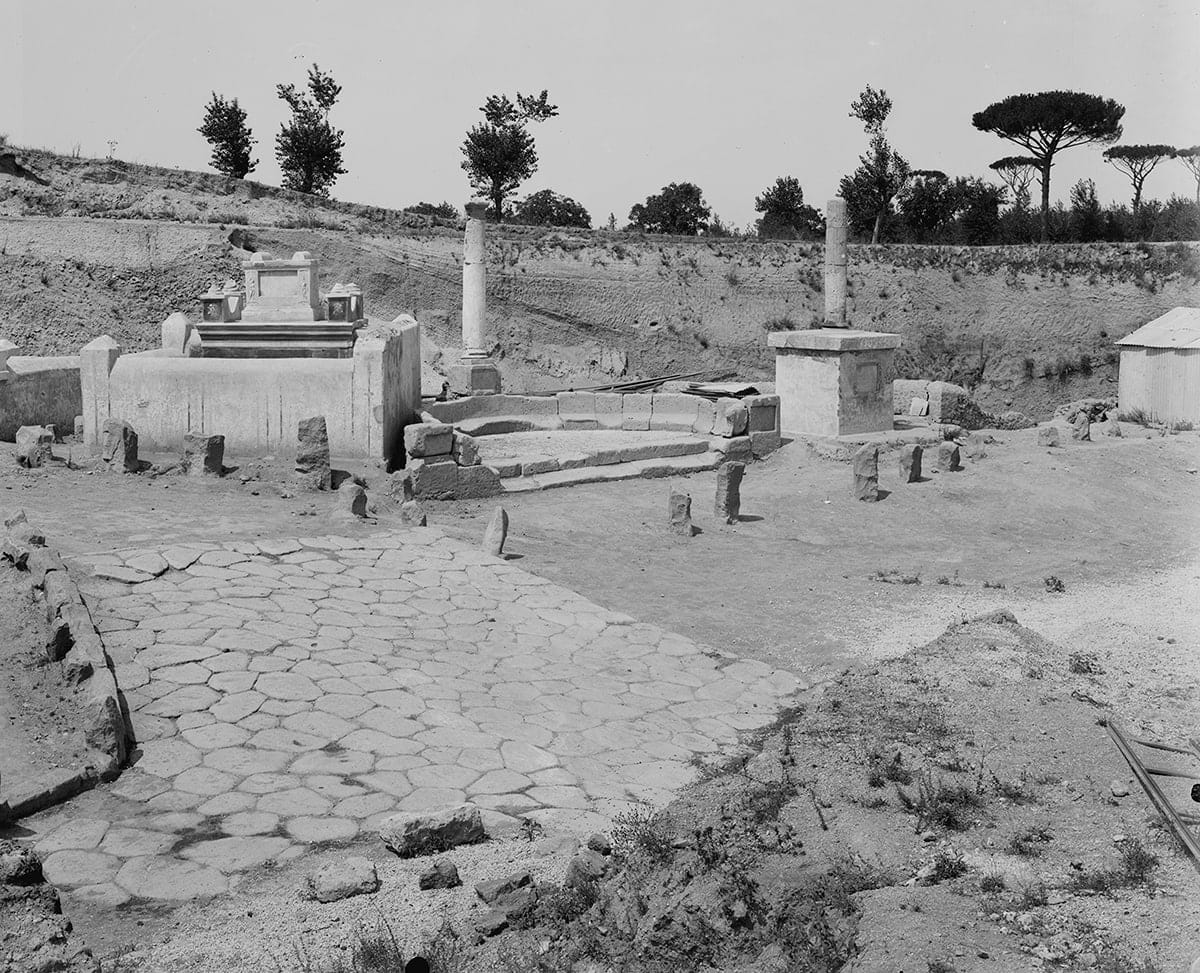
The first excavations at the site of Pompeii were begun by Charles III of Bourbon, King of Naples and Sicily, in April 1748
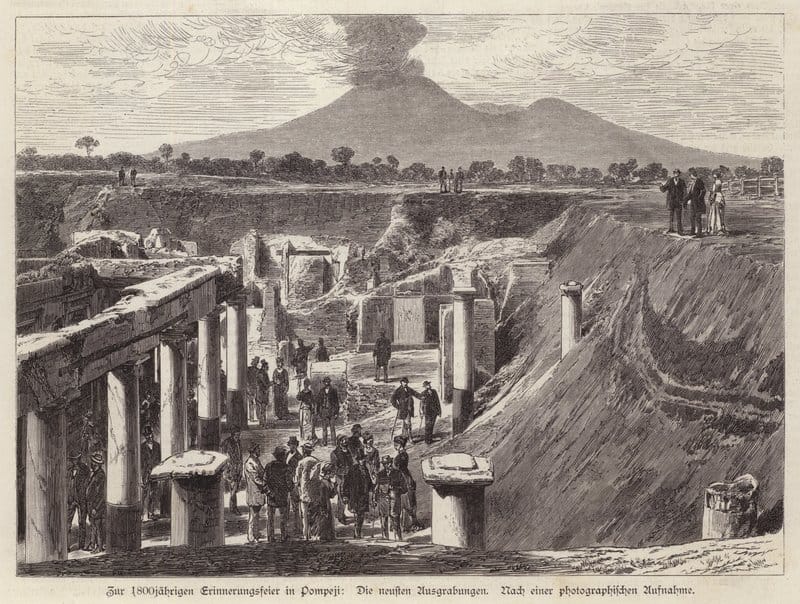
In truth, the place had been discovered by chance as early as the end of the sixteenth century by the architect Domenico Fontana, while digging the Sarno canal beneath the hill of Civita. Some years later, in 1713, it was the turn of the Prince d'Elbeuf, a French nobleman with a passion for history, to make a few happy discoveries: he resolved to build a villa at Portici, at the foot of Vesuvius. During the digging, his workmen came upon a vault containing fragments of marble and statues. The delighted prince boasted of it to the crowned heads of Europe: such a find could point only to the celebrated ancient city of Pompeii, buried under the ash of Vesuvius sixteen centuries earlier, on the fateful day of 24 October AD 79.
As was evidently the custom of the time, the prince offered the archaeological finds to his uncle, Prince Eugene of Savoy, and to Louis XIV, King of France. Thirty-five years later, during the first excavations commissioned by Charles III, namely on 6 April, the workmen uncovered a magnificent fresco depicting flowers, fruit and birds. Ten days later the first Villa of the Mysteries was found, one of the best known in Pompeii, above all thanks to its great fresco adorned with life-size figures. A human skeleton was also exhumed.
Many were astonished at the good state of preservation of so many buildings and wall paintings. The finds, which would probably end up in the collection of some personage of rank, were carefully extracted and displayed in a museum created for the occasion at Portici.
Fifteen years later an important discovery at last made it possible to identify the settlement, until then called Civita, as the city of Pompeii. An inscription near the Herculaneum Gate does indeed read: “Res publica Pompeianorum”.
At the beginning of the nineteenth century Caroline Bonaparte, wife of the King of Naples, Joachim Murat, resumed the excavations under the direction of the French architect François Mazois. The latter, thanks to a more rational approach, advanced the investigations considerably, uncovering a multitude of new sites, including part of the forum. Since then Pompeii, a city buried beneath several metres of lapilli (small lava stones) and ash, has continued to be revealed by researchers, who dig out the numerous ruins bearing witness to a once wealthy city.
In 2024, in excavating the “House of Leda”, discovered in 2018, archaeologists uncovered magnificent frescoes in vivid colours, such as the fresco “Phrixus on the back of the flying ram with the golden fleece”. Today the excavated area of the city covers 66 hectares.
Yet Pompeii, a UNESCO World Heritage Site (44 hectares had been inscribed on the list as of 1997), suffers from dangerous overtourism: some 4 million people visit every year. That is why, since last year, a limit of 20,000 visitors a day has been in force, which is nonetheless an alarmingly large figure, and safety measures have been adopted to ensure that the site is protected and preserved for centuries to come.