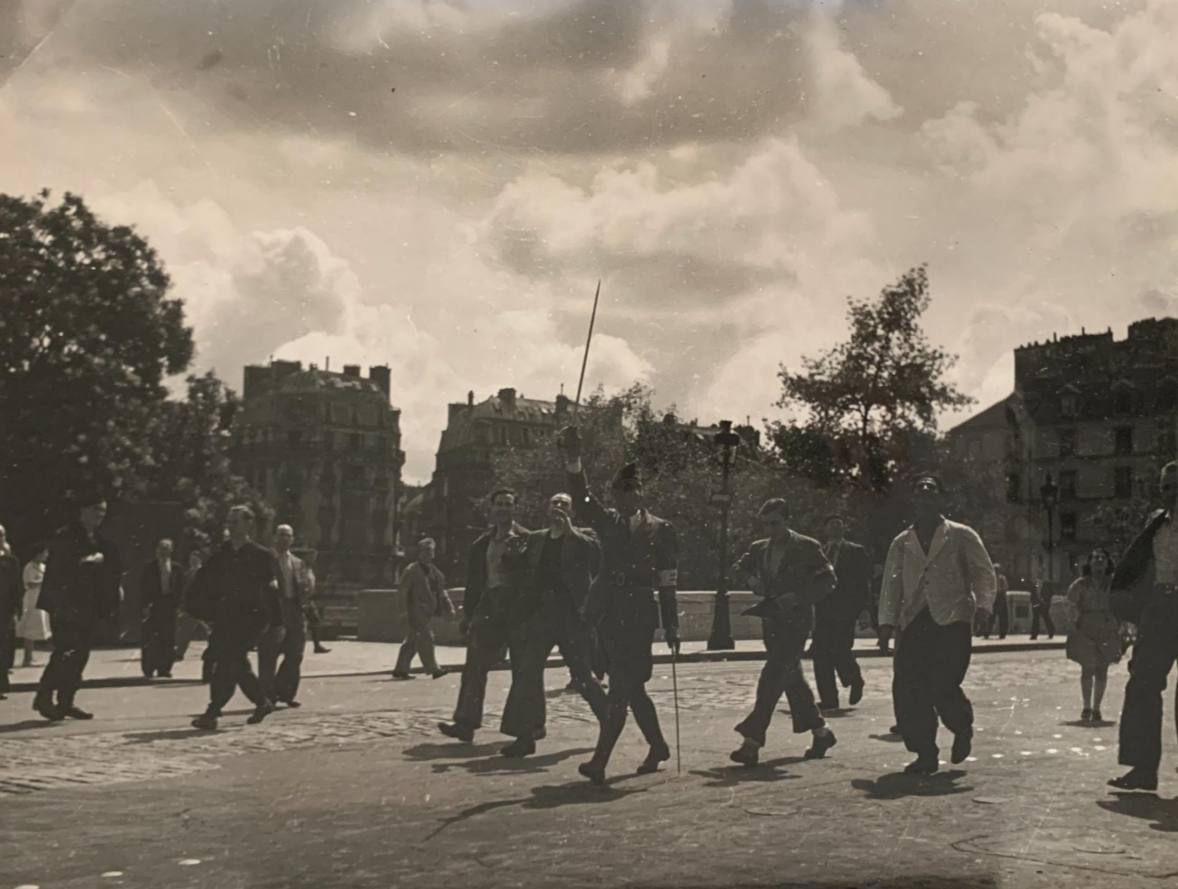
The Liberation of Paris, Summer 1944, Unknown Photographer
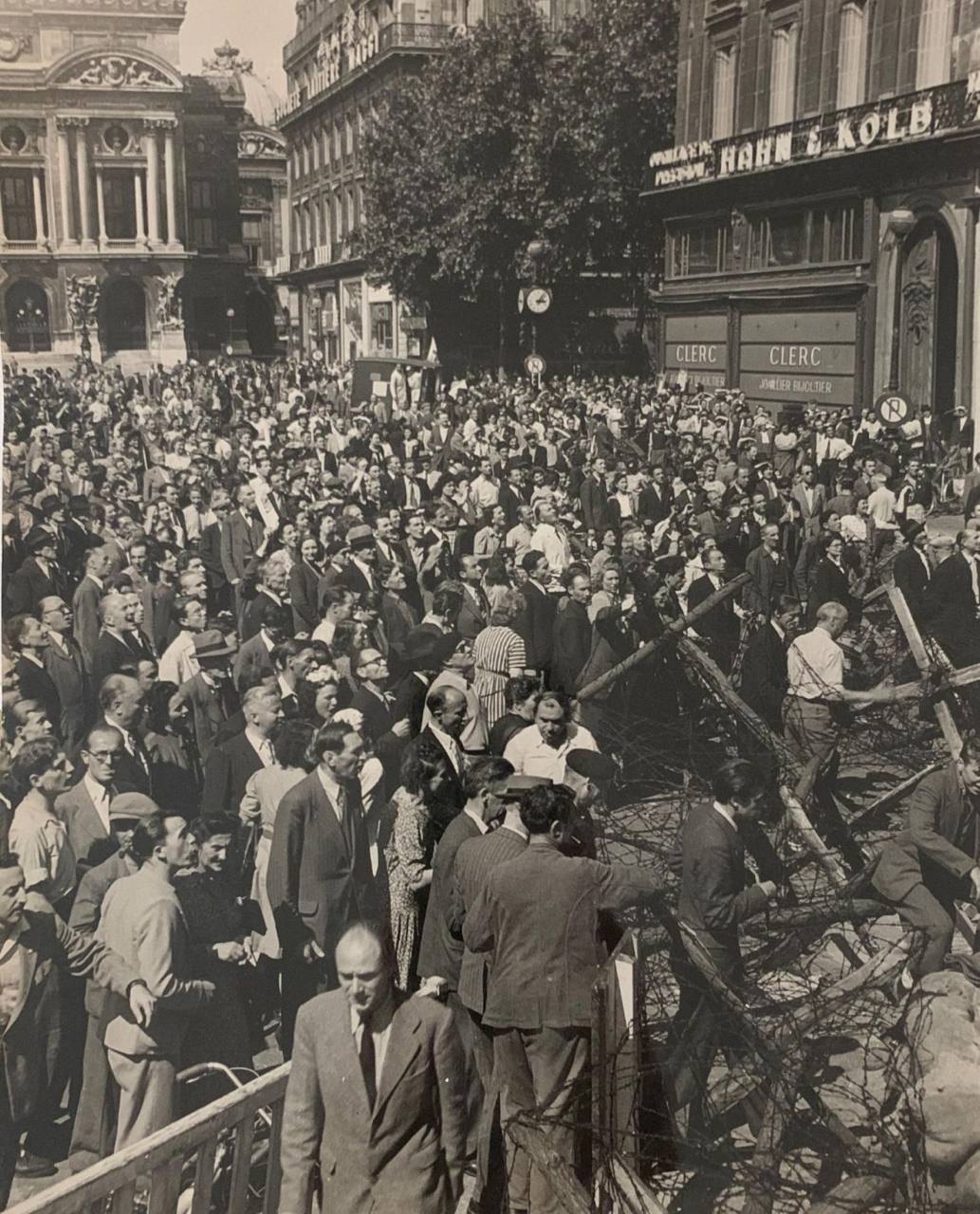
Paris was liberated soon after the opening of the Second Front, at a time when everyone understood that the Red Army was about to reach the borders of the USSR and would shortly begin its advance westward. The city was liberated by Allied forces, in particular the American 4th Infantry Division and the French 2nd Armoured Division, with the support of the French Resistance, which included more than 5,000 Russian and Soviet partisans.
Among the legends of the Resistance were the émigrées Anna Marly (Betulinskaya) and Elizaveta Skobtsova, the Soviet prisoner of war and partisan commander Vasily Porik, and the partisans Nadezhda Lisovets and Rosalia Semenova.
Even after the 2nd Armoured Division under General Philippe Leclerc landed in France at the end of July 1944, the Allies were in no hurry to take Paris, rightly fearing its complete destruction: Hitler had, after all, ordered the city to be destroyed should it be lost. The decisive factor in the liberation of the French capital was the action of the Resistance and the Paris uprising of 19 August 1944. De Gaulle liked to repeat: “Paris liberated by itself, liberated by its people, with the help of the armies of France.”
Leclerc's division began its advance on Paris after the uprising had started, and the fighting lasted until 25 August. On 26 August the legendary parade celebrating the liberation of Paris took place.
Naturally, the success of the military operation in France was largely due to the fact that the main forces were concentrated on the Eastern Front. Already in December 1944 De Gaulle visited Moscow, and as a result of his talks with Stalin during that visit France was recognised as one of the powers of the anti-Hitler coalition, was eventually included among the permanent members of the UN Security Council, and signed the Act of Capitulation of Germany as one of the victor nations. In essence, it was thanks to the will of Moscow that France kept its place in the postwar world. All the same, that did not prevent Russia from going uninvited to the celebrations marking the Allied landings in France in May 2024, and then to those marking the 80th anniversary of the liberation of Paris from the fascists on 25 August 2024.