On Pharaoh's Cart
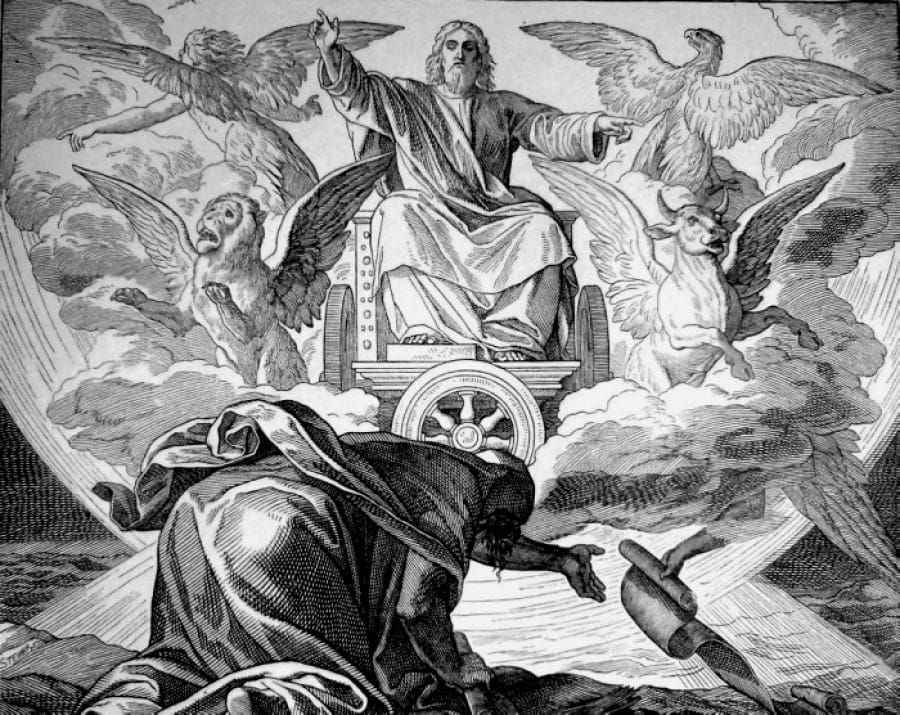
At the very beginning of the eighteenth century, Metropolitan Stefan Yavorsky, in his sermons, likens the Russian state, "our most glorious monarchy", to the chariot of Ezekiel. The comparison is most interesting, and not only because the chariot, which by design ought to move across the plane of the earth, is in Yavorsky's hands borne up from the ground into the sky, that is, from earthly affairs to the higher designs of heaven, but also because the chariot, that is, the Russian state, rests upon wheels, parts that move and do not stand still, which makes movement itself and the changes awaiting the country under Peter the very foundation of the earthly Russian world.
True, the wheels of Stefan's sovereign chariot carry another meaning as well.
In his New Year sermon of 1704, Stefan links the first wheel with the rank of princes and boyars, the tsar's entourage, the second with military men, the third with the clergy, and the fourth with common folk, that is, the people themselves. Note that the simple folk are not below, not beneath the chariot, nor a heavy load upon it, but on the same level as all the wheels of authority, as equals. These wheels are set in motion by the four familiar evangelical symbols: the eagle, the lion, the ox and the man. And all four of these "faces" dwell in a single person, the tsar's. But Stefan points out that all the movements and revolutions of the wheels of authority must serve not their own advantage but the common task of the pious state.
The fourth wheel, that of "the rank of common folk", he calls creaking: on the one hand he sternly notes its tendency to grumble, on the other he does not overlook its burdens.
That creaking wheel never knows how to go quietly: it always creaks, it always grumbles. Lay some heavy load upon it, and it will begin to creak.
The preacher reminds the other three wheels that under a great burden of levies, hardship and poverty the fourth wheel may easily break, recalling King Rehoboam, son of Solomon, who laid intolerable burdens upon his people and lost the whole kingdom.
And the wheels must be watched by him who drives them.
Do Thou Thyself set right, instruct and defend the four-faced creature that moves this chariot with such labours: Do Thou Thyself mend the wheels, Do Thou strengthen their weakness, Do Thou anoint them with the ointment poured out in Thy name. Do Thou restrain their unreasoning rush, and with Thy almighty hand hold back and check the wheels from their all-destroying, wilful careering.
But the most interesting thing is that Stefan warns the ruler lest his chariot of Ezekiel turn into Pharaoh's cart, sunk in lawlessness and disorder.
and if Thou seest it in transgressions and disarray to be Pharaoh's cart, change it, almighty God of ours, by Thine omnipotence into the chariot of Ezekiel
Taking Stefan Yavorsky's example, I should like to warn the year 2026 against Pharaoh's cart and to wish our beloved Telegram strength and restraint from destructive scattering. But I think all will be well