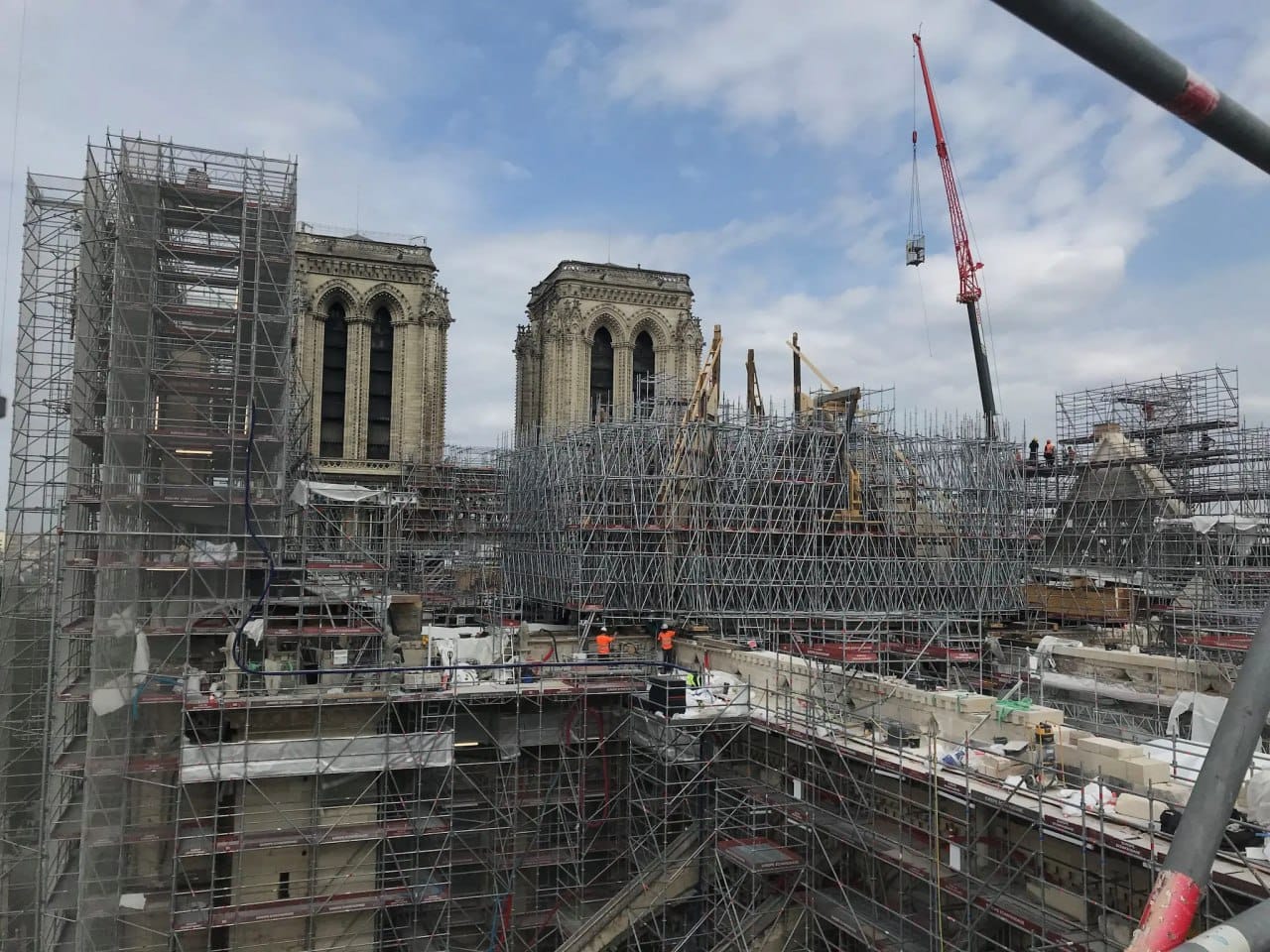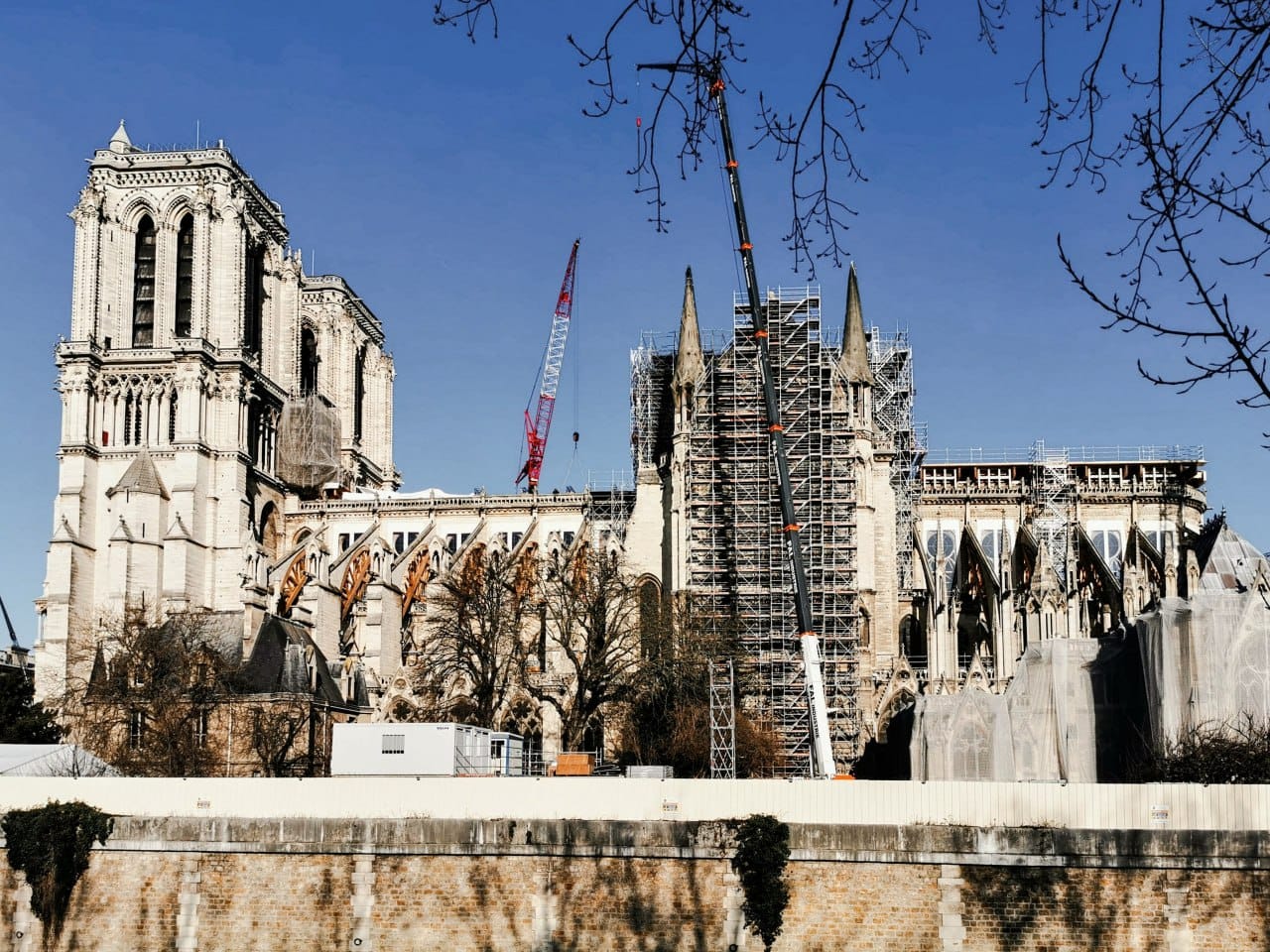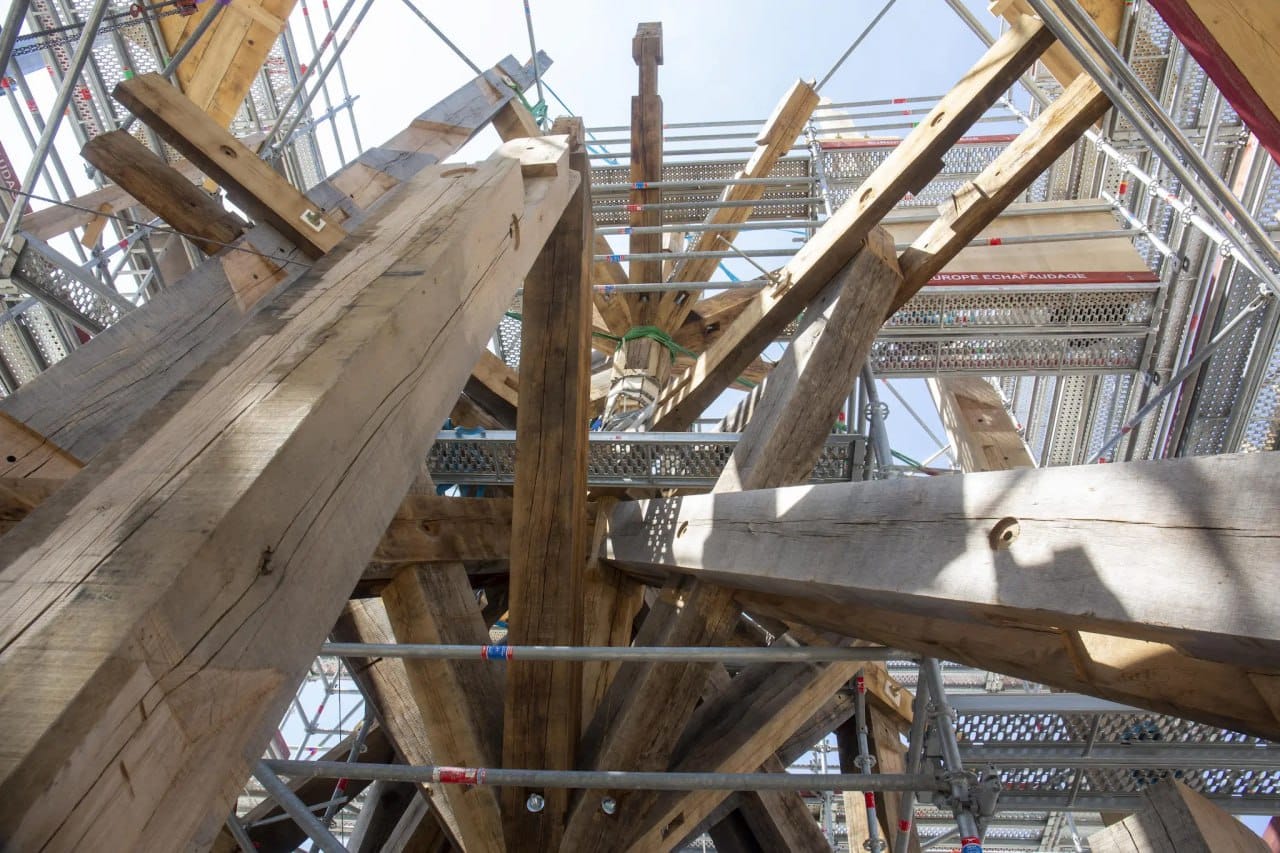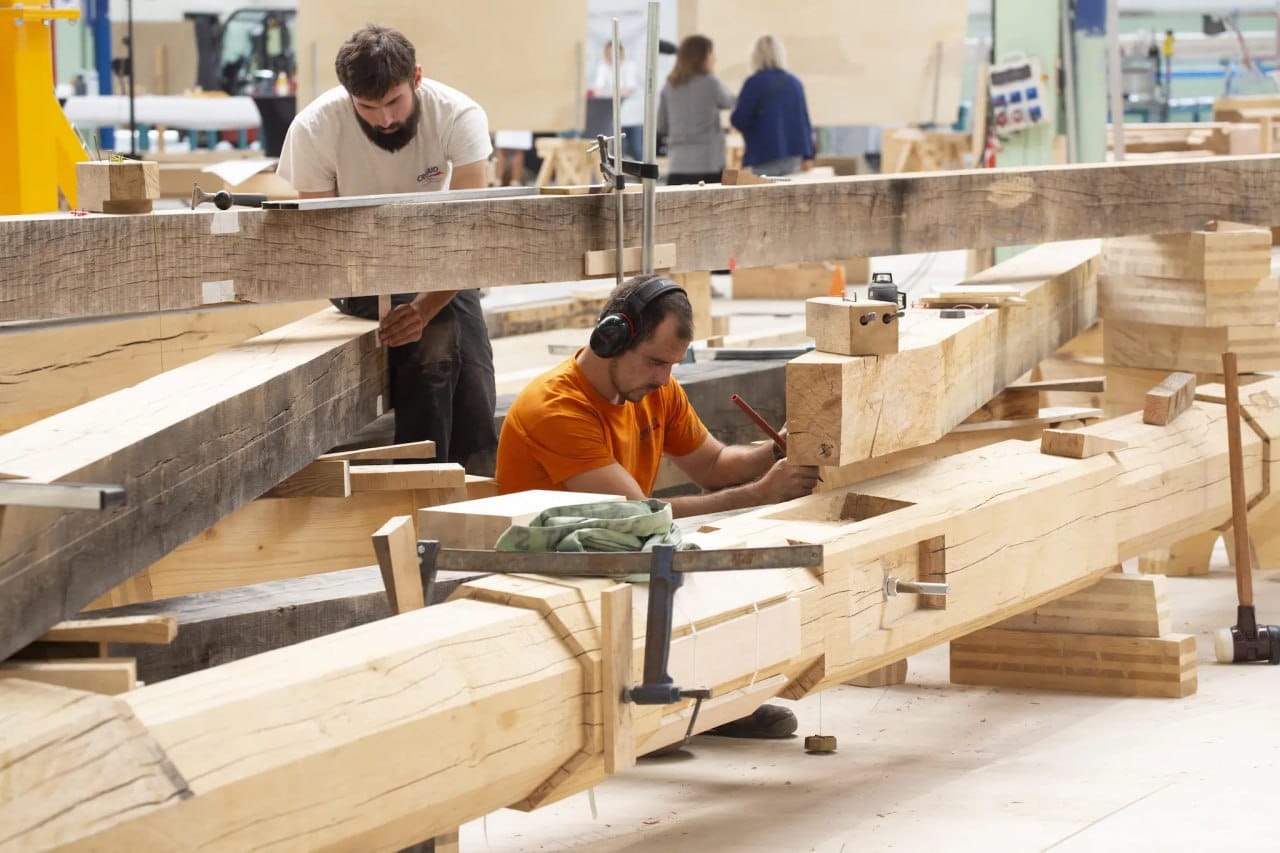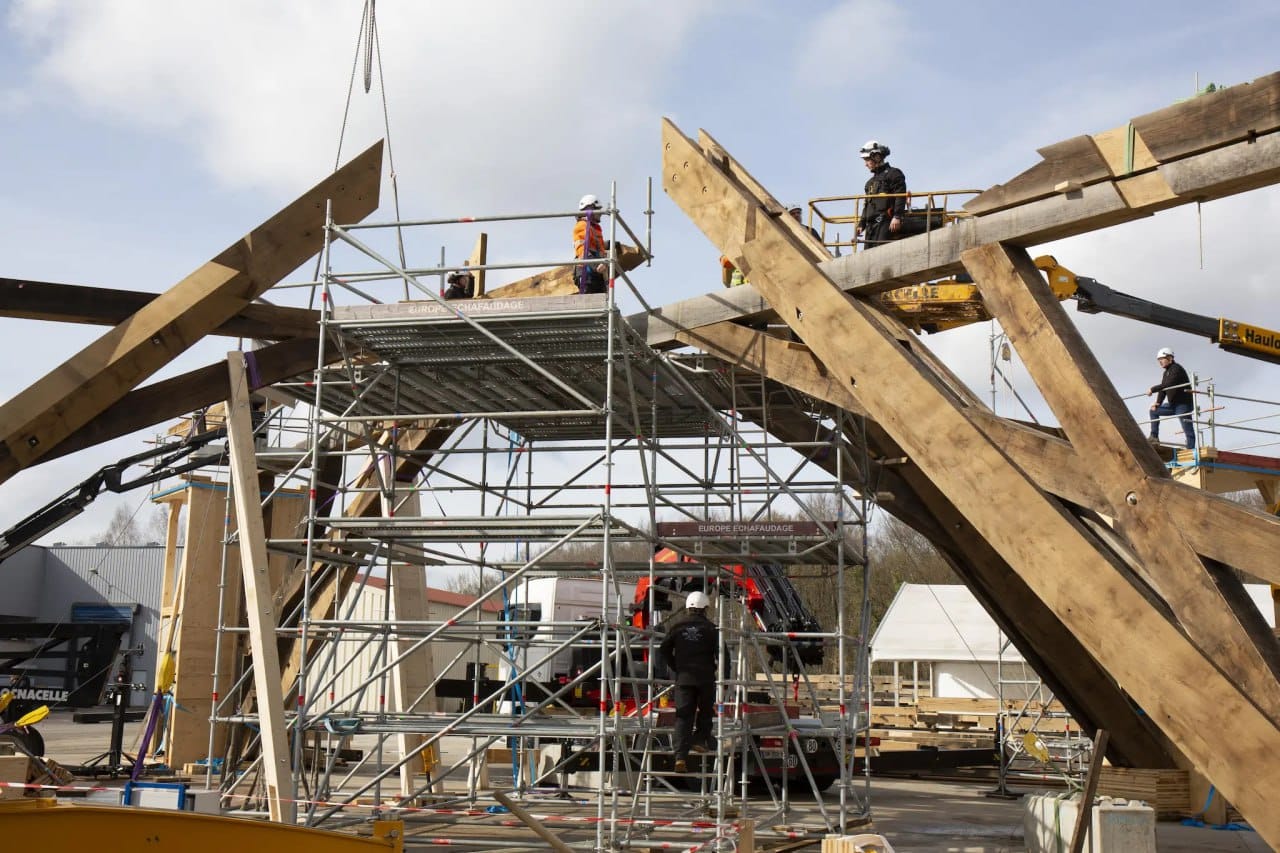
The new spire of Notre-Dame de Paris takes shape: openwork wooden ornaments are being mounted, to be covered in chased lead, just as was done before
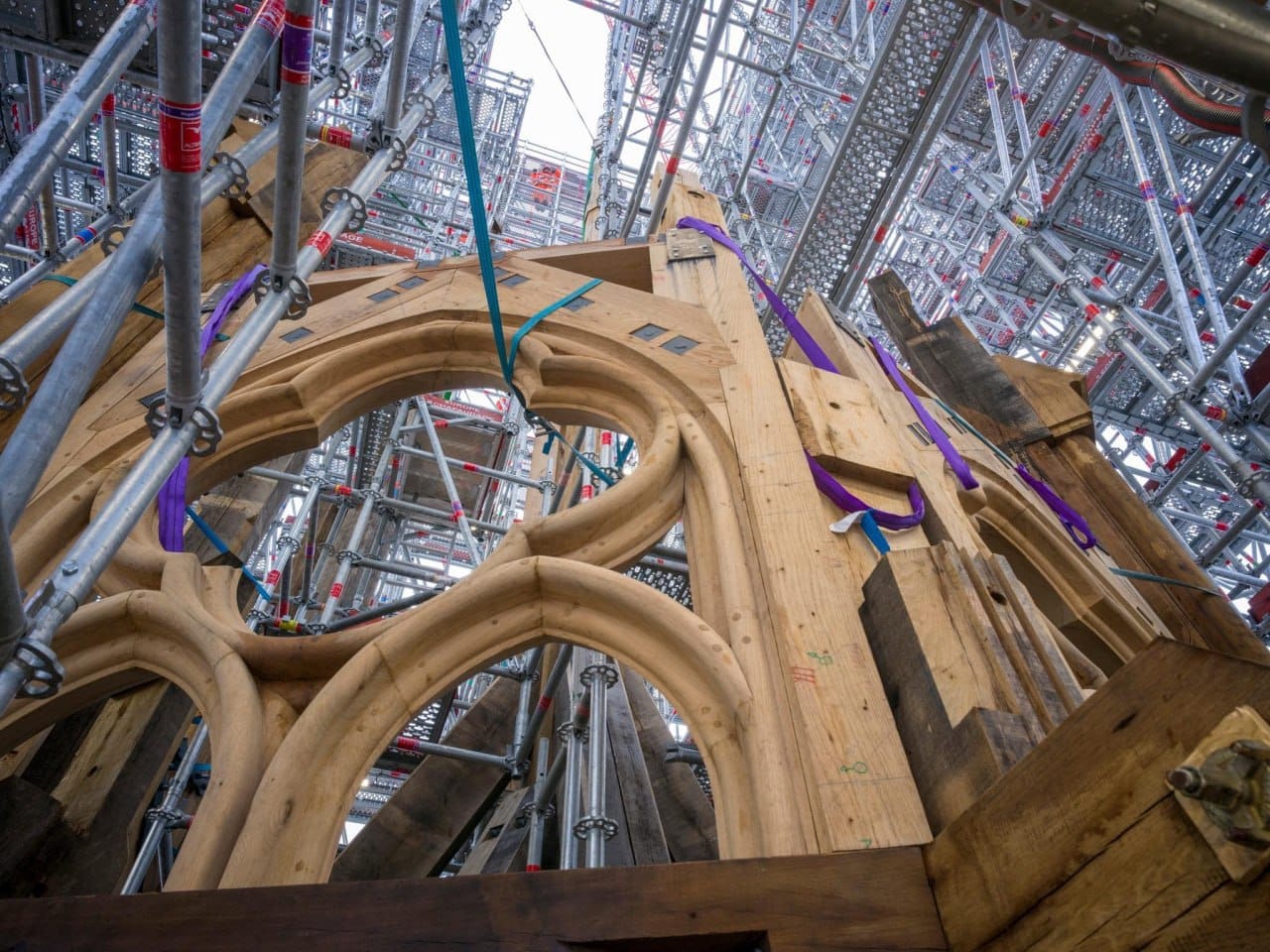
It seems one may breathe out: the cathedral has been saved from the "modern architectural look" that Macron's gang was cautiously pushing. It must be said that this is owed to strong pressure from the public and from lovers of the historical heritage.
The spire is being restored exactly according to the drawings of the architect Eugène Viollet-le-Duc, who in 1844, with the support of Prosper Mérimée, then Inspector-General of Historical Monuments, won the competition for its restoration together with Jean-Baptiste Lassus. The project lasted twenty-five years.
By that time the church was almost in ruins: after several centuries of decline it had been badly battered during two revolutions, the building mercilessly wrecked, plundered and desecrated, until what remained was almost the same as what we saw after the fire. The spire was missing, as it is now; it had been taken down in 1786 for fear that it would simply come crashing down in the wind.
Viollet-le-Duc decided not to copy the original exactly, preferring instead to reinvent the building so that it would better correspond to the architectural ideals of the era of its creation. For the roof he chose methods which, in his view, best embodied the Gothic ideals. As a result, the new roof of Notre-Dame was not a copy of the one that had been decaying for centuries. However, Viollet-le-Duc proposed restoring the original medieval spire and the bell tower over the transept, both taken down in the previous century. At the same time the architect rejected requests to add two new spires to the towers, arguing that the result would be a remarkable monument, but not the Cathedral of Notre-Dame de Paris.