How Napoleon handled papers and dictated to his secretaries, according to Andrew Roberts
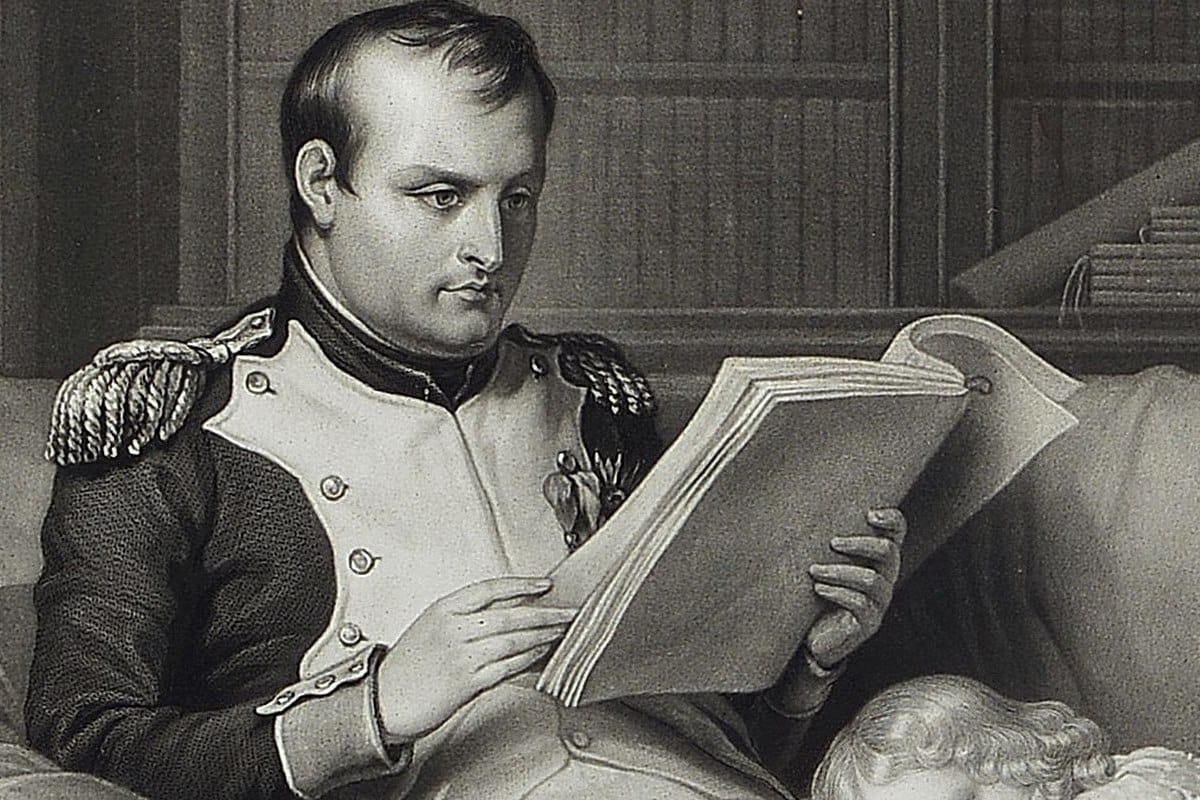
Napoleon knew perfectly well how to set his priorities. Urgent tasks he took up at once; papers that were important but not pressing he laid in a pile to be dealt with later; and documents he did not consider important he threw on the floor.
Whereas Louis XVIII had a facsimile stamp of his signature, Napoleon always looked through his letters himself before signing them, not least because his secretaries, hurried by rapid dictation, sometimes made mistakes.
“Thoughts come fastest of all,” Napoleon explained of his need for secretaries, “and farewell, letters and lines! Now I am fit only to dictate. Dictating is very convenient. It is like holding a conversation.”
He did not sit down at a writing desk, except when he wrote to his wives and mistresses (they alone received letters written entirely in his own hand) or signed documents.
All three of Napoleon's personal secretaries devised their own methods of shorthand to cope with the torrent of words. In the study at the Tuileries the secretary sat at a small table, while Napoleon sat on a sofa upholstered in green taffeta, beside a screen that hid the fireplace. If at one o'clock in the morning Napoleon and his secretary were still at work, they would sometimes go out incognito into the rue Saint-Honoré for a cup of hot chocolate. (One morning Napoleon reproached the prefect of police because the lamps at the palace gates had not been lit, and the prefect could not understand how the Emperor had found out.
From Andrew Roberts's new weighty biography of Napoleon, recently published as a handsome thick volume by Alpina Non-Fiction