The other day we recalled the papal portable throne, the Sedia Gestatoria
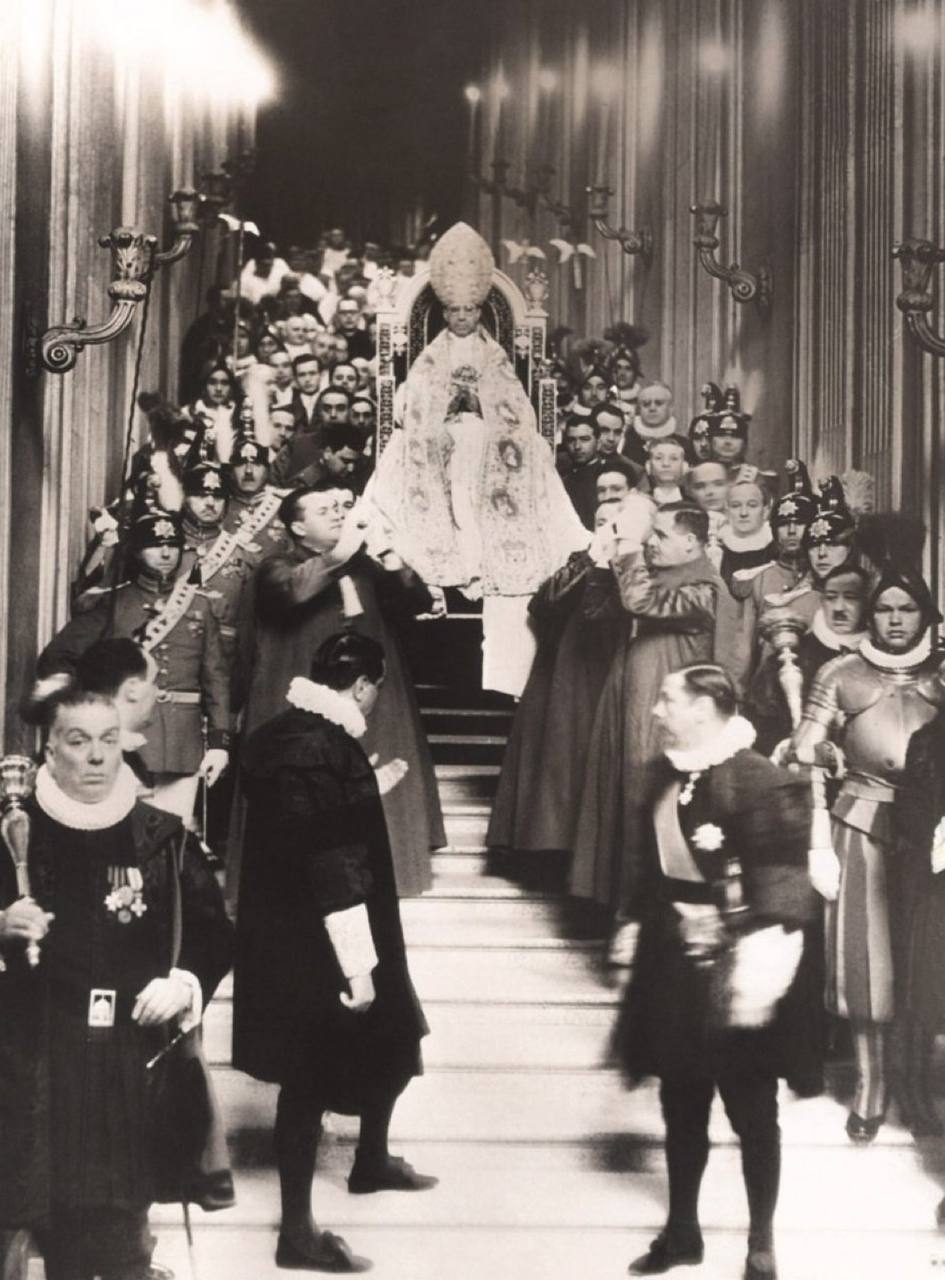
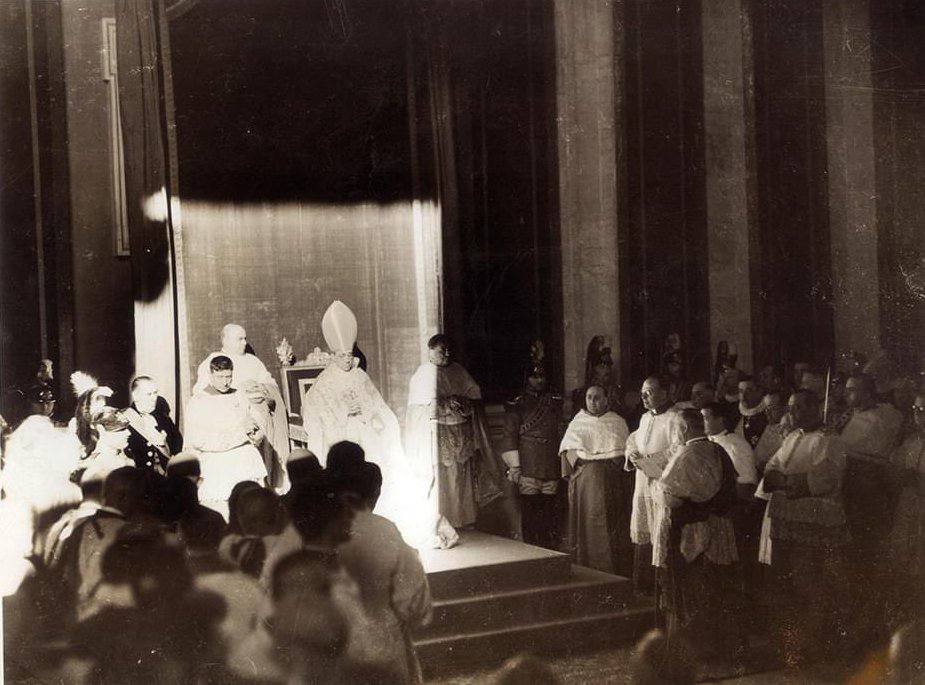
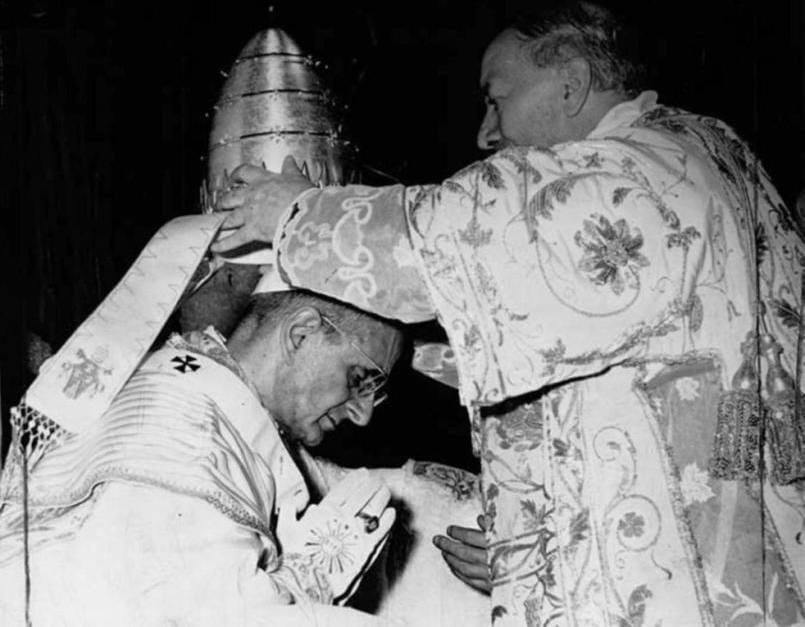
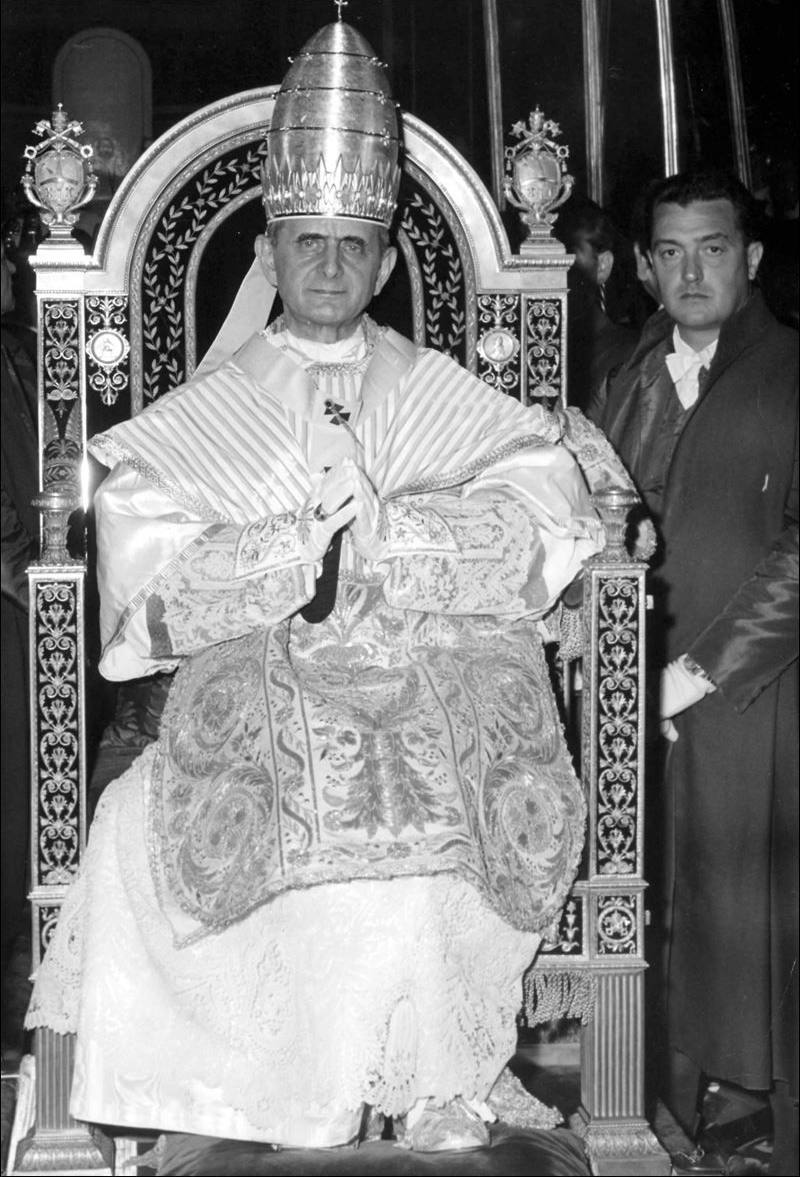
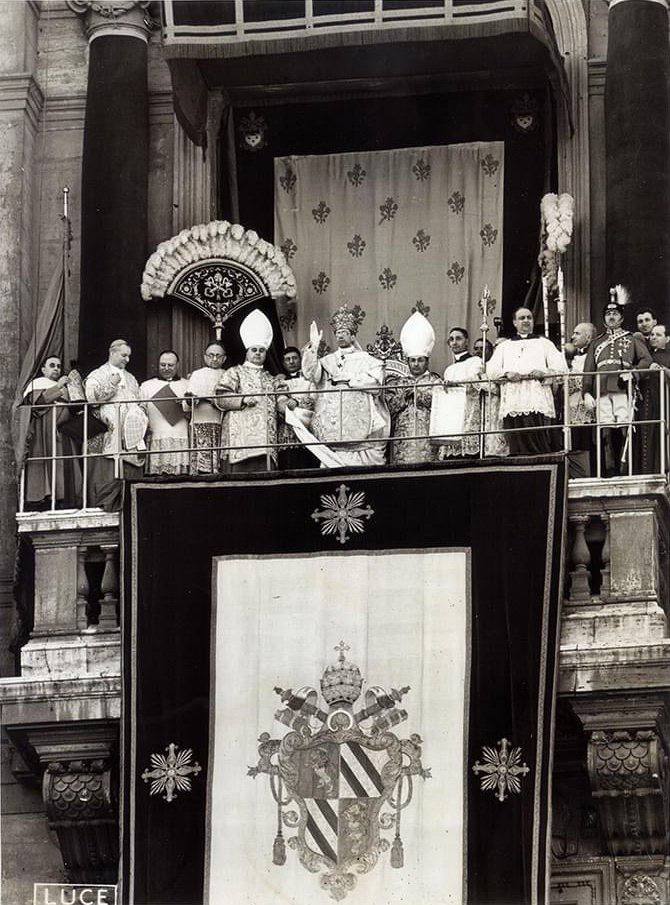
The other day we recalled the papal portable throne, the Sedia Gestatoria. It was the very one used at the coronations of popes. On 31 June 1963 took place the first coronation of a Pope since 970 held not inside St Peter's Basilica but in the open air, on its porch. It was also the last coronation of a Roman Pope in history to employ the three-tiered papal tiara. After Paul VI came John Paul I, John Paul II, Benedict XVI, Francis I and Leo XIV, and not one of them was crowned.
The tiara has three crowns: the first symbolises the power of the Father of Kings, the second the power of the ruler of the world, the third the power of the Vicar of Christ. Or, by another interpretation: supremacy over Christian sovereigns, authority in Rome, and spiritual authority on earth. One way or another, Pope Paul VI became the last pontiff crowned with the tiara that symbolises these three powers.
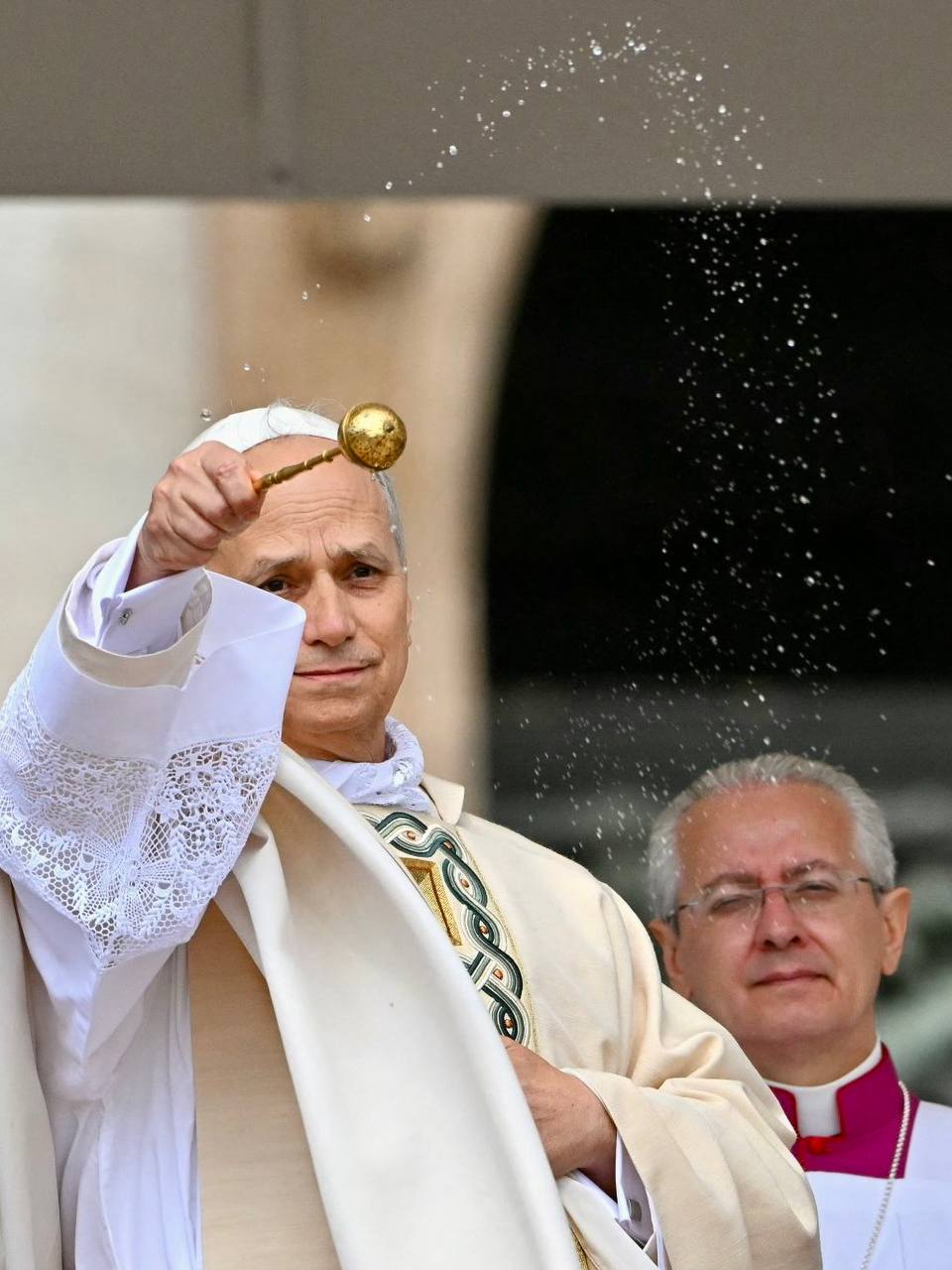
Today the inauguration of Pope Leo XIV took place, not an enthronement, as some authors insist. He took up the papal see, put on the white cassock for the first time, and blessed the assembled faithful.
By ancient tradition, the coronation of a Pope took place after the inauguration, on the first church feast day or the first Sunday.
The Pope was carried on the sedia gestatoria through St Peter's Basilica, surrounded by a ceremonial procession with flabella of ostrich feathers. The procession halted three times, and the master of ceremonies burned a handful of flax tow before the Pope, proclaiming in a ringing voice: “Sic transit gloria mundi!” (“Thus passes the glory of the world!”).
Mass began. After it the Pope took his throne, and the cardinal-bishops prayed before him. At the close of the prayer, the senior cardinal-bishop placed on the Pope's shoulders the papal pallium, a woollen band with six crosses, which personified the fullness of the papal office and stood allegorically for the image of the lost sheep that the shepherd must carry on his shoulders.
When the Mass and all the prayers were over, the triple papal tiara was placed on the Pope's head. The coronation ceremony ended with the blessing Urbi et Orbi, to the City and the World, from the balcony of the papal palace. Of all this, Leo XIV retains the Mass, the placing of the pallium and the blessing of the assembled crowd.
Paul VI was crowned with the tiara, but during his pontificate he renounced this symbol, and subsequent popes merely confirmed the renunciation, not using it on ascending the papal throne, which in itself stripped the ceremony of the status of a coronation and left it as an inauguration.
In my view, none of this springs from the Church's proclaimed striving for simplification. Indeed, if one listens to each of the popes since Leo XIII, all speak of renouncing excess, of a desire to simplify their office, of removing the attributes of monarchy. John XXIII, the “red” Pope and a peasant's son, became the father of the Second Vatican Council, which sought the renewal of church life. Paul VI shortened the calendar of saints, abolished the Index of Forbidden Books, brought Vatican II to its close and, as already said, altered the coronation ceremony; he was both in fact and in spirit the last Roman Pope born in the nineteenth century. John Paul I even in his name declared himself a follower of the two preceding pontificates, abolished the coronation and many rules of Vatican etiquette, and gave up the tiara. John Paul II began to say “I” instead of “we”.
This is not quite simplification; it is a gradual diminution of symbolic significance. Simplification, perhaps, is when Paul VI managed a six-hour ceremony in three hours.
Over the course of the twentieth century the Church gradually gave up its statuses, a process that began in 1870 with the loss of power over the Papal States and continues to this day.
If a pontiff is not crowned with the tiara, he cannot lay claim to the three aspects of power it symbolises: over Christian rulers, over Rome, and spiritually over the whole world. That is all; what remains is power over a single Catholic church, the last relic of the medieval grandeur of the Vatican throne that has not yet been removed and modernised by progressive popes.