The Ministry of Justice in England is planning to digitise historical documents from its archives
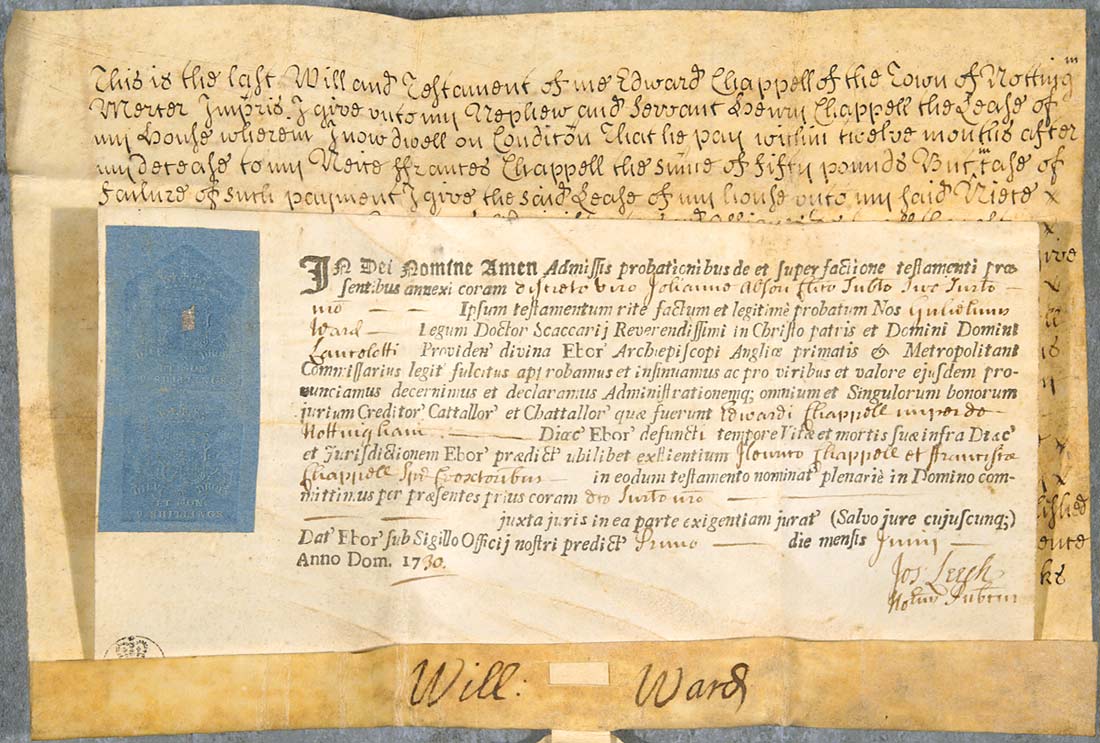
The Ministry of Justice in England is planning to digitise historical documents from its archives. We are speaking of wills covering at least the last two hundred years. This is held to be a boon for historians and genealogists, who will gain access to the documents.
Where does this initiative come from? And is this benefaction really something to rejoice over? I would not. Allow me to explain why.
Under English law of 1858, wills and a whole complex of accompanying documents must be kept for ever.
The digitisation programme is part of a programme to improve the storage system. At present the department holds 110 million documents, and this costs £4.5 million a year.
The officials want to make savings. Say, in order to buy more expensive cars and equipment, build sumptuous offices and hire more assistants; who knows how a respectable accountant might dispose of four million.
Yes, the documents will be digitised. But afterwards nobody will spend anything on keeping them. The holdings will be destroyed. With the exception of a handful: the wills of distinguished and titled persons. These are not my inventions; it is stated in the ministry's own announcement.
As for digital copies, if anyone believes so fervently in their permanence, fireproofing and universality, then you may as well digitise yourself too, just in case.
In Dickens the will stands at the centre of the plot of Bleak House: the heirs of Jarndyce languish for years in the red tape surrounding his last wishes. We learn of the incredible multitude of papers and testimonies used to certify or refute claims to property. We also make acquaintance with the unthinkable red tape surrounding wills and other notarial documents in David Copperfield. Dickens shows English bureaucracy as one of the terrible sides of life, yet he nonetheless returns the reader to the thought that it is precisely the paper document that is often the sole source of justice and an indisputable witness, and he elevates pedantry and the ability to preserve it into a virtue.
It is a great pity that historians, archivists and librarians all over the world take up such ethically dubious projects with so much enthusiasm, without seeing their swift and inevitable consequences.