Medieval towers of Bologna and French cities built for the sake of prestige
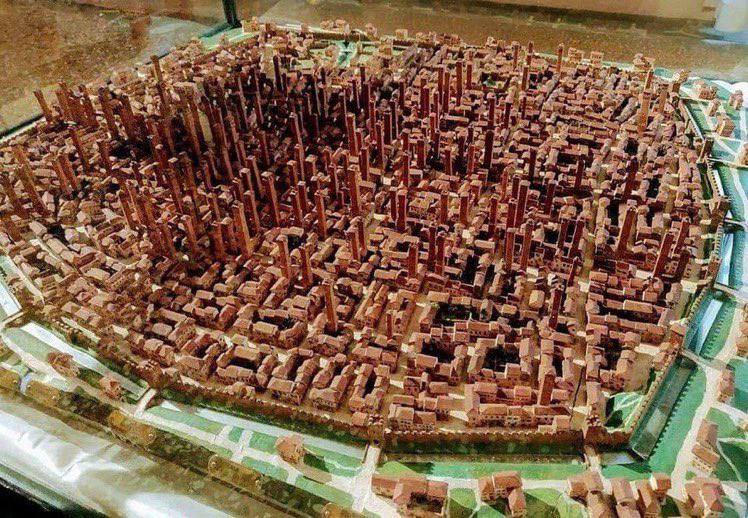
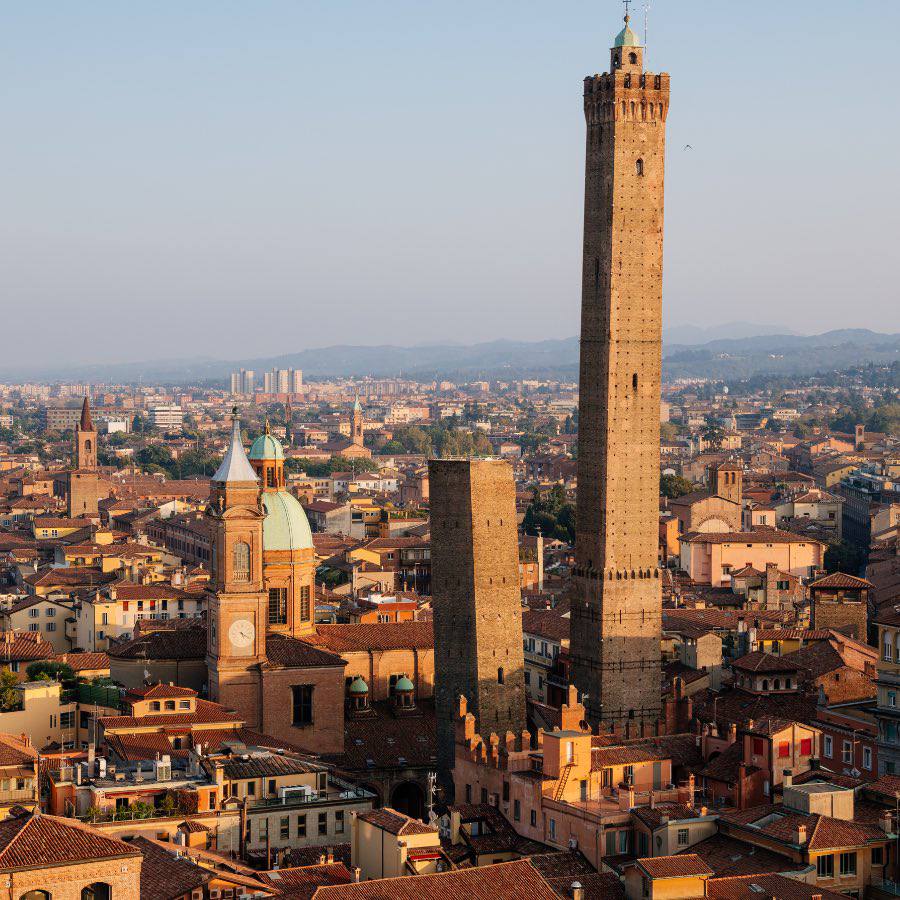
A model of Bologna in the 12th and 13th centuries, with its many towers, resembles the high-rise development of modern cities.
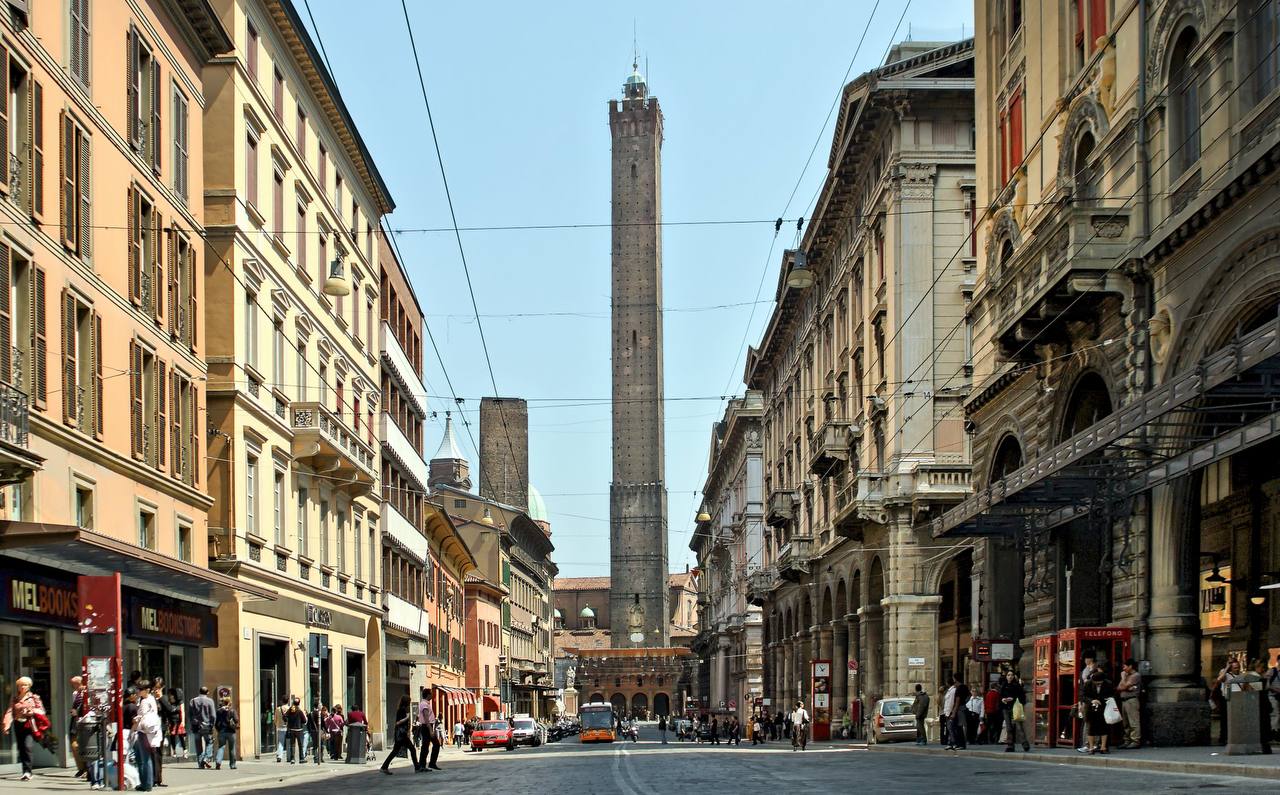
At the height of its prosperity the city counted as many as 180 tall structures, of which some 20 survive to this day. The tallest of them is the 97-metre Torre degli Asinelli. Incidentally, it too is one of the famous leaning towers, with an inclination of 1.3 degrees.
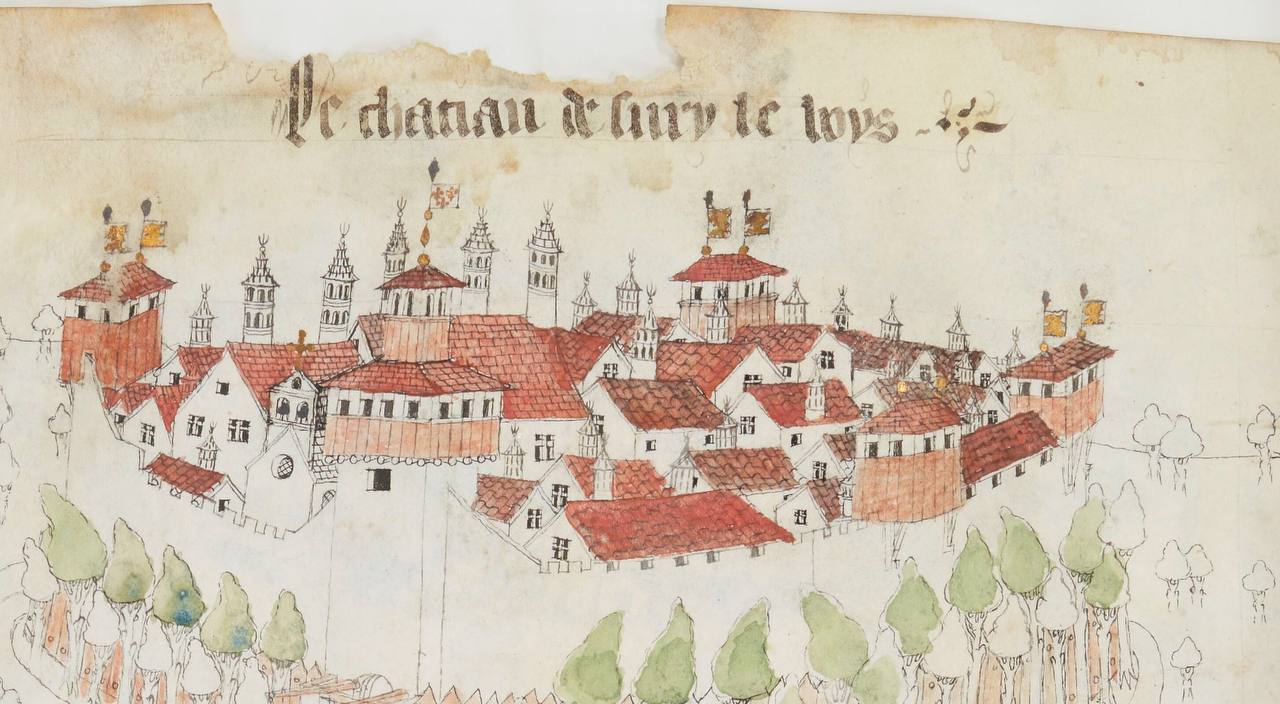
Bologna is not the only medieval city with a multitude of towers. One may recall the armorial of Guillaume Revel, which depicts similar clusters of towers, Souvigny-en-Sologne for instance [?]. Each type of tower had its own purpose: watchtowers, fortification towers, bell towers. But the greater part of the towers nonetheless belong to purely decorative construction.
In French medieval towns, just as in Italian ones, one could come across clusters of towers that quite literally propped one another up. The phenomenon is explained by competition for prestige. Wealthy country gentlemen moved into town, bringing with them not only the practices of rural architecture but also the desire to assert themselves as the more important and richer seigneur, along with a competitive frenzy.
Towers began to be built, essentially, simply to prove that the owner of the house could afford such a luxury. They had no utilitarian purpose as such: they were not storehouses, they contained no living quarters, they were not even dovecotes. Their simple form was meant only to soar upwards as far as possible, feeding the mounting exaltation of the householders, for as long as their means sufficed to pay the masons and engineers.