The Horses of Saint Mark: from Constantinople to Venice and Paris
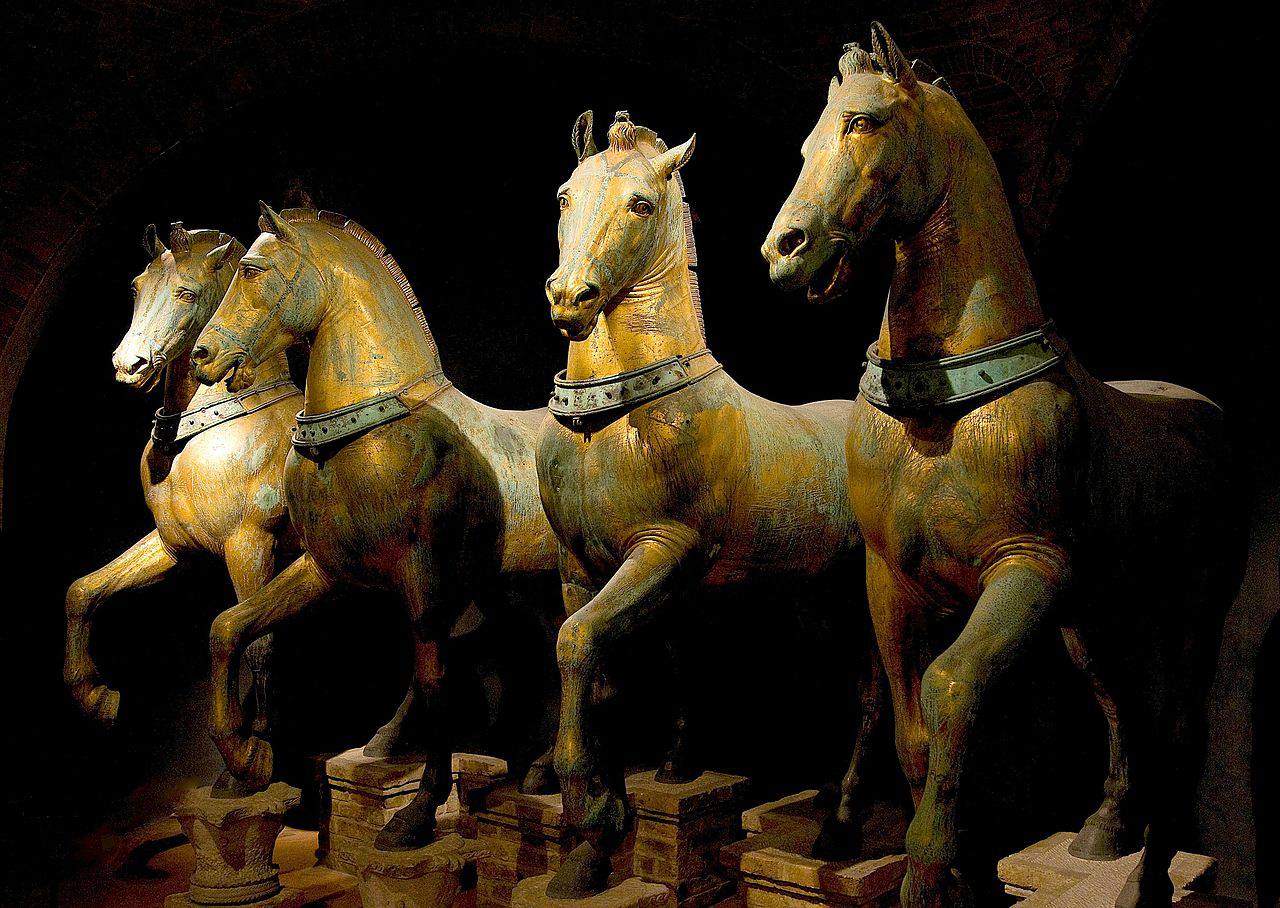
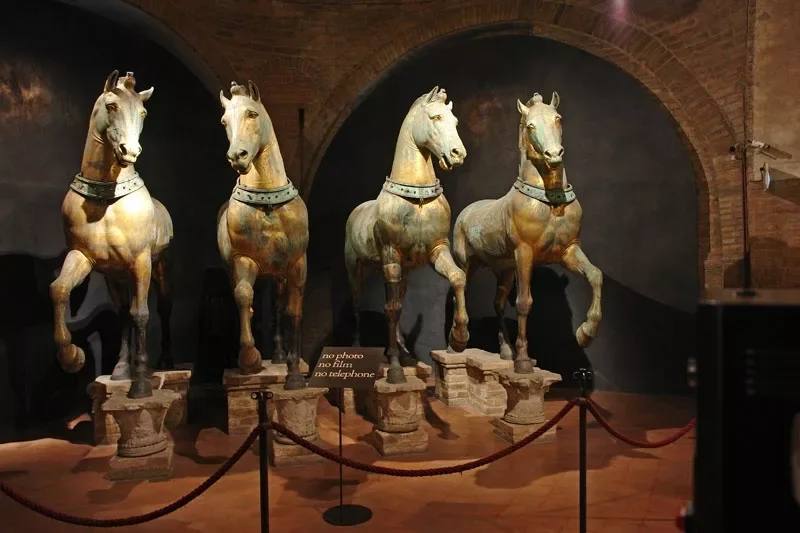
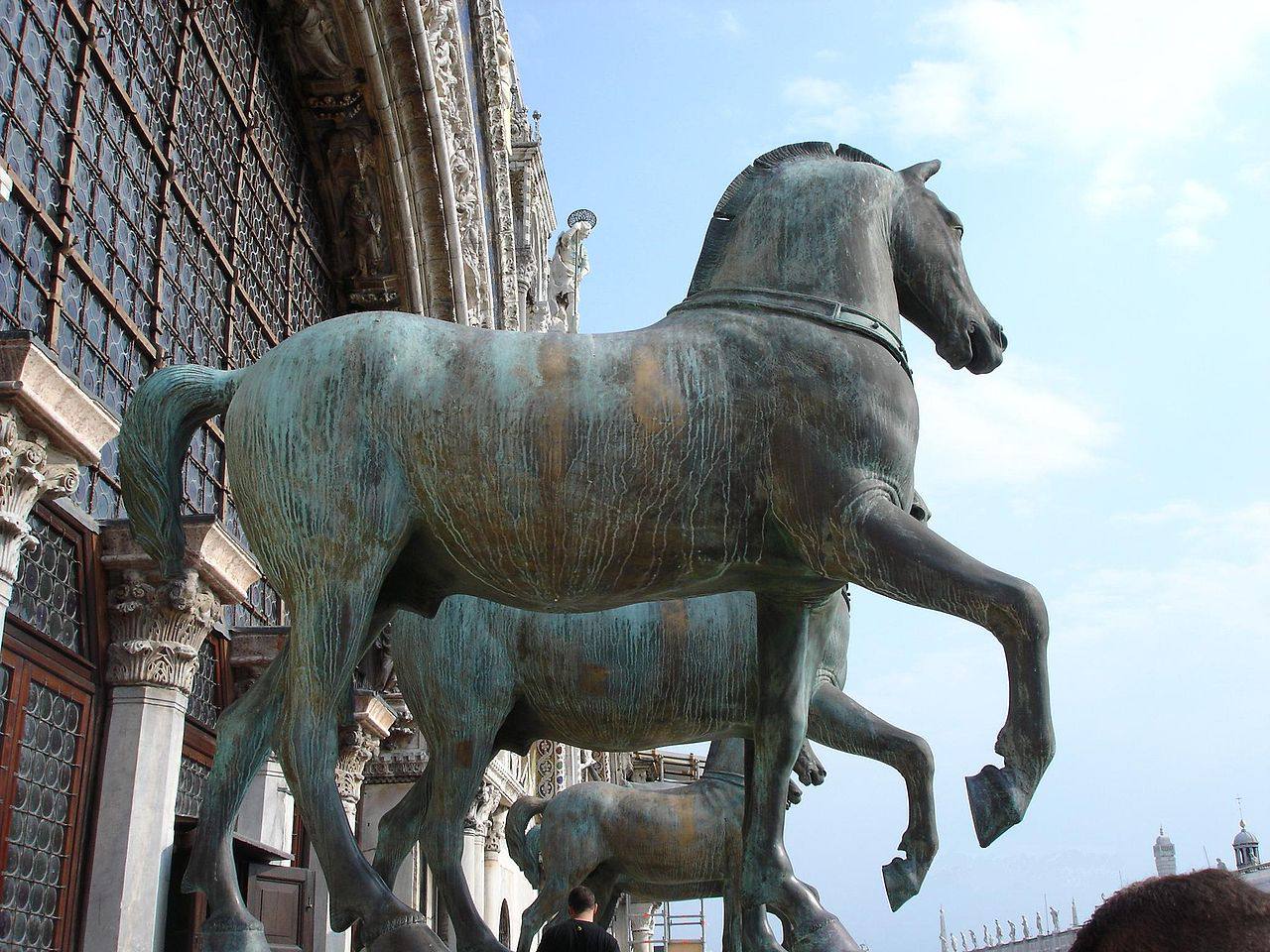
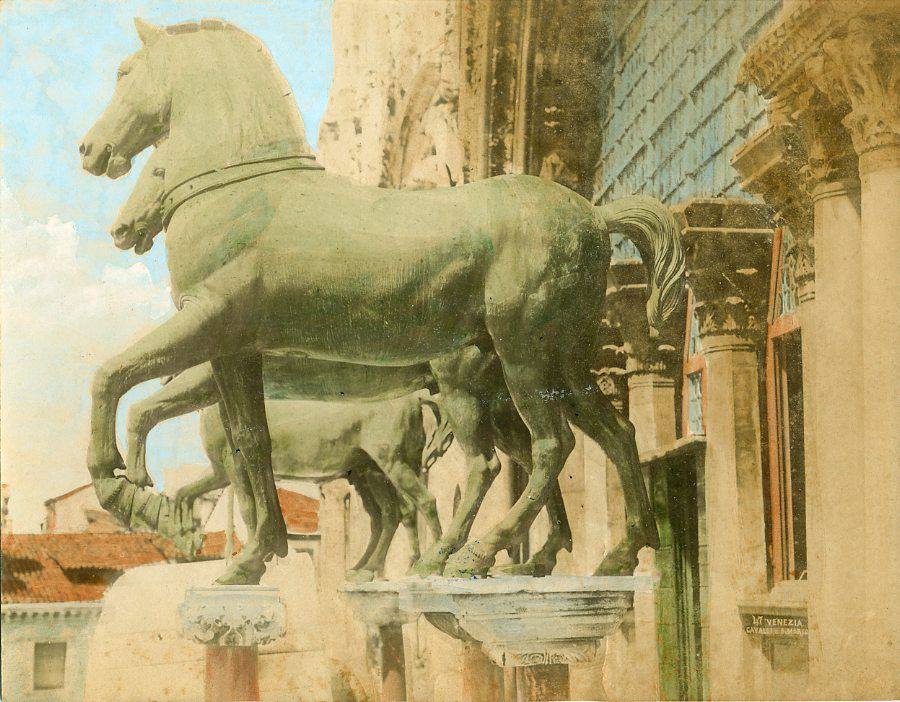
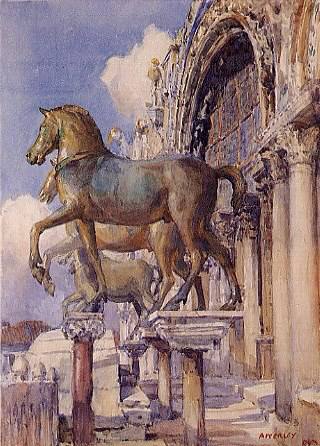
The Horses of Saint Mark, or the Triumphal Quadriga, are one of the emblematic monuments of Venice. The team of four steeds has adorned the façade of the Basilica of Saint Mark for almost eight centuries.
At the very start of the plundering of Italy, in 1797, Napoleon carried the quadriga off from Venice and set it up on the Arc de Triomphe du Carrousel in Paris. In 1815, however, to the Venetians' great good fortune, the horses were returned to their rightful place. Or rather, not quite their rightful place, but their accustomed one. For before they became the Horses of Saint Mark in 1254, they were known as the Quadriga of the Great Hippodrome of Constantinople. The Venetians removed the magnificent statues from Constantinople during the Fourth Crusade in 1204. And they did not merely remove them: they sawed the horses' heads off for ease of transport. The dreadful cut then had to be concealed with metal collars, which remain on the horses to this day.
The original provenance of the four copper horses is not known for certain. They are assigned to the classical period of antiquity, and are most probably considered the work of the great Greek sculptor Lysippos of the 4th century BC.
So to whom should the quadriga belong? It became famous as an ornament of the hippodrome in Constantinople, where it stood for not one hundred years but many; it was stolen by the Venetians and celebrated as an inseparable part of Venice; it was then stolen by Napoleon; and not one of them had anything to do with the creation of this multi-figure equestrian sculpture. It is well known, after all, that the Romans also plundered Greece, carrying off her masterpieces. One recalls Lenin's winged phrase: "we plunder the plunderers".