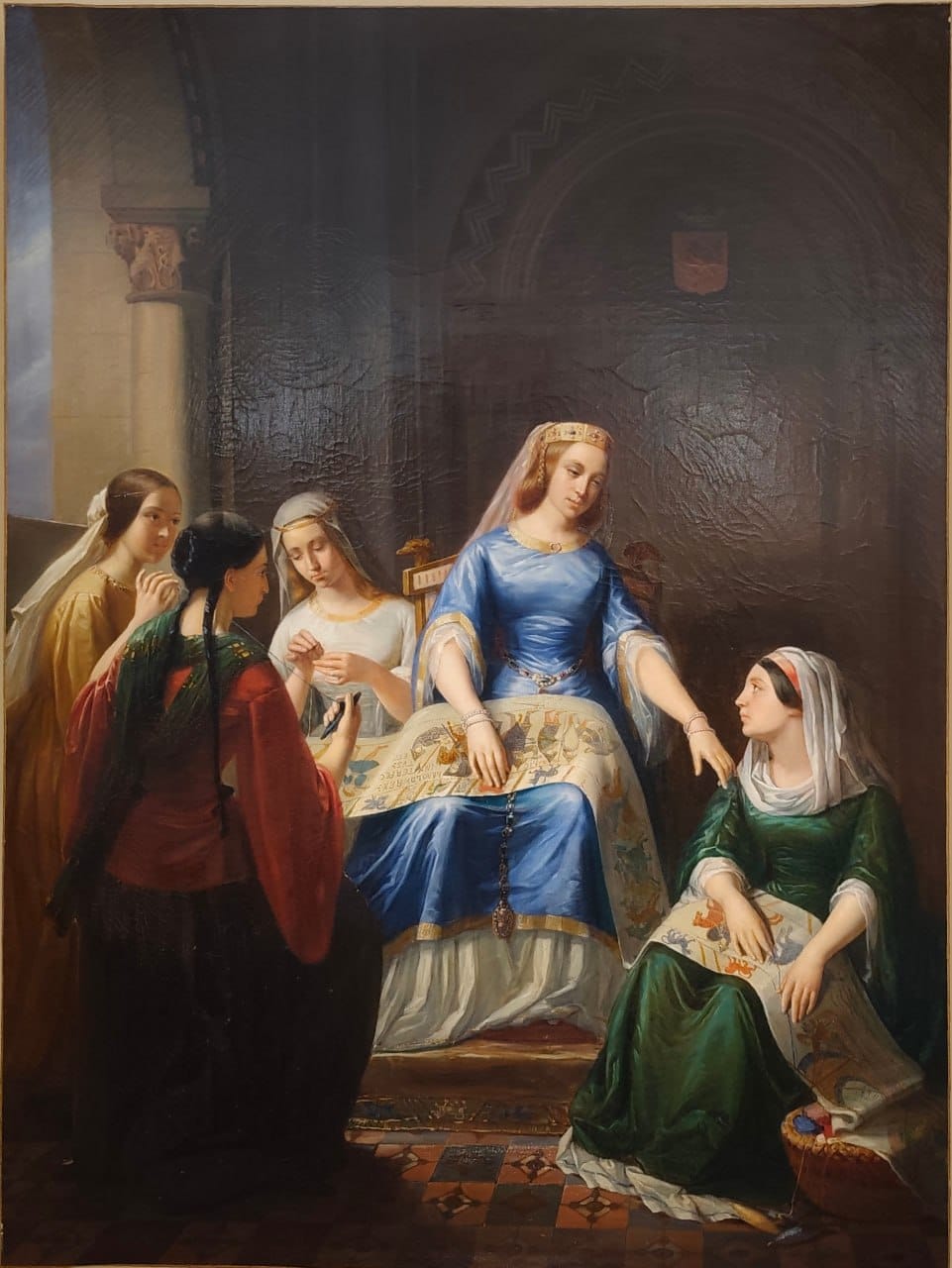
Queen Matilda Working on the Bayeux Tapestry, Alfred Guillard, 1848
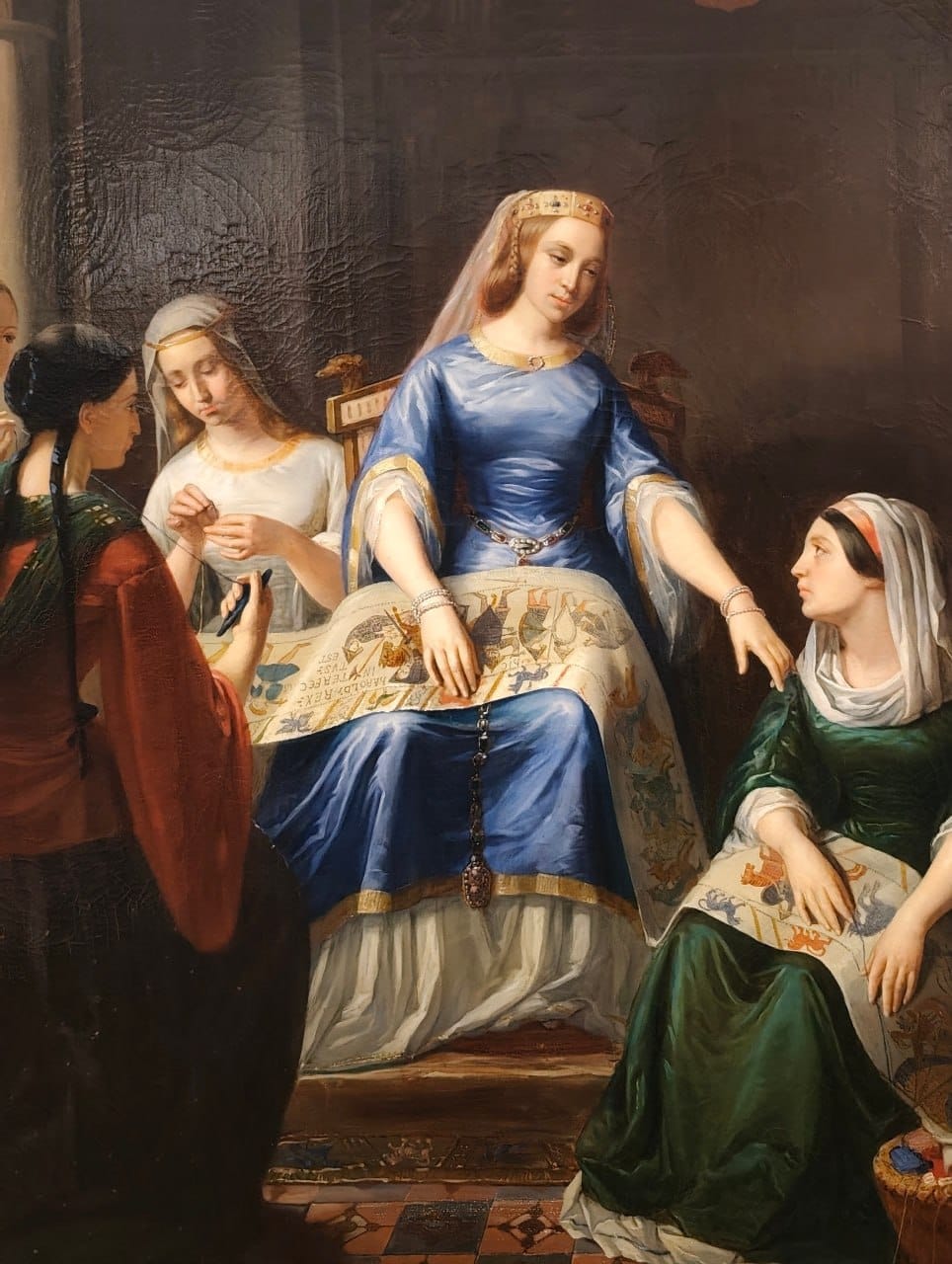
The painting draws on the legend that attributes the making of the Bayeux Tapestry, which depicts the conquest of England, to Matilda, Duchess of Normandy and Queen of England, wife of William the Conqueror. Such romantic vignettes belong to the artistic current known as the "troubadour style" (style troubadour), which alluded to the fashion for the historical reconstruction of the Middle Ages.
It is most unlikely that Queen Matilda did any of the stitching herself; if she had any connection with the work at all, it can only have been in overseeing the needlewomen. It is now thought most probable that the famous embroidery (for the Bayeux Tapestry is in fact embroidered, not woven, and is 68 metres long and about 50 centimetres high) was made in a monastery in the south-east of England only a few years after William's victory. The commission is attributed to William's half-brother, Bishop Odo.