Pavel Antokolsky’s poem about Velázquez and the portrait of the Infanta
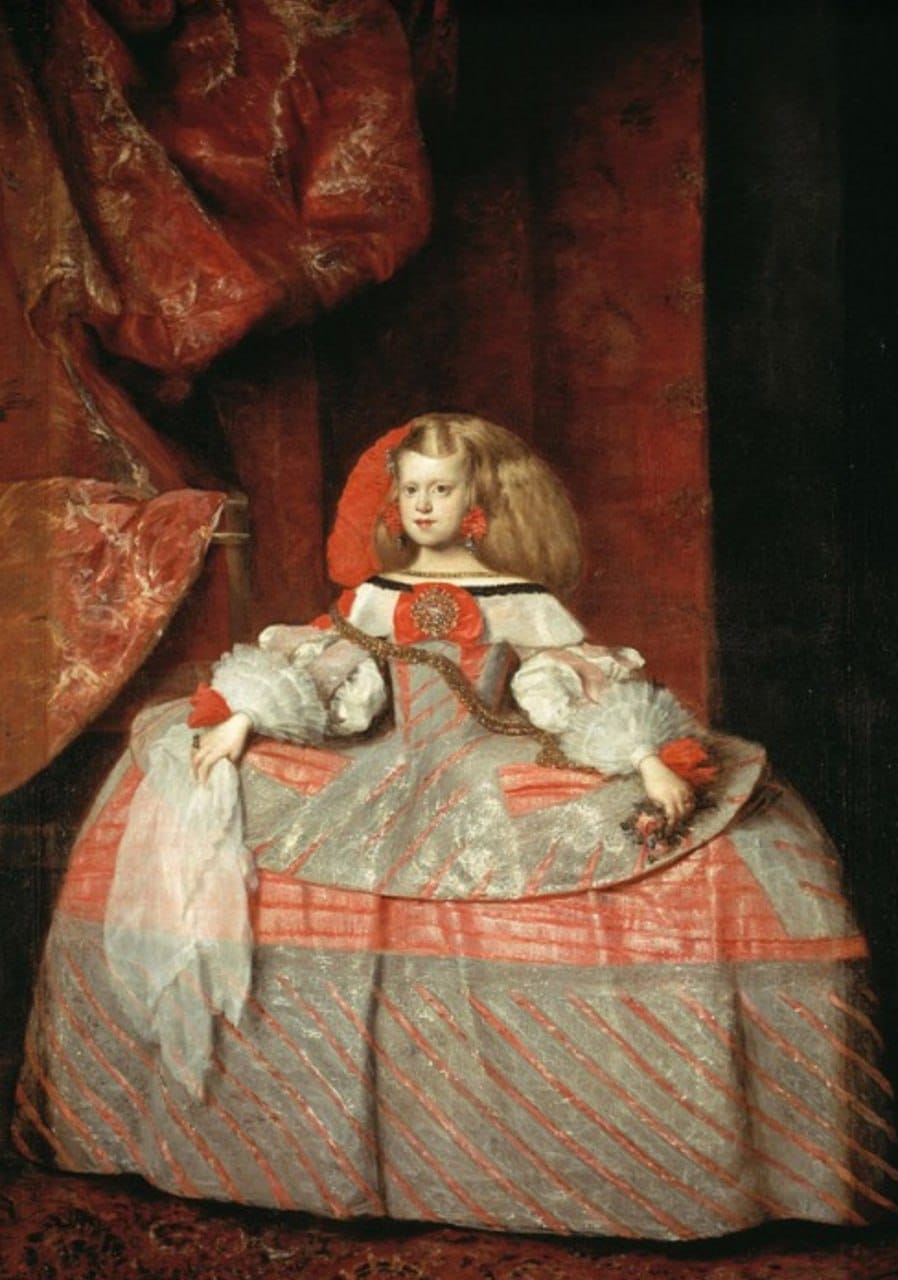
The painter was ardent, affable, pure, clever.
He knew that the rosy, timid child
Was long since dry and yellow, like a squeezed lemon;
That in the pulse of those veins are the dreams of many buried;
That it is not Brabant lace that is beyond price,
But that, surely, in no Bolognas or Sorbonnes
Can one count up the deaths by which she lives,
The ten-year-old.
Smouldering before him was a fragment
Of a harried family. The bastard of a deity.
A mouse. A sweet-tooth. The passion of sexless dwarfs
And the scourge of confessors. He saw in her the sum
Of the history of the land. Before him fluttered the curtain
Of a lifeless soul. Its palace was empty.
The duennas came in a throng, like sheep. And gazed
Into the portrait as into a mirror. He heard a stream
Of florid phrases. The word “charm” was drowning
Beneath a long title of twelve steps.
The king, her father, let his jaw drop.
Baring his black mouth and turning still paler,
He croaked: “You will be fed downstairs, Velázquez.”
And the painter, bowing himself out, went off to dream of her.
His days and years flew by in an infernal dance.
All of it happened. Gold. Oblivion. The binge
Of sleepless labour. The painter’s soul
Is not to be made public. It was itself.
Youth was too little for it. But it would age quickly.
Keen sight was too little for it. And yet it would go blind.
Then centuries passed. One. Another. And a third.
And, looking past the eyes, as he commanded her,
The little Infanta gazes from the overcast portrait.
Before her, an empty Louvre. A grey-haired museum hall.
Parquet gloss. And a hush, as in the days of the Escorial.
And it is clear to the girl from all human eyes
That she has lost nothing since then:
Neither dwarfs, nor realms, nor dolls, nor saints;
That a whole world is made of the same materials,
Given to her from time immemorial. A world of golden reflections,
With nicks in the carving, with a likeness of ringing somewhere
On a bronze clock. And again the ringing died away.
And, dressed pitilessly in the same heavy silk,
Brainless as an idol, indisputable as the grass
In cemetery ditches, older than father and grandfather,
The girl laughs. Strong in that she is dead.
Literal translation
Pavel Antokolsky, “On Velázquez”